What this means
Cellulite is dimpled or mattress-like skin, most often on the thighs and buttocks. Fat lobules push toward the surface while fibrous septae tether the dermis downward. The American Academy of Dermatology notes that most women have cellulite, including people who train hard and stay lean. It is a common contour finding, not an infection, a toxin warehouse, or a lymphatic emergency. No treatment is medically required.
Clinic menus sell acoustic-wave sessions, radiofrequency, lasers, vacuum massage, subcision systems, and enzyme injections as if they were disease care. The honest job of those tools is narrower: make selected dimples less obvious for a period of time. The U.S. Food and Drug Administration has cleared some powered instruments for improvement in the appearance of cellulite and reviewed an injectable collagenase for moderate to severe buttock cellulite in adult women. Clearance or approval is not a promise of smooth skin, a longer life, or a one-time cure.
This page is for adults who are bothered by dimpling and want an evidence-level talk before buying a package. It is not a weight-loss protocol and not a substitute for evaluating a changing lump, pain, or skin infection. Liposuction removes fat volume; it does not reliably release the septae that create classic cellulite. A licensed dermatologist, plastic surgeon, or equivalently trained physician—or an NP or PA working in that medical model—should separate anatomy from marketing.
What the evidence shows
AAD’s public review is more cautious than spa copy. Some treatments can make cellulite less noticeable, at least for a while. Acoustic-wave therapy usually needs a series. A laser approach marketed as Cellulaze aims at septae and fat under the skin. Subcision with a system such as Cellfina uses a needle or small blade to release tethering bands. AAD cites a study of 232 patients in which most reported satisfaction and results that can last two years and possibly longer. Vacuum-assisted precise tissue release had less cellulite for up to three years in a smaller study. AAD also notes that vacuum-assisted massage may improve appearance temporarily and that FDA clearance does not, by itself, prove a device works the way an ad implies.
Injectable collagenase clostridium histolyticum-aaes (sold as Qwo while marketed) was studied in two large phase 3 trials. More people improved on composite clinician and patient scales than with placebo, but two-level composite response rates were still modest—on the order of 6 to 8 percent versus 1 to 2 percent for placebo in the published analyses. That is a real statistical difference and a small average visual change. Most adverse events were injection-site bruising and pain.
A PMC systematic review comparing collagenase with tissue subcision found both can improve appearance. Bruising was reported in about 89 percent after collagenase and about 99 percent after subcision. Pain needing analgesics was common in both groups. Skin discoloration was more often reported after collagenase. Those numbers should sit in the consent conversation next to before-and-after photos taken in the same lighting.
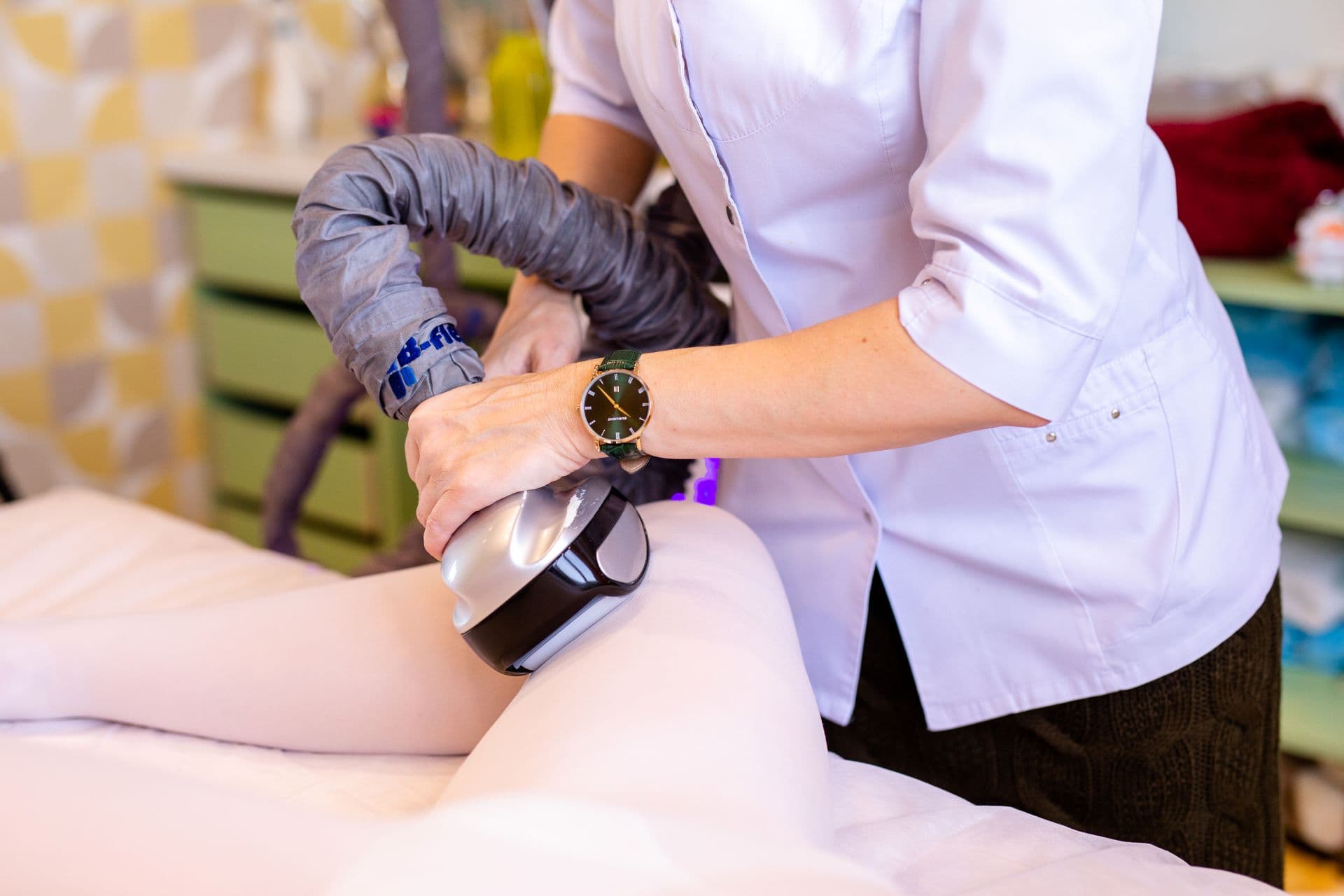
Reviews of noninvasive contouring devices—radiofrequency, low-level laser, ultrasound, shockwave—describe mixed, often short-lived changes in cellulite scores. Heat and massage can swell or temporarily tighten skin. They do not rewrite septal anatomy the way a well-planned release might. If a clinic quotes a single “FDA approved cellulite laser” without naming the indication, session count, or expected fade, treat that as advertising.
- More durable in selected trials: controlled subcision of fibrous bands.
- Modest, injection-based: collagenase in studied buttock dimples, with frequent bruising.
- Often temporary: massage, many energy devices, creams, and wraps.
- Not a disease treatment: no device replaces a medical exam of a new mass.
Common myths
Myth: cellulite means you are unhealthy or “toxic.” Fit people have it. Hormones, connective-tissue pattern, and fat distribution explain more than a juice cleanse. Framing dimples as a detox failure sells sessions. It does not describe pathology.
Myth: a cream, wrap, or lymphatic add-on erases cellulite. Surface products may hydrate or tint skin. They do not reliably cut or enzymatically release deep septae. Temporary smoothness after heat or compression is not a structural result.
Myth: liposuction or “fat freezing” is the same as cellulite care. Removing or injuring fat can change volume and, in some bodies, make dimpling more obvious if tethers remain. AAD treats cellulite and fat-reduction consults as related but not interchangeable decisions.
Myth: one device visit is a permanent cure because a website said “FDA cleared.” Many clearances are for short-term appearance. Even longer-lasting subcision results are appearance scores, not a lifetime warranty. Weight change, pregnancy, and aging can bring dimples back into view.
How clinics use it
Med-spas and longevity rooms often bundle cellulite into a body-contour package with radiofrequency, acoustic waves, and injectables. The useful clinic visit names the target dimples, the tool, the FDA indication if any, how many sessions, expected bruise time, and when a result is likely to fade. AAD stresses that results depend on the skill of the person who treats you and that a dermatologist who offers these procedures can help match method to anatomy.
Ask who is licensed in your state to use a blade, a laser, or a prescription enzyme. Ask who manages infection, prolonged discoloration, or contour irregularity after hours. A salesperson who cannot distinguish septae from subcutaneous fat, or who treats cellulite as a toxin problem, is selling a story. Photographs under identical lighting beat filtered social posts.
Price a full course, not a first-visit discount. Collagenase protocols in trials used repeated visits. Energy devices are often sold as six or eight sessions. If the plan is “until you are happy,” you do not have a plan. Set a stop rule: if dimples are unchanged after the stated course, reassess technique and anatomy rather than stacking another device.
Practical takeaway
Cellulite is common and optional to treat. Devices and injections can produce modest, sometimes months-to-years, smoothing in selected dimples. They do not treat a disease. Choose a licensed clinician, read the indication, and expect bruising. Keep general health habits you already value—activity, not smoking, stable weight if that is your goal—without pretending they erase septae. If a lump is new, tender, or changing, get a medical exam before any cosmetic energy is applied to that field.
Frequently Asked Questions
References
AAD: Cellulite treatments: What really works?
https://www.aad.org/public/cosmetic/fat-removal/cellulite-treatments-what-really-worksAAD: Cellulite and fat removal
https://www.aad.org/public/cosmetic/fat-removalFDA: Powered surgical instrument for improvement in the appearance of cellulite (product code OUP)
https://www.accessdata.fda.gov/scripts/cdrh/cfdocs/cfPCD/classification.cfm?ID=OUPPMC: Comparing collagenase and tissue subcision for cellulite (systematic review)
https://pmc.ncbi.nlm.nih.gov/articles/PMC11191026/PMC: Collagenase clostridium histolyticum-aaes phase 3 cellulite trials
https://pmc.ncbi.nlm.nih.gov/articles/PMC8078112/PMC: Review of noninvasive body contouring devices on cellulite and fat
 Your Privacy Choices