What “good” looks like
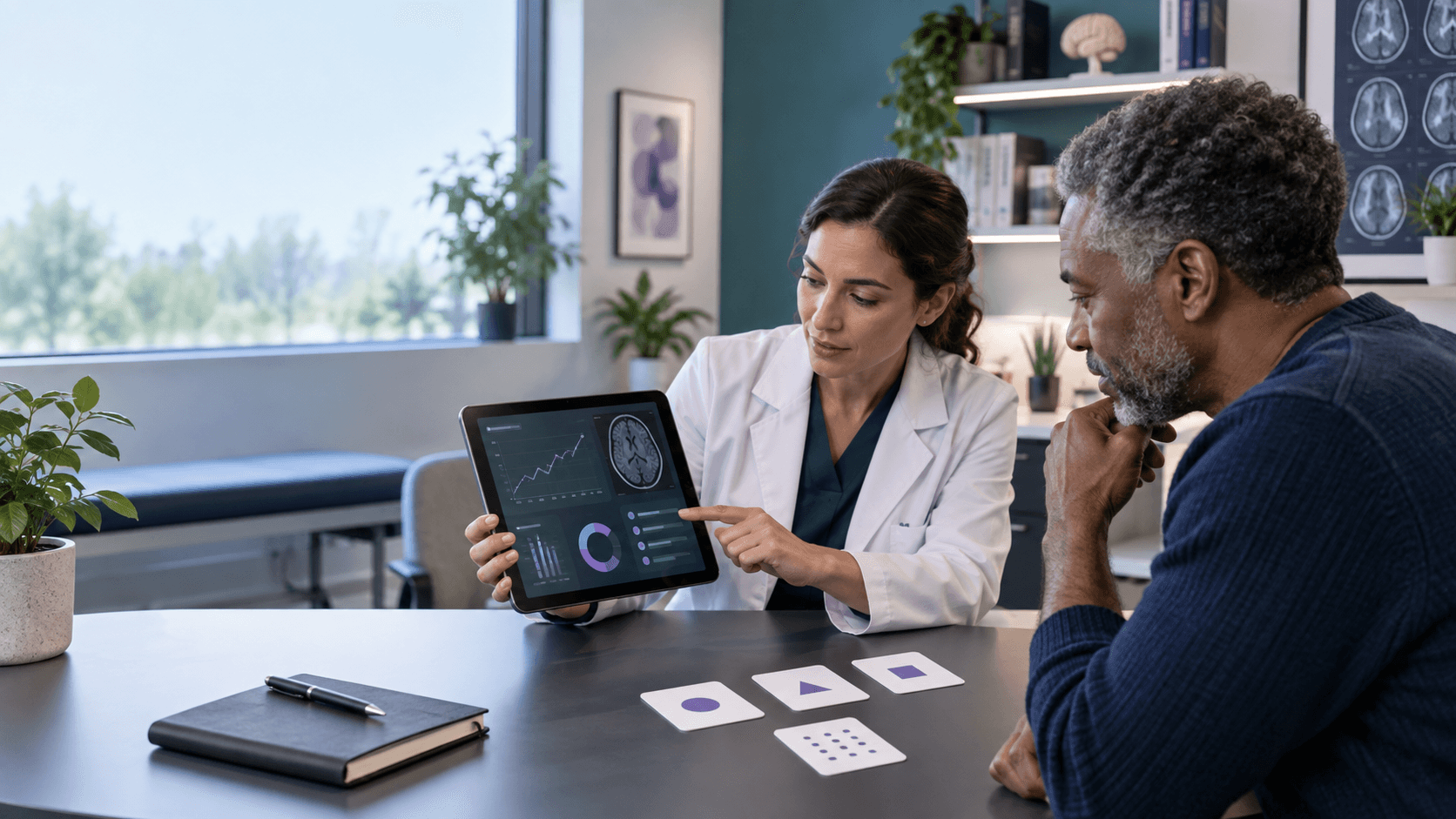
A cognitive performance clinic should start as a clinical evaluation, not as a product room. The first visit covers the problem you notice, how fast it changed, medicines, sleep, mood, alcohol, hearing, blood pressure, and safety at work or while driving. NIA pages on cognitive health put those factors at the center. A brain-training login is not that history.
Good clinics complete indicated workup before nootropics or devices. That can include a mental-status screen, hearing check, sleep questions, basic labs when appropriate, and referral for formal neuropsychology or neurology if decline is progressive. USPSTF materials treat cognitive assessment as a clinical activity, not a storefront upsell.
Referral is a mark of quality. Mild cognitive impairment and dementia evaluations belong with clinicians who manage those diagnoses. NIA describes MCI as a change that is more than typical aging and that needs medical follow-up. A performance clinic that keeps those patients on a supplement subscription is the wrong room.
Privacy is part of good care. Cognitive scores, voice recordings, and app logs should live in a medical record with consent you can explain. They should not become marketing graphs. You should be able to buy an evaluation without joining a content funnel.
Credentials and scope to verify
Look up a license for the person who interprets results and recommends treatment. Physicians, nurse practitioners, and physician assistants can evaluate and refer. Neuropsychologists interpret formal testing. Audiologists evaluate hearing. Sleep clinicians evaluate apnea. A health coach or device technician can support practice tasks. They cannot diagnose dementia.
Ask which hat each person is wearing. A clinician who also sells a nootropic line must say when they are prescribing and when they are retailing. FDA does not approve dietary supplements to treat cognitive disease. Selling a stack is not the same as managing a diagnosis.
Device operators need limits. Stimulation, neurofeedback, or light-based gadgets have contraindications and uneven evidence. If the operator cannot name who should not be treated, or treats a game score as a diagnosis, the clinic is outside a defensible scope.
Confirm emergency and decline pathways. Progressive language loss, getting lost, personality change, or inability to manage medicines needs specialty care. A clinic without a referral list is offering entertainment testing. Ask who they call, and how quickly, when a screen suggests more than a focus complaint.
Questions to ask
Bring questions that expose process.
- Who is licensed to interpret my testing, and will I get a written impression?
- What workup do you complete before nootropics, stimulants, or devices?
- When do you refer to neurology, geriatrics, psychiatry, audiology, or sleep medicine?
- Where are my cognitive data stored, who can see them, and are they used for marketing?
- What is the cost of evaluation alone, and what is the stop rule if nothing useful changes?
Ask how they handle hearing and mood. CDC materials on hearing loss describe communication strain that people often call brain fog. A clinic that never asks about hearing, depression, or sleep apnea is skipping high-yield problems.
Ask what a better score would mean. If the only answer is buy the next package, the metric is a sales tool. A useful answer names a function you care about and a date to reassess.
Red flags
Walk away from guaranteed sharper thinking, reversed aging, or a protocol that treats every client with the same injections. Cognitive complaints have many causes. A single stack is not an evaluation.
Nootropic- or device-first visits are a warning. So is refusing to refer progressive decline because the membership still has months left. NIA MCI pages exist because change over time matters. Keeping that person in a performance lane delays diagnosis.
Be cautious if testing is done only by an app, with no licensed interpreter, or if results are shown as a biological-age number without a medical plan. Vanity metrics can scare families into buying more product. They are not a neurologic exam.
Privacy shortcuts are easy to see. Public testimonials with test scores, pressure to post your results, or unclear data sharing with a consumer app are reasons to leave. Cognitive information is not a social asset.
Cost, time, and logistics
A diagnostic visit and indicated hearing, sleep, or mental-health care may be insurance-eligible. Cash-pay cognitive memberships often bundle tests you did not ask for with supplements. Ask for an itemized evaluation price. A time-limited workup is easier to judge than a year of brain optimization.
Time includes the visit, possible formal testing, and the weeks you still need for sleep and hearing care. Daily device sessions that crowd out those basics are the wrong logistics. Training homework can be short. It should not replace a sleep study you were told you need.
Logistics include who explains results to a family member you choose, how records transfer to your primary-care clinician, and how you revoke app access. If you travel, ask whether follow-up is medical or only a supplement reorder.
Before you enroll, write the license you verified, the workup that precedes any stack, the referral trigger for decline, and the privacy rules for your data. Cognitive performance services can be a narrow adjunct after those pieces exist. They should not be the place that misses a disease or publishes your scores.
Frequently Asked Questions
References
NIA: Cognitive Health and Older Adults
https://www.nia.nih.gov/health/brain-health/cognitive-health-and-older-adultsNIA: What Is Mild Cognitive Impairment?
https://www.nia.nih.gov/health/alzheimers-and-dementia/what-mild-cognitive-impairmentUSPSTF: Cognitive Impairment in Older Adults Screening
https://www.uspreventiveservicestaskforce.org/uspstf/recommendation/cognitive-impairment-in-older-adults-screeningFDA: Dietary Supplements
https://www.fda.gov/food/dietary-supplementsCDC: About Hearing Loss
https://www.cdc.gov/hearing-loss/about/index.html Your Privacy Choices