What “good” looks like
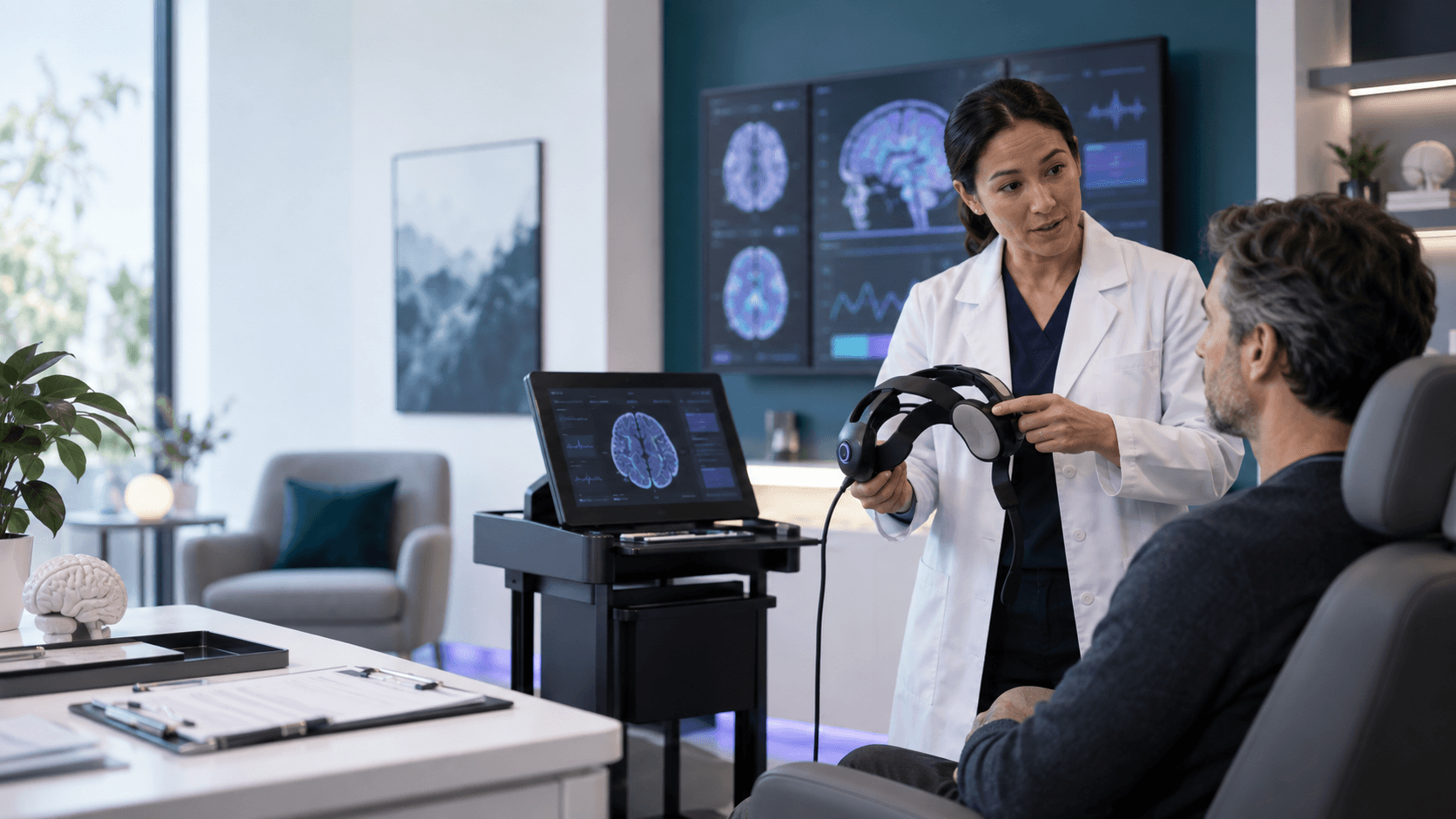
A useful neurological optimization clinic behaves like a clinic. A licensed physician, osteopathic physician, nurse practitioner, or physician assistant takes a history, lists medicines and implants, decides whether you have a diagnosis that a device can address, and says what the site will not handle after hours. The banner can say optimization. The work still has to look like care.
Good programs separate indicated devices from wellness gadgets. Clinic TMS for major depression, certain nVNS, REN, or migraine TMS products, and research protocols are different from consumer tDCS, CES, or neurofeedback sold for focus. FDA home-use device pages and general-wellness guidance exist because those categories confuse patients. Ask for the indication that matches your problem.
Good care names an emergency path. Thunderclap headache, sudden weakness or speech trouble, seizure, and suicidal thinking go to emergency services, not to a morning voicemail. NINDS stroke pages and NIMH suicide-prevention pages are written for that reality. A lounge that cannot recite the plan is not ready to stimulate a brain.
Good marketing is specific and limited. It does not promise a better IQ, reversed dementia, or a guaranteed mood change. It explains uncertainty and alternatives, including ordinary sleep, vascular-risk, and psychiatric care. If the first room you see is a wall of machines and the first person you meet cannot name a license, you are in a store.
Credentials and scope to verify
Verify an active state license for the person who will diagnose you and order the device. Use the state board lookup. MD and DO licenses are the usual physician path. NPs and PAs can be appropriate when their supervising or collaborating arrangements meet state law and the condition is within their training. A technician certificate is not a medical license.
Match specialty to the problem. New or complex headache belongs with clinicians who manage migraine, often neurology or headache medicine. Major depression, bipolar disorder, and TMS protocols belong with psychiatry or a clinic that follows psychiatric standards. Progressive cognitive change belongs with primary care plus neurology, geriatrics, or neuropsychology—not with a gadget specialist alone.
Ask who is in the room for TMS or other clinic systems. NIMH describes rTMS as an office therapy with monitoring for discomfort, mood change, and rare seizure. Someone trained to respond must be present. For home or wearable devices, ask who teaches you, who reviews a diary, and who you call if attacks or mood worsen.
Scope includes what they will not do. A clinic should refer stroke-like symptoms, new cognitive decline that needs a workup, and psychiatric crisis. AAN MCI guidance is about assessment and monitoring, not a stimulation subscription. If the brand claims to treat everything a neurologist treats, the scope is too wide.
Questions to ask
Ask what diagnosis they believe you have, what they have ruled out, and what visit type you are buying: evaluation, a labeled-device course, or a wellness package. If they cannot answer without a sales script, pause. AHS clinician notes on choosing a migraine device start from diagnosis and contraindications, not from inventory.
Ask for the device name, FDA pathway, and the exact indication. Then ask how your case matches that labeling—age, diagnosis, prior treatments. “Cleared for something” is not enough. “Wellness” is not the same as cleared or approved. Request the plan if the device does nothing after a defined trial.
Ask about metal, implants, seizure history, pregnancy, and medicines that lower seizure threshold before you pay. Ask who covers nights, which hospital they use, and how records reach your primary-care or psychiatric clinician. Ask whether you are expected to stop indicated medicines as a condition of enrollment.
Ask how progress will be measured in words you already use: migraine days, depression scores your psychiatrist already tracks, or daily function. Refuse proprietary brain ages that only the clinic can read. If answers change when you mention price, you have learned what the visit is for.
Red flags
Walk away from guaranteed cognitive upgrades, “best clinic” claims, or cure language. Walk away if progressive memory loss is treated as a reason to buy more sessions instead of a medical workup. Walk away if suicidal thinking is reframed as a mindset or a coil setting.
Be wary of one protocol for every client, no license posted, and no implant or seizure questions. Be wary of consumer tDCS sold as if it were clinic TMS, or migraine gadgets sold before anyone has diagnosed the headache. FDA wellness guidance is not a loophole for memory-claim stimulators.
Pressure to stop psychiatric medicine, skip imaging your clinician ordered, or hide the program from your regular doctor is a safety problem. So is a clinic that will not share records. Cash-pay status does not remove coordination duties when staff are practicing medicine.
Facility signals matter. Unclean electrodes, no crash plan, unsupervised first TMS sessions, and staff who mock emergency departments are reasons to leave. A medical logo on a retail wall does not create an emergency department. Believe the process you are shown, not the lighting.
Cost, time, and logistics
Clinic TMS for depression is often a multi-week series of weekday visits. NIMH describes typical courses as several sessions a week for several weeks. Budget time, transportation, and who watches you after the first visits if you feel lightheaded. Insurance may cover indicated TMS; it rarely covers an optimization membership.
Prescription migraine devices can involve a device fee, electrodes or refills, and follow-up visits. AHS clinicians note that access and paperwork are often the bottleneck. Ask for an itemized cash price and what happens if you stop. OTC cleared devices still need a diagnosis and a plan for red-flag headaches.
Wellness packages are usually prepaid and easy to over-buy. FDA home-use device advice still applies if you take hardware home: follow labeling, report problems, and do not improvise dose. A cheap kit with a disease claim is not a bargain if it delays care.
Put logistics in writing: total cost, refund rule, number of sessions, who you see each visit, and the after-hours number. If travel is long, ask whether local emergency care is briefed and whether video follow-up is enough. Distance is not a reason to skip a licensed exam when symptoms are new or severe.
Frequently Asked Questions
References
FDA: Buying and Using Home-Use Medical Devices Safely
https://www.fda.gov/medical-devices/home-use-devices/buying-and-using-home-use-medical-devices-safelyFDA: General Wellness Policy for Low Risk Devices
https://www.fda.gov/regulatory-information/search-fda-guidance-documents/general-wellness-policy-low-risk-devicesNIMH: Brain Stimulation Therapies
https://www.nimh.nih.gov/health/topics/brain-stimulation-therapies/brain-stimulation-therapiesNIMH: Suicide Prevention
https://www.nimh.nih.gov/health/topics/suicide-preventionNINDS: Stroke Signs and Symptoms
https://www.ninds.nih.gov/health-information/stroke/signs-and-symptoms Your Privacy Choices