What “good” looks like
A good lymphatic therapy clinic treats a diagnosed lymphatic problem with a program, not a perfume-scented detox. NCI describes care directed by a certified lymphedema therapist—often a physical or occupational therapist with additional training. The American Cancer Society describes complete decongestive therapy as MLD plus compression, skin care, exercise, and elevation. The National Lymphedema Network describes an intensive clinical phase and a self-care phase with garments you can manage at home.
Good care starts with a medical reason for swelling. CDC tells people to see a doctor to exclude other causes, including a blood clot, before assuming lymphedema. The clinic should take a history of cancer treatment, surgery, infection, and prior clots; measure the limb the same way each visit; and teach you what to do when you are not on the table. You should leave with a written home plan, not only a relaxed feeling.
Good care also knows its limits. Staff can name infection and clot red flags, will not treat a hot febrile limb, and will call your physician when volume rises or skin breaks down. A luxury room, a machine wrap, or a “lymphatic facial” does not make a medical program. Comfort massage can exist—but it should not be sold as treatment for lymphedema or as toxin removal.
Credentials and scope to verify
Ask who will touch you and what license they hold. For lymphedema, prioritize a CLT and confirm PT, OT, or another license that your state recognizes for this work. ACS lists the Lymphology Association of North America (LANA) and NLN as places patients look for trained clinicians. A weekend certificate in “manual lymphatic drainage” for spa staff is not equivalent to CDT training.
Ask who makes medical decisions. A physician, NP, or PA should be in the loop for new diagnoses, antibiotics, and clot questions. The therapist’s scope is rehabilitation and education, not diagnosing cancer recurrence or treating cellulitis with oils. If you are post-op, the clinic should want the surgeon’s clearance rather than guessing.
Verify practical skills: garment measuring and fitting, bandage wrapping, pump training when used, and infection-prevention teaching. NLN materials treat compression selection as a trained decision, not a retail upsell. Ask whether they treat your body region—breast, head and neck, genital, and pediatric lymphedema are not all the same skill set. If they only offer a one-hour menu item, they are not set up for CDT.
Questions to ask
Bring a short list and write the answers. You are hiring a long-term partner if you have chronic lymphedema, not buying a single treat. Vague answers about “moving energy” or “detoxing lymph” are enough to walk out.
- What is my diagnosis, and who made it?
- Will you provide CDT, including compression and skin care, or only a massage?
- What are your CLT and PT/OT credentials, and can I verify them?
- How will you measure progress, and how often?
- When do you stop and send me to a physician or emergency department?
- Who clears me if I had recent surgery, a clot, or heart failure?
- What will garments and the first month of visits cost, with and without insurance?
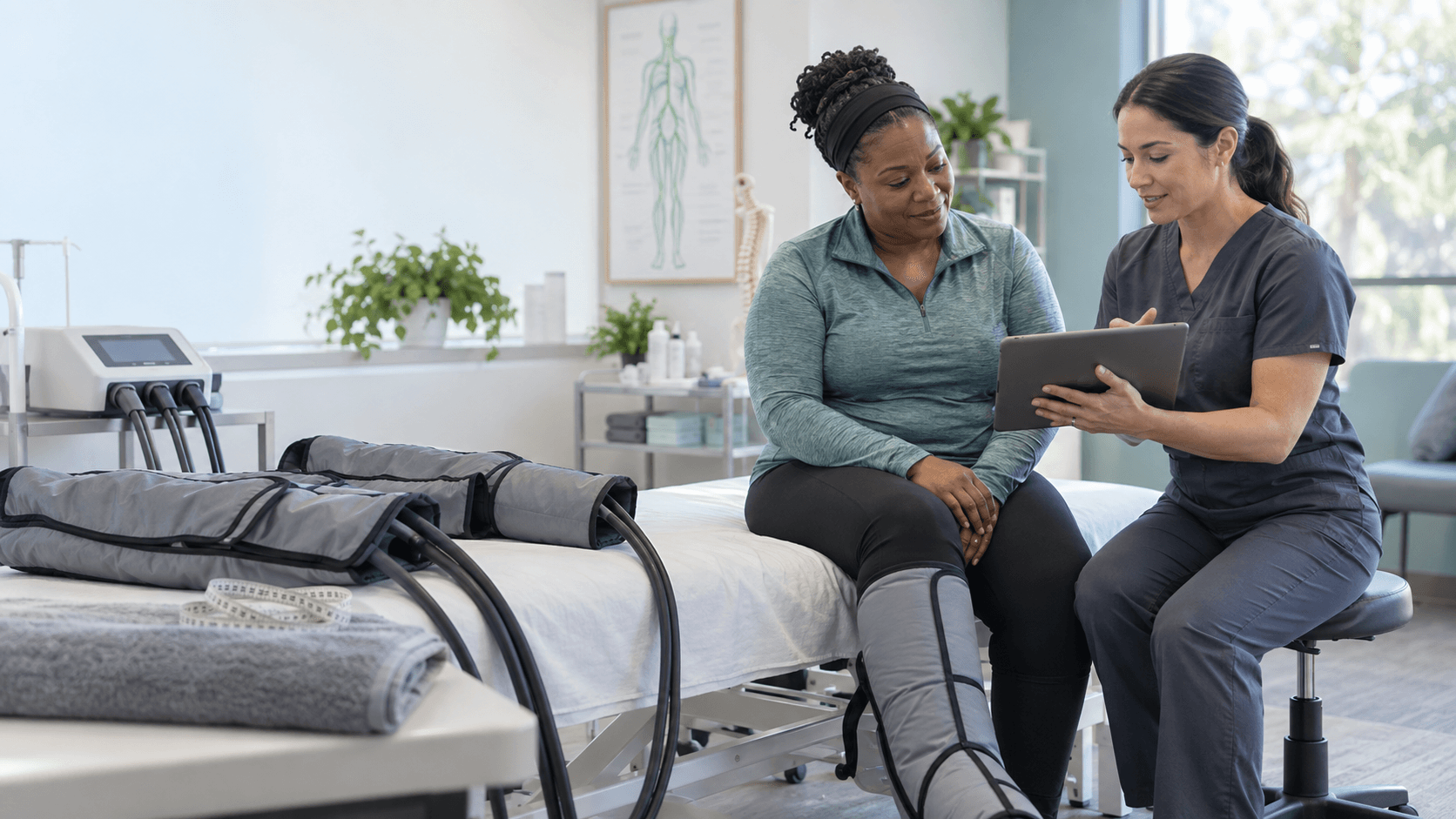
Ask to see the treatment space. You should find bandaging supplies, a way to wash hands and skin, and privacy to dress—not only a candle and a playlist. Ask how they clean pumps and tables. Ask whether a family member can learn donning so you are not dependent on the clinic forever.
Red flags
Walk away from toxin language, guaranteed reduction, or claims that drainage treats cancer, weight, or immunity. CDC and NCI do not describe spa detox as lymphedema care. Be wary of therapists who dismiss compression because it is “unsightly,” who deep-tissue a swollen limb, or who treat through fever and spreading redness.
Pressure to buy a large prepaid package before evaluation is a sales model. So is a provoked story that you must come weekly forever with no measurements. Clinics that refuse to communicate with your oncologist or surgeon, or that tell you to skip antibiotics, are unsafe. Offering needlesticks or blood-pressure cuffs on an at-risk limb against your cancer team’s advice is another warning sign—CDC still lists avoiding sticks in the swollen area among common precautions.
After surgery, a clinic that will wrap an open wound, soak an incision, or start a pump without clearance is outside safe practice. A setting that cannot describe DVT symptoms is not ready for postoperative swelling. Your comfort with the room should not override those basics.
Cost, time, and logistics
Intensive CDT can mean visits most weekdays for two or more weeks, then less frequent maintenance. That is time, parking, and help at home to don garments. Maintenance means replacing garments as they wear out—often every few months—which is a real budget line. Insurance may cover skilled therapy visits and sometimes garments; ask for a benefits check in writing.
Spa series are cheaper per hour and more expensive as medicine because they do not include the parts that hold reduction. Traveling far for a famous clinic only helps if you can continue compression at home. A closer CLT who will call your physician is usually the better logistics choice. Ask about infection plans: if you get cellulitis, can you pause and restart without losing a prepaid fortune?
Judge the clinic after three to five medical visits by measurements, your skill with the garment, and whether staff still remember your clot and wound history. If the only metric is how relaxed you felt, you hired a spa. Licensed lymphedema care is specific, measured, and a little unglamorous. That is what good looks like.
Frequently Asked Questions
References
NCI: Lymphedema and Cancer
https://www.cancer.gov/about-cancer/treatment/side-effects/lymphedemaAmerican Cancer Society: Lymphedema
https://www.cancer.org/cancer/managing-cancer/side-effects/swelling/lymphedema.htmlNational Lymphedema Network: Lymphedema Therapy
https://lymphnet.org/lymphedema-therapyCDC: Lymphedema for Cancer Survivors
https://www.cdc.gov/cancer-survivors/patients/lymphedema.htmlNCI PDQ: Lymphedema (Health Professional)
https://www.cancer.gov/about-cancer/treatment/side-effects/lymphedema/lymphedema-hp-pdq Your Privacy Choices