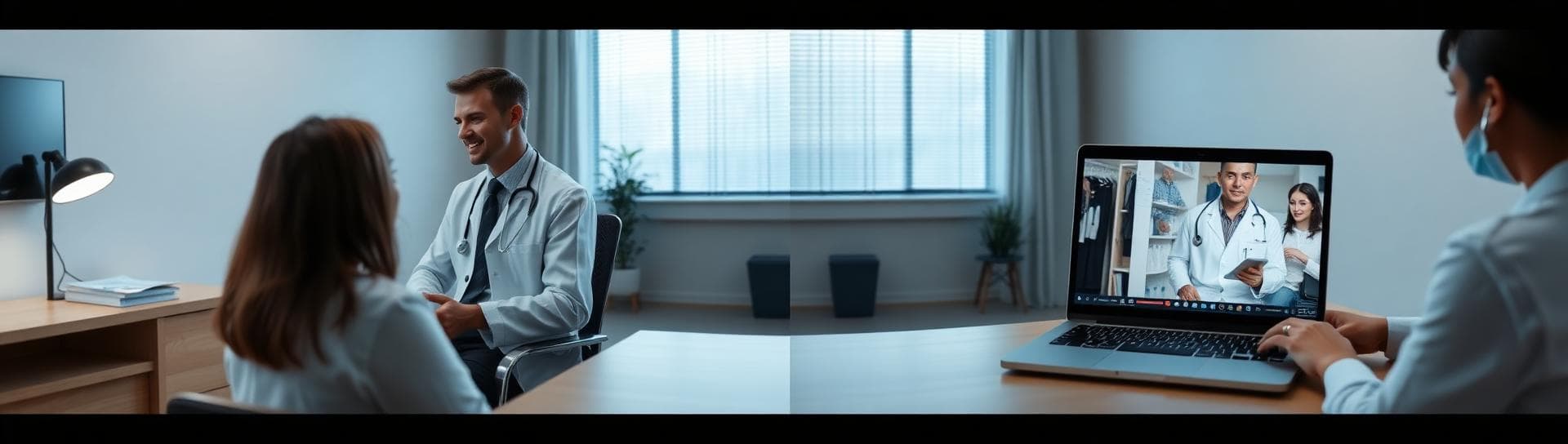
What “good” looks like
A useful visit, video or in person, looks like licensed clinical care. The clinician takes a history, reviews medications and allergies, decides whether an exam or test is needed, and states what they will not manage. Video can be enough when you are stable, the work is follow-up or counseling, and labs already exist or can be drawn locally with a written order.
In-person care is the safer default when the next decision depends on a physical exam, a procedure, or a room that can respond if you become unstable. New chest pain, a neurologic change, unexplained bleeding, a first pelvic or prostate exam, injections, and supervised testing do not belong on a laptop. A lounge visit that skips the exam is not a hybrid model.
State licensure is part of quality. Federation of State Medical Boards telemedicine policy treats your location during the visit as the place of practice. A clinician licensed only elsewhere cannot examine or prescribe for you unless a compact privilege or exception applies. Confirm the license on DocInfo or your state board before you upload records.
Good programs also name emergency backup. If you develop chest pain, a severe drug reaction, or a hypertensive emergency, the answer is emergency services and a hospital, not another coaching slot. A clinic that cannot describe that path is not ready for procedures or high-risk medications, remote or in person.
Credentials and scope to verify
Ask who will see you and which license applies to that encounter. A physician, nurse practitioner, or physician assistant can diagnose and prescribe within state scope. A health coach, nutritionist without a dietetics license, or sales consultant cannot convert a video chat into a medical visit. Sharing a Zoom link does not transfer authority.
Look up the license where you will sit for the visit, not where the brand is headquartered. DocInfo covers many physician licenses. Nurse practitioners and physician assistants have separate state lookups. If the clinic says a medical director in another state “oversees” local coaches, ask what that person actually signs and whether they ever examine you.
Scope includes what the visit is allowed to decide. Counseling on sleep, activity, and food can be remote when you are stable. Starting testosterone, compounding peptides, or clearing you for an infusion requires more than a questionnaire. FDA pages on home-use devices also warn that a shipped gadget is not a supervised test. Ask which decisions require an exam the clinic can actually perform.
Verify how records move. A virtual clinic should send a visit note to your primary-care clinician when you ask, and should receive your medication list before changing therapy. If they refuse coordination, you are buying a parallel plan that your other clinicians cannot see when you are acutely ill.
Questions to ask
Ask for answers you can write down. Vague talk about access or a digital-first lifestyle is not a care model. You are checking licensure, exam limits, and what happens when video is the wrong tool.
- In which state are you licensed for this visit, and what is the license number?
- Which problems require an in-person exam before you will treat or prescribe?
- Where will labs and imaging be done, and who follows abnormal results?
- If I have chest pain, severe bleeding, or a drug reaction, what is the emergency plan?
- Will you send a note to my existing clinicians, and who is on call after hours?
Ask how Medicare or commercial telehealth coverage applies, if at all. CMS describes when telehealth is a covered visit. Many longevity memberships are cash-pay even when a similar counseling visit could be billed by your usual clinician. A lower sticker price that requires a private panel is not automatically a savings.
Ask what the clinic will not do remotely. A usable answer names exams, procedures, and emergencies. An unusable answer is that their platform replaces a physical exam for everyone. If they cannot describe a local partner for phlebotomy or imaging, do that work through your medical home instead.
Red flags
Walk away if the clinician is not licensed in your state and still offers diagnosis, prescriptions, or “protocols.” Interstate practice is regulated. A disclaimer that you accept out-of-state advice as education is often a way to sell product without owning the medical relationship.
Be wary of a questionnaire-only hormone, peptide, or infusion plan. Those decisions need history, medication review, and often an exam or indicated labs. A camera that never turns on, or a visit that lasts ten minutes before a cart appears, is a retail funnel. FDA consumer pages on health fraud flag guaranteed results and one-product-does-it-all claims; the same pattern shows up in virtual longevity ads.
No emergency plan is a hard stop for anything beyond coaching. If staff tell you to message the app for crushing chest pain, or cannot name a hospital, they are not practicing as a clinic. The same is true if they discourage you from keeping a local physician “because we are your doctors now” while having no admitting privileges or after-hours coverage.
Pressure to buy a year of remote access before anyone reviews your records is a sales tactic. So is requiring a wearable or supplement subscription as the price of a medical opinion. You can decline devices. You should not decline a license check.
Cost, time, and logistics
Price a first month, not a slogan. Include the consult, required labs, follow-up, shipping, and any membership that unlocks the clinician. Virtual fees often look smaller until the clinic adds a cash panel your primary-care office could have ordered with a covered visit. Ask what is optional.
Time includes more than the video slot. You still need a draw site, a place to get imaging, and a local clinician for acute illness. A 20-minute remote visit that creates a 40-item to-do list without a coordinator is not convenient. Hybrid intensives add travel; only book those if the on-site day includes an exam or a test that changes management.
Logistics include privacy and connectivity. Use a closed door and a stable connection. Confirm how the platform stores recordings, labs, and photos. If you travel, the state you sit in that day is the state that must license the clinician. Do not join a prescribing visit from a state they do not cover.
Before you pay, write the delivery model you are buying: video only, hybrid with a named exam, or in person. Keep your primary-care clinician for acute and chronic care. Virtual support can extend counseling and stable follow-up. It does not replace an exam, a procedure, or emergency backup.
Frequently Asked Questions
References
FSMB: Telemedicine Key Issues and Policy
https://www.fsmb.org/advocacy/telemedicine/FSMB: Appropriate Use of Telemedicine Technologies in the Practice of Medicine (2022)
https://www.fsmb.org/siteassets/advocacy/policies/fsmb-workgroup-on-telemedicineapril-2022-final.pdfDocInfo physician license lookup
https://www.docinfo.org/Medicare: Telehealth
https://www.medicare.gov/coverage/telehealthFDA: Buying and Using Home-Use Medical Devices Safely
https://www.fda.gov/medical-devices/home-use-devices/buying-and-using-home-use-medical-devices-safely Your Privacy Choices