Who this is for
This guide is for people with diagnosed lymphedema—protein-rich swelling from damaged or missing lymph nodes or vessels—who are choosing therapy. Common settings are cancer surgery or radiation, primary lymphatic disorders, and some trauma. The Centers for Disease Control and Prevention notes that tumors, node-removing surgery, and radiation can all block lymph flow. The National Cancer Institute describes care with a certified lymphedema therapist (CLT) or a physical or occupational therapist trained in the condition.
It is also for people offered a spa “lymphatic detox” because an arm or leg looks puffy. Ordinary puffiness from heat, salt, medication, or inactivity is not automatically lymphedema. CDC tells people with new swelling to see a doctor first and make sure there is no other cause that needs immediate treatment, such as a blood clot. A wellness drainage menu is not that evaluation.
This is not a first stop for fever with a red hot limb, sudden one-sided calf swelling, chest pain, or shortness of breath. Those are infection or clot problems. It is also not a substitute for cancer follow-up if a tumor could be blocking drainage. Pregnant people and children need clinicians who treat those groups, not a cash-pay massage series sold as drainage.
What options clinics actually offer
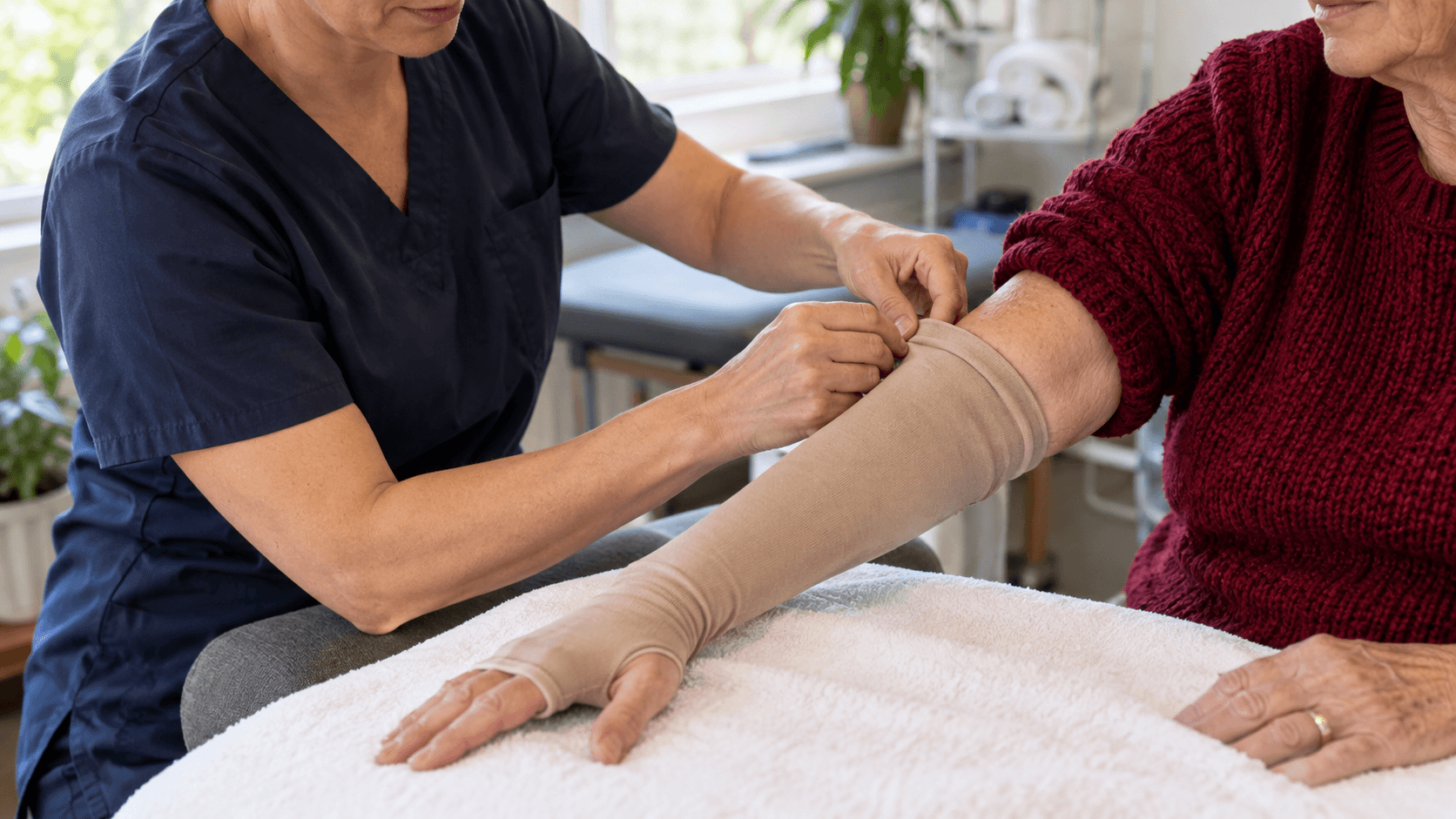
Medical programs offer complete decongestive therapy. The American Cancer Society describes CDT as manual lymphatic drainage, compression, skin care, exercises, and elevation. NCI’s professional summary describes two phases: an intensive reduction phase with daily skin care, exercise, MLD, and compression bandages, then a maintenance phase with garments and MLD as needed. The National Lymphedema Network likewise frames CDT as an intensive clinical phase followed by self-management.
Manual lymphatic drainage is a gentle, sequenced technique—not deep tissue and not a “toxin flush.” A trained therapist may teach self-MLD. Compression includes multilayer short-stretch bandaging in the reduction phase and fitted garments later. Intermittent pneumatic pumps are adjuncts for some people, chosen with a therapist, not a mall kiosk default. Skin care is infection prevention: clean, moisturized skin and prompt attention to small cuts.
Longevity and spa rooms often offer a single “lymphatic drainage” massage, cupping, or a machine wrap and call it detox. That is not CDT. Surgery for selected severe cases exists in specialty centers; CDC mentions operative options when a physician recommends them. Cancer treatment itself is the option when a tumor is the cause. Diuretics are not a standard standalone lymphedema cure and can be the wrong tool if the problem is lymphatic, not simple water retention.
- First-line medical: CDT with a CLT or trained PT/OT, then lifelong compression and skin care.
- Selected: pneumatic compression, intensive bandaging weeks, or surgical referral.
- Not medical lymphedema care: spa detox drainage, essential-oil wraps, or one-off deep massage.
What evidence supports
CDT is the conservative standard because clinical experience and consensus documents support volume reduction and maintenance when compression is continued. NCI states CDT is standard of care for stage II lymphedema, while noting that the optimal exact program is not fully settled. Trials comparing CDT plus garments with garments alone have shown mixed volumetric results; compression remains a cornerstone even when MLD’s added volume effect is modest in some studies.
MLD as a stand-alone spa service has weaker support. A systematic review cited in NCI’s PDQ found mixed volumetric change and some signal for preventing lymphedema after breast-cancer treatment in selected protocols. That is not evidence that a monthly detox massage treats established disease or “cleans lymph.” Exercise, once feared, is now encouraged in many programs when done with guidance and usually with compression on—NLN and NCI both treat movement as part of care, not a hazard by default.
Infection prevention has a clearer rationale than any luxury add-on. CDC explains that lymphedema raises infection risk because immune cells travel poorly through the swollen area, and wounds heal more slowly. Recurrent cellulitis is a reason to tighten skin care and see a physician—not to book a deeper massage on inflamed skin. There is no evidence that lymphatic therapy removes environmental toxins or treats cancer.
When to see a clinician first
See a physician, NP, or PA before therapy if swelling is new, unexplained, rapidly worse, or one-sided after travel or surgery. CDC’s lymphedema page tells people to find out why they have swelling and to exclude causes that need immediate treatment, including a clot. Cellulitis can mimic clot symptoms; CDC’s venous thromboembolism pages note that special tests, not a massage, diagnose DVT.
Seek urgent or emergency care for fever, spreading redness, severe pain, sudden limb swelling, chest pain, coughing blood, or fainting. Do not put a therapist’s hands or a pump on a limb that might be infected or clotted. After cancer treatment, new swelling also needs the oncology or primary-care team to consider recurrence or treatment effects before you buy a package.
Get licensed clearance if you have open wounds, unstable congestive heart failure, acute infection, or a known DVT. Compression and MLD change fluid shifts; they are not harmless spa extras in those settings. If you already have a CLT and a garment, do not let a wellness clinic replace that plan with essential oils and no measurements.
How to judge progress
Judge the program the way lymphedema clinics do: repeated limb measurements, photographs or volume when used, infection counts, garment fit, and what you can do with the limb. ACS and NCI are clear that lymphedema is managed, not cured. A temporary softer feel after one massage that rebounds by evening is not a treatment response.
In the intensive phase, expect frequent visits—often weekdays for a period of days to weeks—then a shift to garments you can don correctly. If you cannot get a proper garment, or you skip compression, volume usually returns. That is a logistics and skill problem to solve with the therapist, not a reason to add unproven detox visits.
Set a stop rule for spa add-ons. Keep CDT elements that a CLT can defend. Drop “drainage” that has no measurements, no compression plan, and no infection teaching. Return to a physician if swelling climbs, skin thickens or weeps, or fever appears. Medical lymphatic therapy is a long-term self-management program. It is not a detox membership.
Frequently Asked Questions
References
NCI: Lymphedema and Cancer
https://www.cancer.gov/about-cancer/treatment/side-effects/lymphedemaNCI PDQ: Lymphedema (Health Professional)
https://www.cancer.gov/about-cancer/treatment/side-effects/lymphedema/lymphedema-hp-pdqAmerican Cancer Society: Lymphedema
https://www.cancer.org/cancer/managing-cancer/side-effects/swelling/lymphedema.htmlNational Lymphedema Network: Lymphedema Therapy
https://lymphnet.org/lymphedema-therapyCDC: Lymphedema for Cancer Survivors
https://www.cdc.gov/cancer-survivors/patients/lymphedema.html Your Privacy Choices