Who this is for
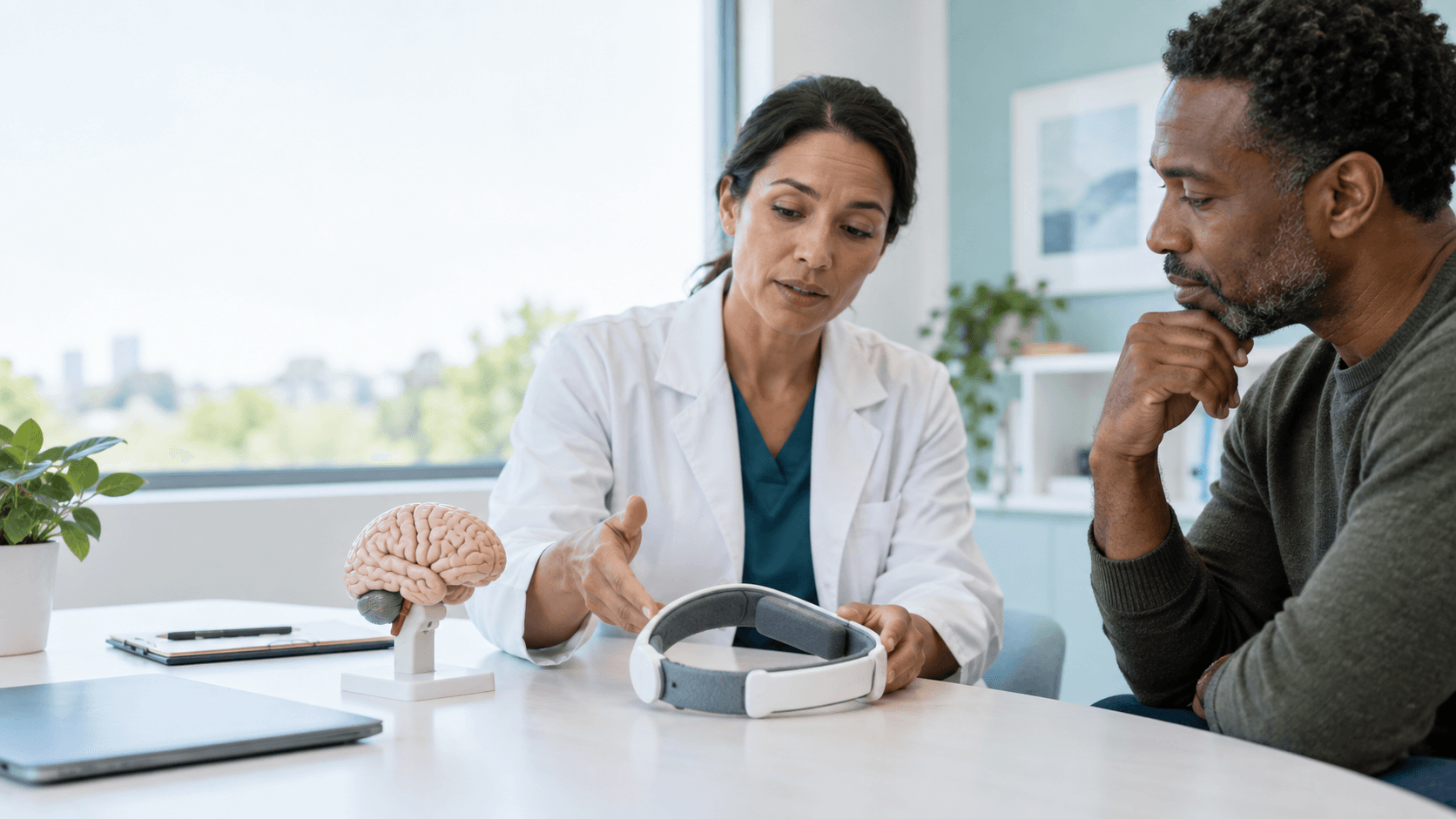
This guide is for people considering a longevity or performance clinic because they want sharper focus, a better memory score, or “brain optimization,” and have been offered transcranial direct current stimulation, neurofeedback, cranial electrotherapy, or a bundled neuromodulation package. Feeling mentally tired is common. It is not a diagnosis, and it is not proof that you need electrical stimulation.
It is also for families who were told a headset could treat or slow dementia. NIA clinician materials list many causes of cognitive change, including medicine effects, metabolic and endocrine problems, depression, infection-related delirium, and neurodegenerative disease. Some of those improve when the cause is treated. A device menu does not sort them.
This is not written for people with sudden neurologic change. Sudden confusion, one-sided weakness, trouble speaking, or a thunderclap headache needs emergency evaluation. It is also not a substitute for licensed psychiatric care if the real problem is depression, mania, or psychosis dressed up as brain fog.
If you want help with sleep, hearing, blood pressure, activity, or alcohol, say that plainly. Those are ordinary clinical targets with a stronger evidence base than consumer enhancement devices. You do not need a neuro-optimization brand to work on them.
What options clinics actually offer
Some clinics offer FDA-cleared TMS under a psychiatric or neurologic protocol for a labeled indication such as major depression. That visit should look like specialty care: diagnosis, consent, seizure-risk screening, and a defined course. Using the same chair to sell cognitive enhancement to healthy adults is a different, usually off-label, claim.
Many cash programs sell consumer tDCS, CES, photobiomodulation headsets, or neurofeedback packages as optimization. FDA’s general-wellness guidance says a neurostimulation product that claims to improve memory is not a low-risk wellness product. If a clinic uses wellness language to avoid talking about device class, ask for the indication in writing.
Better clinics start with a medical history, medicines, mood, sleep, hearing, and vascular risk. They may use a validated cognitive screen and refer to neurology, geriatrics, or neuropsychology when scores or function change. They do not treat a single brain-training app score as a diagnosis.
You can request a problem list and decline the headset. Ask who follows abnormal labs, who manages driving or medication safety if impairment is confirmed, and how the clinic would respond to sudden decline. If the only next step is another session pack, keep a physician, nurse practitioner, or physician assistant in charge.
What evidence supports
AAN guidance on mild cognitive impairment asks clinicians to use validated tools when screening is appropriate, look for modifiable contributors, assess function, and monitor cognition over time. It discusses the lack of highly effective medicines to reverse MCI. It does not recommend a consumer stimulator as standard treatment. That is the clinical frame, not a spa protocol.
NIA assessment pages emphasize that cognitive complaints deserve a differential diagnosis. Depression can mimic dementia. Sleep apnea, thyroid disease, B12 deficiency, and medicine burden can worsen attention. Treating those problems is medical care. It is not “optimization,” and it does not require a tDCS lease.
NIMH describes brain-stimulation therapies such as ECT, rTMS, and implanted vagus-nerve stimulation as treatments for mental disorders under clinical protocols. Those pages are not an endorsement of mail-order enhancement. NIMH has also hosted scientific discussion of neurofeedback as an intervention still being developed, which is a research status, not a retail guarantee.
Small laboratory studies of tDCS on lab tasks do not establish that a home kit prevents Alzheimer disease or raises workplace performance. If a trial exists, it should appear on ClinicalTrials.gov with inclusion criteria and a sham comparison. Marketing before that work is finished is advertising. It is not a reason to skip a workup.
When to see a clinician first
See a licensed clinician first if you or a family member notices repeating questions, getting lost, money or medication errors, personality change, or a drop in work performance. NIA materials treat those reports as a reason to assess early. Do not wait for a longevity package to decide whether the change is real.
Seek emergency care for sudden confusion, one-sided weakness, trouble speaking or seeing, sudden severe headache, or a rapid change with fever. NINDS stroke pages tell bystanders to call 9-1-1. Home stimulation during those symptoms wastes time.
Get medical review before any electrical or magnetic protocol if you have a seizure history, implanted devices, metal in the head, unstable heart disease, or untreated major depression. Those are safety questions. A technician who never asks them is not practicing neurology.
If the concern is mood, suicidal thinking, or inability to care for yourself, that is psychiatric and medical care, not a focus headset. Call emergency services or 988 if you are in immediate danger. Enhancement language should not reframe a crisis as a performance gap.
How to judge progress
If the goal is everyday function, define it in words you already use: remembering medicines, finishing a work task, driving safely, or following a conversation. Repeat a clinician-chosen screen on a sensible interval. A rising wellness-app score with new missed bills is not improvement.
If a clinic starts stimulation anyway, demand a time-limited trial, a written indication, and a stop rule. Ask what would make them refer to neurology or stop the device. “More sessions” is not a plan. Neither is a proprietary brain age that only the vendor can interpret.
Watch for substitution. A program that delays evaluation of sleep apnea, depression, or polypharmacy while selling neurofeedback is not protecting cognition. AAN monitoring advice is serial clinical assessment, not an open-ended gadget subscription.
Reassess after a few weeks of ordinary care: sleep, hearing, blood pressure, alcohol, and a medication review. If thinking is still changing, ask for specialty referral. Leave if staff promise to reverse dementia, treat decline as a device problem, or tell you a consumer headset replaces a neurologic exam.
Frequently Asked Questions
References
FDA: General Wellness Policy for Low Risk Devices
https://www.fda.gov/regulatory-information/search-fda-guidance-documents/general-wellness-policy-low-risk-devicesNIA: Assessing Cognitive Impairment in Older Patients
https://www.nia.nih.gov/health/health-care-professionals-information/assessing-cognitive-impairment-older-patientsAAN: Practice Guideline Update — Mild Cognitive Impairment
https://www.aan.com/Guidelines/home/GuidelineDetail/881AAN: Diagnosis of Dementia
https://www.aan.com/Guidelines/home/GuidelineDetail/42PMC: AAN Mild Cognitive Impairment Guideline (2018)
https://pmc.ncbi.nlm.nih.gov/articles/PMC5772157/ Your Privacy Choices