Who this is for
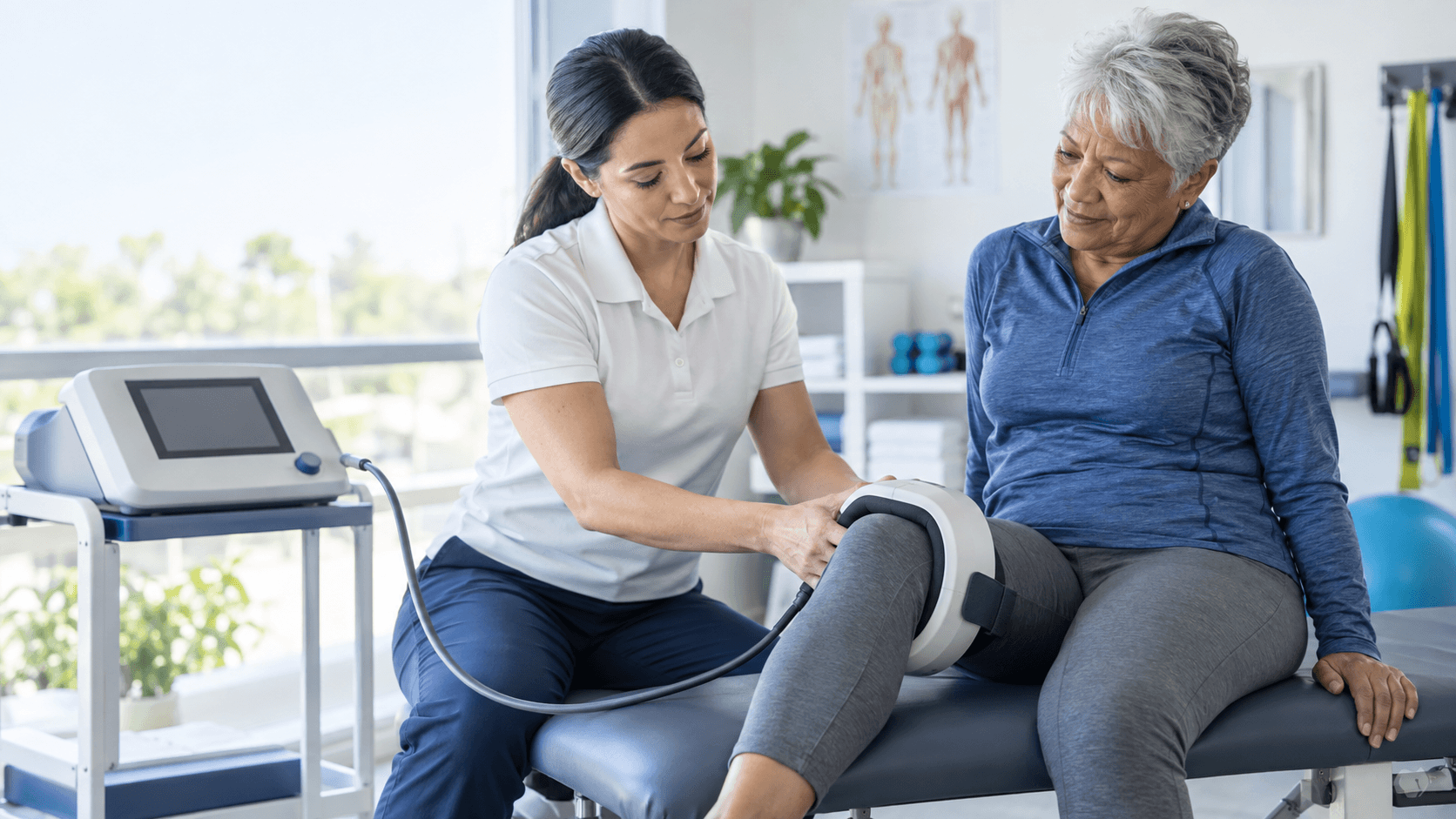
This guide is for adults who already have osteoarthritis, or who are being evaluated for it, and who have been offered pulsed electromagnetic field therapy for joint pain. The offer may be a shared clinic mat, a home device, or a membership that stacks PEMF with other recovery services. The useful question is whether PEMF is a time-limited adjunct to a licensed plan, not whether a brochure says cellular energy.
It is not a first-stop page for a joint that is hot, red, suddenly swollen, or painful after a fall or twist. Those patterns can mark infection, crystal arthritis, fracture, or a ligament injury. Fever with joint pain is also a reason to seek care the same day. A device session cannot sort those problems.
You may be a reasonable person to discuss PEMF after a physician, nurse practitioner, physician assistant, or physical therapist has confirmed osteoarthritis, reviewed activity and weight goals, and offered indicated medicines or injections when appropriate. Implanted electronics, pregnancy, and a joint that has never been examined change that conversation.
This is not written for people seeking cartilage regrowth, a guaranteed pain-free month, or a way to skip joint-replacement counseling. Marketing and a clinical adjunct are different questions. A longevity menu that lists PEMF next to infusions does not replace osteoarthritis care.
What options clinics actually offer
Orthopedic and rheumatology clinics usually start with what NIAMS and AAOS materials already emphasize: an exam, sometimes imaging, exercise that the joint can tolerate, weight management when extra mass loads the joint, physical therapy, and medicines such as topical or oral anti-inflammatories when they are appropriate for you. Braces, canes, and activity changes are ordinary tools. Those steps are the plan. Devices sit beside them, if at all.
Longevity and recovery studios more often sell PEMF beds, chairs, or mats as cash-pay sessions. Staff may describe relaxation, circulation, or inflammation language. Ask which manufacturer and model you will use, whether the product is a medical device, and what intended use is on the label. A wellness mat is not a prescription bone-growth stimulator, and neither product rebuilds a worn joint surface.
Some orthopedic practices prescribe a labeled bone-growth stimulator after a defined fracture or fusion problem. That is a different indication from knee or hip osteoarthritis pain. Do not assume the physics transfer. If the clinic cannot name the indication, you are hearing a service menu, not a matched device.
You can decline PEMF and still request a written osteoarthritis plan: therapy visits, a home program, a medicine trial, and a date to reassess function. A site that only sells sessions, or that treats every client with the same preset, is not offering individualized joint care. Keep your existing clinician in the loop if you add a device course.
What evidence supports
NIAMS describes osteoarthritis as breakdown of cartilage and other joint tissues, with pain, stiffness, and reduced motion. Treatment goals are symptom control and function, not a promise to reverse the disease. Exercise, weight change when relevant, and medicines have a clearer place in that framework than an unlabeled mat series.
Published PEMF trials in knee osteoarthritis are mixed. Protocols differ in waveform, field strength, coil placement, session length, and course. Some reports describe short-term changes in pain scores. Others find little clinically important difference. Heterogeneous devices cannot be pooled into one wellness claim. Evidence for one prescription stimulator does not validate a spa bed.
FDA 510(k) clearance means a device was found substantially equivalent to a predicate for a stated intended use. It is not a finding that every later advertisement treats osteoarthritis. Ask for the indication-for-use sentence and compare it with the website headline. Uses that are not on that sentence were not the cleared indication.
No PEMF product has been shown to restore lost cartilage, fix malalignment, or make joint-replacement decisions unnecessary. CDC arthritis pages still put diagnosis, activity, and medical follow-up at the center. Judge a trial by walking tolerance, stair use, sleep, and medicine use—not by a falling “inflammation score” on a clinic tablet.
When to see a clinician first
See a licensed clinician before booking PEMF if the joint has never been diagnosed, symptoms are new after age-related change in pattern, or you have a history of cancer, immune suppression, or unexplained weight loss. Those are evaluation problems. A magnetic session cannot rule out inflammatory arthritis, infection, or tumor.
Seek urgent or emergency care for a hot, swollen joint, fever, severe pain after trauma, sudden inability to bear weight, or a joint that is locked after injury. Those patterns are not “flare-ups” to treat with a mat. Infection and fracture windows matter more than a prepaid package.
Do not start PEMF if you have a pacemaker, implanted defibrillator, some other electronic implants, or pregnancy unless the prescribing clinician and the specific device labeling say the exposure is appropriate. “It is only a magnet” is not a safety review. If intake never asks about implants, the visit is not a medical screening.
If osteoarthritis is already diagnosed and function is declining despite therapy and indicated medicines, ask for an orthopedic or rheumatology review rather than another device add-on. NIAMS joint-replacement pages place surgery after other treatments fail to restore daily activity—not after a wellness course is exhausted. Bring a medication list and a simple activity diary.
How to judge progress
Write a baseline before the first session: average pain, walking minutes, stair difficulty, and how often you use rescue medicine. Reassess after a defined number of weeks, not after one comfortable visit. If those measures do not move, the course has not earned an extension, even if the session felt relaxing.
Keep PEMF in the adjunct column. Continue the exercise or therapy program you were given. Stopping physical therapy because a mat is easier is a substitution, not a plan. Weight-management and medicine decisions still belong with the clinician who knows your other conditions.
Stop and contact your clinician if swelling, redness, fever, or night pain worsen, or if you need more pain medicine. New locking, giving way, or trauma during the course needs an exam, not a setting change. Device staff should not be the people who tell you to ignore a hot joint.
A useful trial is time-limited, paid as a short block, and coordinated with your existing care. If staff promise cartilage repair, treat fever as a contraindication they never asked about, or refuse to share notes with your clinician, end the package. Keep diagnosis and surgical timing with licensed musculoskeletal care.
Frequently Asked Questions
References
NIAMS: Osteoarthritis
https://www.niams.nih.gov/health-topics/osteoarthritisNIAMS: Osteoarthritis Diagnosis, Treatment, and Steps to Take
https://www.niams.nih.gov/health-topics/osteoarthritis/diagnosis-treatment-and-steps-to-takeNIAMS: Joint Replacement Surgery
https://www.niams.nih.gov/community-outreach-initiative/understanding-joint-health/joint-replacement-surgeryAAOS OrthoInfo: Osteoarthritis
https://orthoinfo.aaos.org/en/diseases--conditions/osteoarthritis/FDA: Premarket Notification 510(k)
https://www.fda.gov/medical-devices/premarket-submissions-selecting-and-preparing-correct-submission/premarket-notification-510k Your Privacy Choices