Who this is for
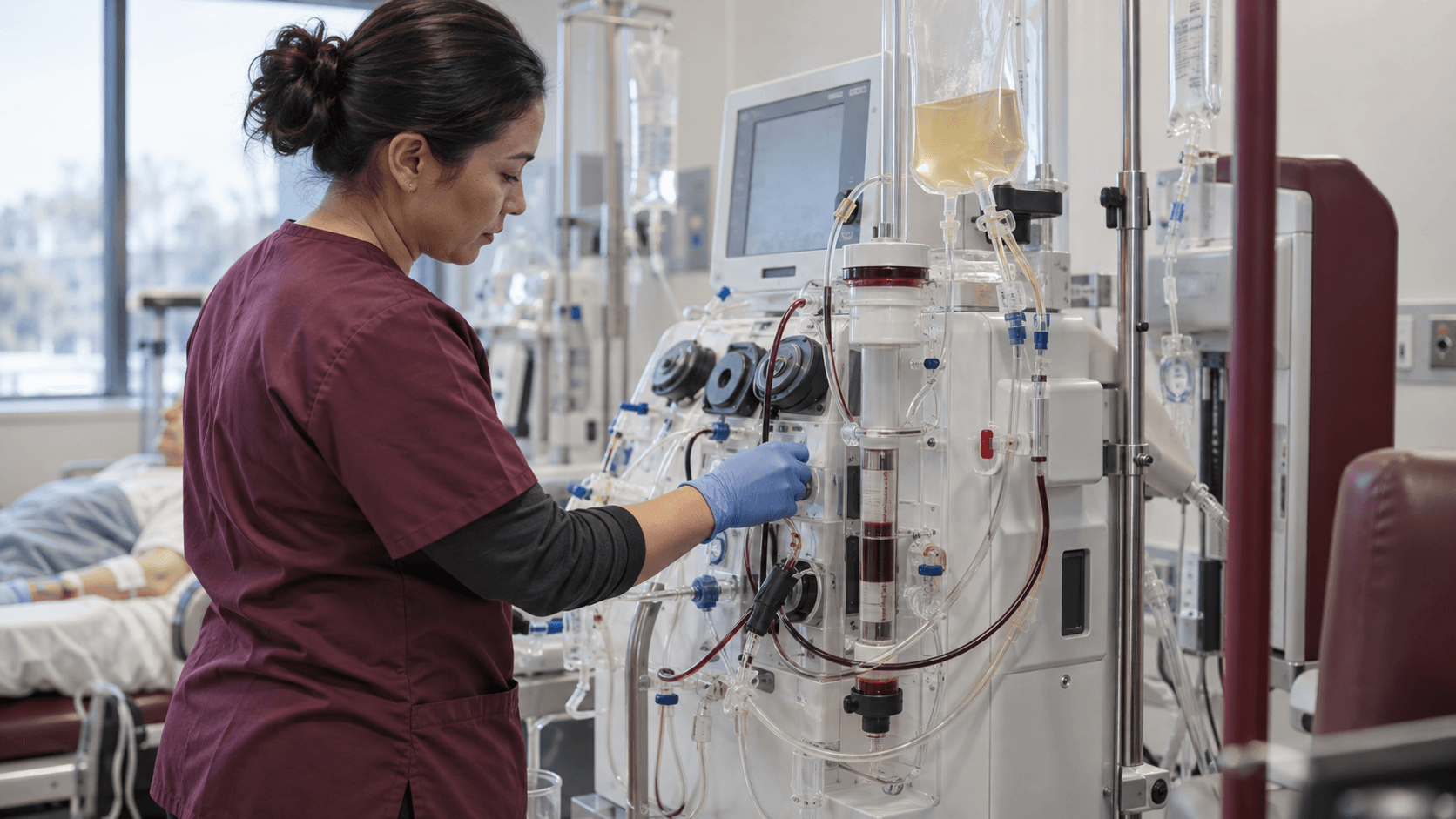
Therapeutic plasma exchange (TPE) for thrombotic thrombocytopenic purpura (TTP) and symptomatic hyperviscosity is emergency or hospital specialty care. It is not a wellness visit, a longevity add-on, or a “blood cleaning” appointment. The National Heart, Lung, and Blood Institute (NHLBI) describes acquired TTP as a life-threatening platelet disorder treated in the hospital. Daily TPE replaces plasma, removes antibodies that damage ADAMTS13, and supplies missing enzyme activity until organ injury eases, the platelet count stabilizes, and red-cell damage stops.
Hyperviscosity from a circulating paraprotein—most often IgM in Waldenström macroglobulinemia—is a hematology emergency when vision changes, mucosal bleeding, severe headache, confusion, or coma appear. TPE can drop viscosity quickly while clone-directed therapy starts. That pathway is not the same as boutique plasma exchange sold for aging.
This page is for patients, families, and referring clinicians facing suspected TTP or hyperviscosity, or who have been told a longevity clinic offers “the same procedure.” It is not a treatment protocol. A hematologist, intensivist, or apheresis physician directs medical TPE. Licensed nurses and trained apheresis staff run the machine under that order.
- TTP: hospital TPE with donor plasma, often plus immunosuppression and, when indicated, caplacizumab.
- Hyperviscosity: urgent TPE, usually albumin replacement, plus disease-directed therapy.
- Not this indication: healthy aging, fatigue, or a preventive “plasma reset” without those diseases.
What options clinics actually offer
Medical TPE is performed in hospitals, transfusion-medicine units, and selected centers with apheresis privileges, blood-bank support, and after-hours coverage. NHLBI states plasma treatments for TTP occur in a hospital. You should expect vascular access (often a central line), citrate anticoagulation, vital-sign monitoring, and a plan for hypocalcemia, hypotension, circuit clotting, and catheter infection.
For acquired TTP, replacement fluid is donor plasma, not albumin alone, because the goal is to supply ADAMTS13 and remove inhibitors. The FDA discusses caplacizumab as an adjunct with plasma exchange and immunosuppression, not as a substitute for TPE. Congenital TTP is managed differently (plasma infusion or recombinant ADAMTS13). Labeling a cash-pay visit “plasma exchange” without a diagnosis is unsafe.
For symptomatic hyperviscosity, many services replace with 5% albumin. Reviews note that IgM is largely intravascular, so one or two exchanges often ease symptoms while chemotherapy or targeted therapy starts. Transfusing red cells before viscosity falls can worsen flow. Longevity menus that list TPE next to IV vitamins do not reproduce this pathway: they typically lack ADAMTS13 turnaround, plasma inventory, ICU backup, and American Society for Apheresis (ASFA) indication review.
ASFA publishes evidence-based categories for therapeutic apheresis. TTP and hyperviscosity sit in that medical framework. Wellness longevity is not an ASFA indication. If a clinic cannot name the indication, the replacement fluid, and the covering physician, it is not offering emergency TPE.
What evidence supports
Acquired TTP mortality fell after TPE became standard. NHLBI patient pages describe daily TPE until organ problems resolve, platelets stabilize, and hemolysis stops, with caplacizumab used along with exchange. FDA materials on caplacizumab likewise frame the drug with plasma exchange and immunosuppression, not as stand-alone wellness care. Pathogen-reduced plasma products have FDA labeling that includes TPE in TTP, which underscores that this is a blood-product procedure, not a spa service.
Hyperviscosity management is supported by long clinical experience and ASFA categorization as first-line care for symptomatic disease, even without large randomized trials. A PMC review of paraprotein hyperviscosity explains that TPE removes IgM and other large proteins, that a single exchange can lower viscosity on the order of 20–30%, and that concurrent clone-directed therapy is required so the protein does not rebound.
What the evidence does not support is using TTP-style or hyperviscosity-style TPE as a proven aging treatment. Animal plasma-dilution studies and small human biomarker trials are a different question. They do not authorize delaying TTP care, substituting albumin for plasma in TTP, or selling emergency apheresis as a membership perk. Infection, catheter thrombosis, citrate-related hypocalcemia, allergic reactions to plasma, and transfusion-related lung injury are documented procedure harms.
When to see a clinician first
Go to emergency care for confusion, stroke-like symptoms, seizures, severe headache, vision loss, unexplained bruising or bleeding, dark urine, jaundice, fever with a low platelet count, or a known high IgM with mucosal bleeding. Do not book a longevity consult first. TTP can worsen over hours. Hyperviscosity can threaten sight.
Call the treating hematologist or oncologist the same day if you have Waldenström or another paraprotein disorder and new neurologic or visual symptoms. Rituximab can cause an IgM flare; teams sometimes exchange before that drug when IgM is very high. That decision belongs to oncology, not a cash-pay TPE menu.
If a wellness clinic offers “the TPE used for TTP” to a well person, ask which ASFA indication applies and who manages anaphylaxis, line sepsis, and circuit clotting after hours. If the answer is a salesperson, walk away. People with unstable cardiac disease, severe liver failure, or untreated active infection need a hospital risk assessment before any extracorporeal circuit.
How to judge progress
In TTP, progress is clinical and laboratory: rising platelet count, falling LDH, less hemolysis, improving neurologic status, and later ADAMTS13 recovery. NHLBI describes continuing daily exchange until organ problems have gone, platelets are stable, and red-cell damage has stopped. Relapse surveillance stays with hematology. A “younger” epigenetic clock is not a TTP endpoint.
In hyperviscosity, judge vision, headache, bleeding, and measured viscosity or IgM, plus start of disease-directed therapy. One or two procedures may suffice for IgM-related symptoms; IgG paraproteins may need a short series because more of the protein sits outside vessels. If symptoms return, that is a disease problem, not a missed longevity interval.
After any TPE, watch the access site for redness, pus, swelling, or arm pain (clot), and report perioral tingling, muscle cramps, or chest discomfort during the run (hypocalcemia or citrate effect). Fever after a line should prompt urgent evaluation for infection. Costly elective series in people without TTP or hyperviscosity should not be scored as success because a biomarker moved. Those diseases are treated when the emergency is over and the underlying clone or inhibitor is managed—not when a membership renews.
Frequently Asked Questions
References
NHLBI: Thrombotic Thrombocytopenic Purpura (TTP)
https://www.nhlbi.nih.gov/health/thrombotic-thrombocytopenic-purpuraFDA: Approval of caplacizumab for acquired TTP with plasma exchange
https://www.fda.gov/drugs/resources-information-approved-drugs/fda-disco-fda-approval-cablivi-acquired-thrombotic-thrombocytopenic-purpuraFDA: INTERCEPT Blood System for Plasma, including TPE in TTP
https://www.fda.gov/vaccines-blood-biologics/approved-blood-products/intercept-blood-system-plasmaASFA: JCA Special Issue 9th Edition (therapeutic apheresis guidelines)
https://www.apheresis.org/news/647089/JCA-Special-Issue-9th-Edition-Now-Available.htmPMC: Hyperviscosity syndrome in paraprotein-secreting conditions
https://pmc.ncbi.nlm.nih.gov/articles/PMC7248405/ Your Privacy Choices