Who this is for
This page is for people considering ice, cold packs, or a clinic cold session after a sprain, strain, bruise, or an operation. It assumes you already have, or will promptly get, a licensed clinician: a surgeon, physician, nurse practitioner, physician assistant, or physical therapist who owns the protocol. It is not a do-it-yourself surgery guide and it does not promise faster healing from colder temperatures.
Cold can be a reasonable adjunct when the skin is intact or the team has approved a barrier over a closed incision, sensation is present, and the goal is short-term comfort or swelling control. NIAMS describes ice as part of home care for many minor sports injuries. After surgery, that default may be shortened, delayed, or forbidden around grafts, nerves, or flaps.
It is not for unexplained severe pain, a deformed joint, inability to bear weight, or a wound that is opening. Those need examination first. It is also not for people with numb feet, poorly controlled diabetes, or known arterial disease unless the clinician writes how to protect the skin. A longevity cold plunge is a poor match for a fresh postoperative week.
Family members helping an older adult should treat unsupervised ice machines and plunges as fall and burn-or-frostbite risks. If the patient cannot report numbness, someone else must watch the clock and the skin.
What options clinics actually offer
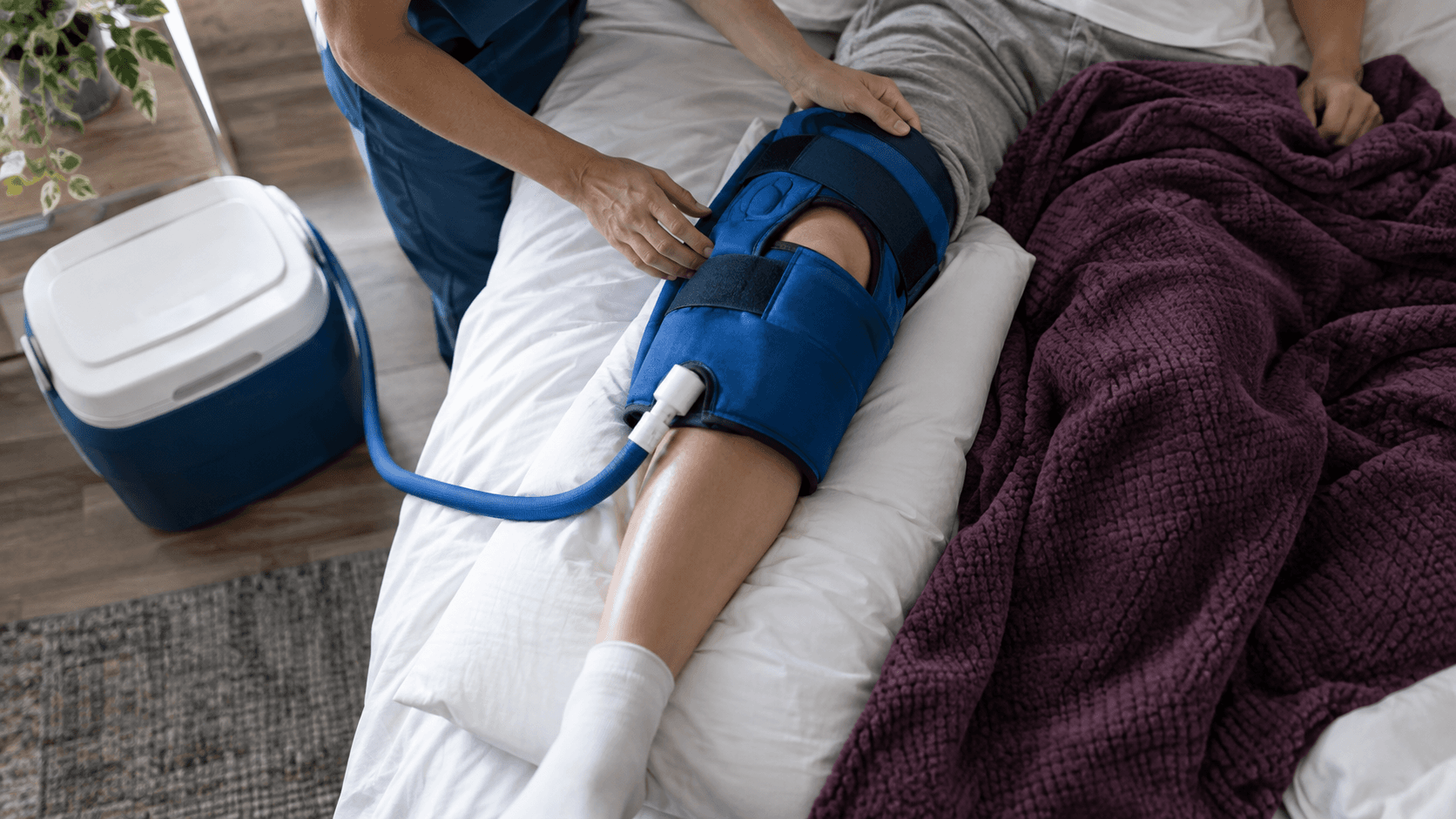
Orthopedic and physical-therapy clinics typically offer a wrapped gel pack, crushed ice, or a prescribed cold-compression unit with a time limit. Sports-medicine offices may add education on elevation and protected movement. That is ordinary care. The device is less important than who set the on/off times and who you call if swelling spikes overnight.
Longevity and recovery studios may offer walk-in plunges, cryotherapy chambers, or contrast circuits. Those are optional extras. They rarely have your operative note, your anticoagulant plan, or your incision photos. If they cannot coordinate with the surgeon, they should not be your first stop in the first weeks after an operation.
Home options are the same tools NIAMS and MedlinePlus describe: ice wrapped in a cloth, limited minutes, repeated through the day if advised. Elevation and compression, when prescribed, often matter as much as temperature. Buying a more expensive cooler does not replace those steps.
- Prescribed pack or cold-compression sleeve from the surgical or PT team
- Home ice with a barrier and a written time limit
- Clinic plunge or chamber only if the operating or rehab team agrees
What evidence supports
NIAMS supports short ice applications for many minor sports injuries as part of R-I-C-E, and it warns against heat in the immediate period because heat can increase swelling. MedlinePlus gives similar first-days ice advice for muscle strain. Those sources support cold as early comfort care, not as a disease-modifying therapy.
PRICE (protection, rest, ice, compression, elevation) is a teaching extension of that first-aid idea. PEACE and LOVE is a later sports-medicine phrase that keeps early protection and then emphasizes education, loading, and optimism. Clinics use these acronyms to remind people that rest is not forever and that ice is only one line. They are frameworks, not outcome guarantees.
After surgery, evidence is protocol-specific. Some teams use cold-compression for comfort after joint replacement; others limit ice around nerve blocks because you cannot feel a freeze injury. There is no single longevity protocol that applies to every incision. If a studio cites a chamber study in athletes as proof it is right for your operation, that is a category error.
What evidence does not support is using cold to hide infection, to treat a blood clot, or to skip prescribed movement. CDC materials on surgical-site infection emphasize wound watching and medical review, not colder air. NHLBI materials on venous clots emphasize recognition of limb swelling and chest symptoms, not ice.
When to see a clinician first
See a clinician before you start any cold routine if the injury is severe, the joint looks wrong, you heard a pop and cannot walk, or you have numbness that was not explained. After surgery, use the on-call number you were given for fever, spreading redness, foul drainage, or a wound that opens. CDC describes surgical-site infection as a reason for prompt medical care, not home experimentation.
Do not ice and wait on calf swelling, tightness, or pain that is different from the expected postoperative ache, especially with chest pain or shortness of breath. NHLBI treats those as possible venous thromboembolism and lists chest pain and trouble breathing among heart-attack warning symptoms. A pack on the knee does not treat a clot in the lung.
People with arterial disease, Raynaud phenomenon, or neuropathy should get clearance before any plunge or long ice session. Children and anyone with a nerve block need a responsible adult watching the skin. If you take anticoagulants, ask whether bruising under a tight cold wrap is acceptable.
If a recovery clinic will not read your discharge instructions or will not defer to the surgeon, leave. Scope mismatch is a safety issue, not a difference of wellness philosophy.
How to judge progress
Judge the days after injury or surgery by function and by the team’s milestones: pain you can sleep through with the prescribed plan, swelling that trends down, and the ability to complete the assigned exercises. A colder session that leaves you too stiff to do physical therapy is a failure, even if it felt intense.
Set a review point before you buy a package. Forty-eight to 72 hours after a simple sprain, you should know whether you can bear weight as advised. After surgery, use the scheduled postoperative visit, not a plunge attendance card. If pain or swelling worsens while you ice, stop and call.
Track red flags in writing so family members know them: fever, spreading redness, calf swelling, chest pain, sudden breathlessness, or a wound change. Those override any recovery membership. Licensed clinicians adjust the protocol; spa staff should not.
When the acute phase is over, the useful extra is usually guided loading, not a colder brand of ice. Ask the physical therapist when to taper cold and when stiffness means gentle heat or movement instead. Progress is return of use, not loyalty to a temperature.
Frequently Asked Questions
References
NIAMS: Sports Injuries — Diagnosis, Treatment, and Steps to Take
https://www.niams.nih.gov/health-topics/sports-injuries/diagnosis-treatment-and-steps-to-takeMedlinePlus: Muscle Strain Treatment
https://medlineplus.gov/ency/article/002116.htmNHLBI: Venous Thromboembolism
https://www.nhlbi.nih.gov/health/venous-thromboembolismCDC: Surgical Site Infection Basics
https://www.cdc.gov/surgical-site-infections/about/index.htmlNHLBI: Heart Attack Symptoms
https://www.nhlbi.nih.gov/health/heart-attack/symptoms Your Privacy Choices