Who this is for
This guide is for adults using a cold plunge, ice bath, or cryotherapy session to bounce back from training. Recovery is several jobs at once: less soreness, restored power, better sleep, and long-term adaptation. Cold can help one of those and get in the way of another.
It is also for lifters who were told to plunge after every session. A PMC meta-analysis of postexercise cold-water immersion and hypertrophy found that routine immersion after resistance training may modestly blunt muscle growth. If hypertrophy is the goal, timing matters more than the brand of tub.
This is not a first stop for a deformed joint, inability to bear weight, head injury, chest pain, or a swollen calf. NIAMS sports-injury pages send those problems to evaluation. Cold can numb a fracture or a tendon tear long enough to make it worse. Call emergency services for collapse, confusion, or suspected heart symptoms after a plunge.
People with coronary disease, uncontrolled hypertension, Raynaud phenomenon, cold urticaria, or neuropathy need a clinician’s clearance before elective immersion. AHA pages on cold weather treat sudden cold as a cardiovascular stress. FDA consumer pages warn that some cold devices injure skin when left on too long, and that whole-body cryotherapy has unconfirmed benefits and extra hazards.
What options clinics actually offer
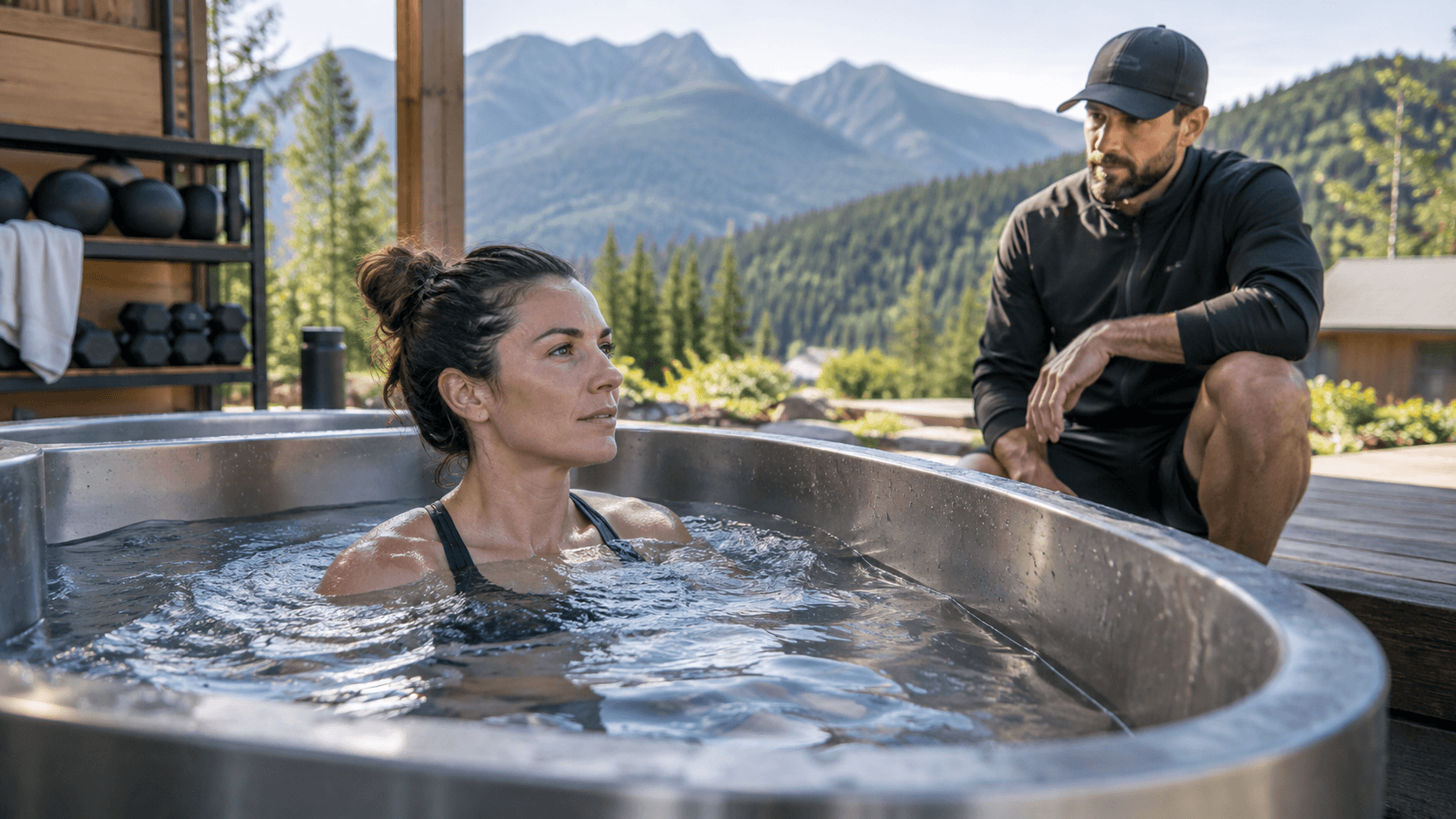
The common offer is cold-water immersion: a plunge pool or tub, often 5 to 15 minutes at roughly 10 to 15°C in research, though gyms run colder. Dose includes depth and whether the water is still. Colder is not automatically better. A towel, a clock, and a way out are part of the product.
Clinics also sell whole-body cryotherapy chambers, local ice or circulating-cold wraps, and contrast sessions. FDA distinguishes circulating hot/cold devices—which can cause serious cold injury if misused—from whole-body chambers, whose healing claims remain unconfirmed. A chamber is not a more medical version of an ice bag.
Better recovery options sit next to the tub whether the menu lists them or not: sleep coaching, training-load changes, protein-adequate meals, and physical therapy for a real injury. NIAMS describes rest, ice, compression, and elevation as short first aid for some minor injuries, then points to rehabilitation. A longevity studio that only sells minutes in water is missing the larger plan.
Ask what outcome they are targeting this week: a tournament tomorrow, or muscle size next season. The same plunge can be reasonable for the first and poorly timed for the second.
- More studied for soreness: brief cold-water immersion after unusually hard endurance or mixed sessions.
- Use sparingly after hypertrophy work: skip or delay immediate post-lift immersion if size is the priority.
- Not required: chambers, contrast stacks, or daily plunges for general fitness.
What evidence supports
Systematic reviews generally support cold-water immersion for reducing delayed-onset muscle soreness and improving perceived recovery after strenuous exercise. That can matter during congested calendars. Effects on objective next-day strength and power are smaller and less consistent. Feeling numb is not the same as restored muscle function.
The hypertrophy tradeoff is the main caution for lifters. The PMC meta-analysis on postexercise immersion and resistance-training hypertrophy reports a modest negative effect versus training without cold. Mechanisms discussed in that literature include blunted blood flow and anabolic signaling when cooling happens immediately after lifting. One recovery plunge after a meet is not the same as a ritual after every squat session.
Whole-body cryotherapy has less mature evidence for recovery and no FDA clearance to treat medical conditions. It should not be assumed equivalent to water immersion. Local ice remains a short, wrapped option for a new sprain or strain when NIAMS-style first aid applies and the skin can sense temperature.
Sleep and load have larger day-to-day effects for most recreational athletes. A well-timed rest day and eight hours in bed will usually beat an extra chamber visit. Protein intake after resistance training supports adaptation; a plunge does not replace it. Evidence does not support cold as a longevity drug.
When to see a clinician first
See a physician, NP, PA, or physical therapist before you build a cold habit if pain is focal and worsening, you cannot complete a warm-up, or swelling is out of proportion to training. Those need a diagnosis. NIAMS notes that some sports injuries require imaging and a rehab plan before return to sport.
Get medical clearance before plunges or chambers if you have heart disease, a pacemaker question, uncontrolled blood pressure, fainting, pregnancy, or a known cold sensitivity. AHA’s cold-stress message is enough reason not to self-test toughness. CDC winter-safety pages treat hypothermia as an emergency, including after unexpected water exposure.
Seek urgent care for chest pain, severe shortness of breath, confusion, or skin that stays white, waxy, or blistered after cold. FDA has received reports of serious local cold injury from devices left on too long. Do not treat those as delayed-onset soreness.
If you are cutting weight, dehydrated, or using alcohol, skip elective cold. Those states raise arrhythmia and hypothermia risk. Bring your medication list; some drugs affect circulation or shivering.
How to judge progress
Define the outcome before the first session. For a competition week, useful signs are that you can complete the next quality workout and sleep is not worse. For a hypertrophy block, useful signs are progressive loading and tape-measure or strength trends over months—not how cold you felt on Tuesday.
Run a short trial. Keep temperature, time, and depth fixed. Compare two similar hard sessions, one with cold and one without. If soreness scores and next-day performance do not change, stop paying. If lifting stalls after you added immediate post-session plunges, move cold away from those workouts or drop it.
Watch substitution. A plunge that lets you skip sleep, protein, or a deload is not recovery. A chamber that delays physical therapy is not recovery. NIAMS-style success is function: you can train the plan your clinician or coach wrote.
Set a stop rule. Stop for chest symptoms, confusion, or skin injury. Do not chase colder water. Sleep, load, and food remain the main recovery tools. Cold is an optional adjunct with a hypertrophy caveat when you use it immediately after strength training.
Frequently Asked Questions
References
NIAMS: Sports Injuries — Diagnosis, Treatment, and Steps to Take
https://www.niams.nih.gov/health-topics/sports-injuries/diagnosis-treatment-and-steps-to-takePMC: Postexercise Cold Water Immersion and Hypertrophy Meta-Analysis
https://pmc.ncbi.nlm.nih.gov/articles/PMC11235606/FDA: Cold Facts on Water-Circulating Hot/Cold Therapy Devices
https://www.fda.gov/consumers/consumer-updates/cold-facts-help-avoid-injury-water-circulating-hotcold-therapy-devicesAHA: Cold Weather and Cardiovascular Disease
https://www.heart.org/en/health-topics/consumer-healthcare/what-is-cardiovascular-disease/cold-weather-and-cardiovascular-diseaseCDC: Winter Weather Safety
https://www.cdc.gov/winter-weather/safety/index.html Your Privacy Choices