Who this is for
This page is for people who want ice, a cold pack, or a clinic cold session to ease pain or swelling. The honest target is short-term analgesia—less throbbing so you can rest or complete prescribed movement. It is not a plan to change the course of osteoarthritis or an autoimmune disease, and it does not promise that inflammation numbers on a wellness panel will fall.
Cold may fit a new sprain or strain, a brief activity-related flare with intact skin, or a clinician-approved interval after exercise. NIAMS and MedlinePlus describe ice in those early, local situations. It is a poor fit as the only treatment for months of joint damage, and a poor fit if you cannot feel the pack or have open wounds at the site.
People with Raynaud phenomenon, neuropathy, peripheral artery disease, or cognitive impairment need a licensed plan before any plunge or long ice. NHLBI’s peripheral artery disease pages explain that limbs may already have low flow. Adding intense cold can injure skin. Children and older adults need supervision and a timer.
If swelling is unexplained, one joint is hot and red, or you have fever, start with a physician, NP, or PA. Infection and crystal arthritis are medical diagnoses. A cryotherapy membership is not a workup.
What options clinics actually offer
Primary-care and physical-therapy clinics offer wrapped packs, ice massage, and advice on elevation. Rheumatology and orthopedics may allow brief cold for comfort around an osteoarthritis flare while they manage medicines, injections, or surgery decisions. That hierarchy matters: cold is the comfort tool, not the disease plan.
Longevity studios offer plunges, chambers, and contrast circuits branded as anti-inflammatory. Those sessions can feel intense. They do not include joint imaging, autoantibody interpretation, or infection exclusion unless a licensed clinician is actually doing that work. Ask who diagnoses and who you call if the joint looks worse the next morning.
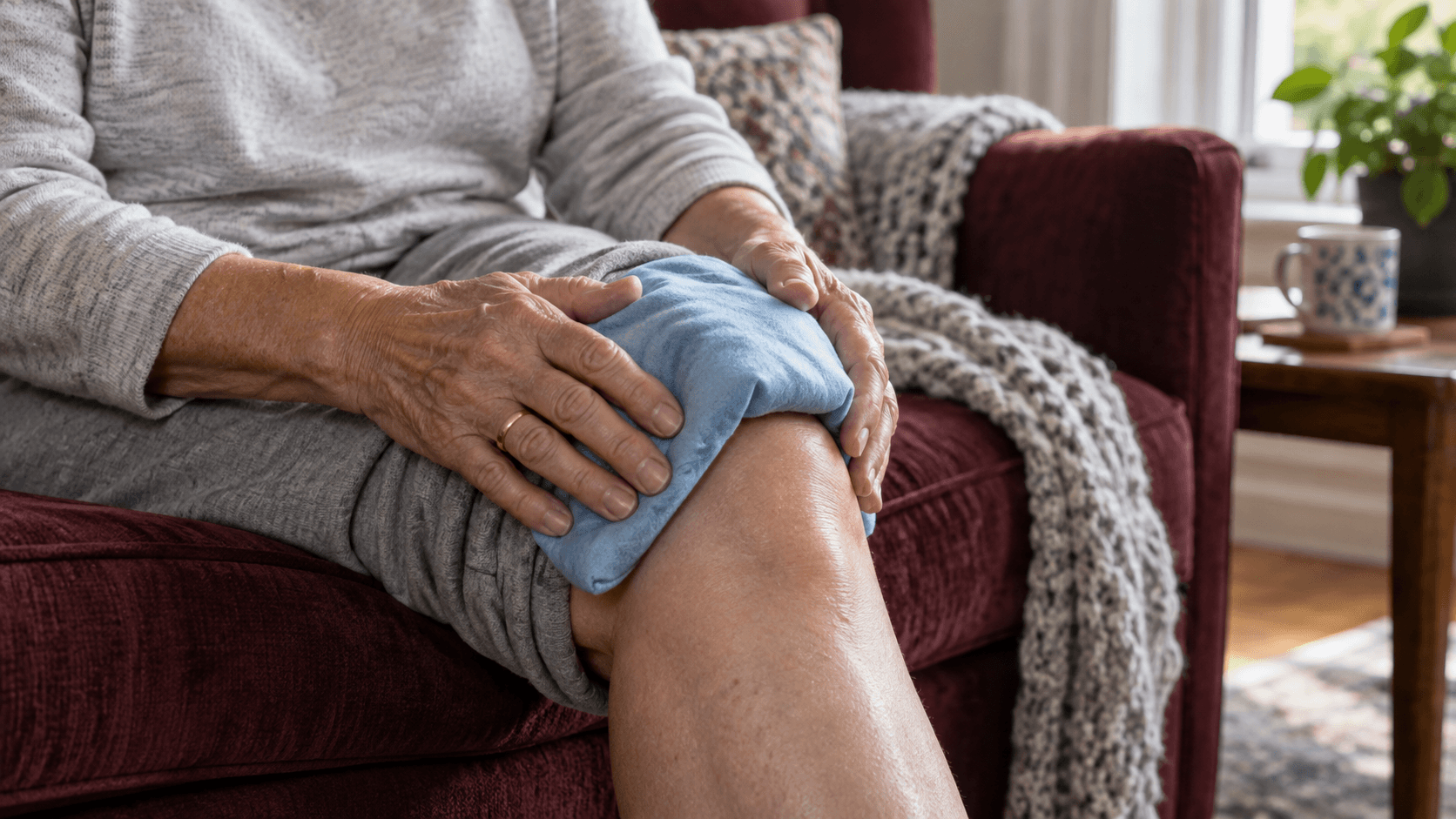
Home ice remains the usual option NIAMS describes: a towel-wrapped pack, about 20 minutes, several times a day if advised. A more expensive chamber does not change the screening questions: sensation, circulation, skin integrity, and whether the swelling has a diagnosis.
- Wrapped home or clinic pack with a timer
- Cold-compression sleeve if a clinician prescribed it
- Plunge or chamber only after vascular and wound screening
What evidence supports
NIAMS sports-injury pages support short ice applications to ease pain and swelling in many minor injuries, with a warning not to ice longer than about 20 minutes because of cold injury. MedlinePlus gives similar early ice advice for muscle strain. That is short-term symptom care. It is not evidence that cold reverses joint destruction.
NIAMS osteoarthritis materials emphasize activity, weight management when appropriate, medicines, and procedures—not cryotherapy as a disease-modifying treatment. CDC osteoarthritis pages likewise frame OA as a joint disease managed with medical and lifestyle care. Feeling less sore after ice does not mean the cartilage problem was treated.
Autoimmune inflammatory arthritis is a different category. Cold might numb a painful knee for an hour. It does not replace disease-modifying drugs, steroids when indicated, or infection checks when a joint is hot. Clinics that sell “inflammation protocols” based on a wellness lab and a plunge are mixing marketing with a real rheumatology word.
Whole-body cryotherapy and plunges have mixed, often small studies on soreness. They are not guideline first-line therapy for OA or autoimmune disease. Extra hardware is not extra evidence. If a studio cannot separate analgesia from disease modification, treat the pitch as advertising.
When to see a clinician first
See a clinician before you ice at home if a joint is hot and red, you have fever, you cannot move the joint, or swelling followed a fall with deformity. Infection, fracture, and crystal arthritis can look like ordinary inflammation. Cold can hide how bad it feels while the cause continues.
Get urgent care for calf swelling with chest pain or sudden shortness of breath, or for a joint that is exquisitely painful after a puncture. Those are not plunge indications. People with known PAD, nonhealing ulcers, or numb feet should ask a physician or vascular clinician before any intense cold.
If you already have a rheumatologist or orthopedist, ask them how they want flares handled. Do not let a recovery studio change your medicine list because a chamber “controls inflammation.” New weakness, unexplained weight loss, or night pain that is different from your usual pattern also needs medical review, not more ice.
A clinic that will not inspect the skin or ask about circulation is not offering careful cold therapy. Screening is part of the intervention.
How to judge progress
Judge cold by hours and days, not by a brand. Success is less throbbing, better sleep that night, and the ability to do the exercises or daily tasks you were given. If you need colder, longer sessions to get the same numbness, stop and reassess. That pattern can mean skin risk or a missed diagnosis, not a need for a stronger chamber.
Set a two-week review for a simple strain and a shorter review for a hot joint. If swelling climbs, function falls, or fever appears, stop icing as your main plan and get examined. Keep a written list of contraindications you were given so family members do not “help” with a plunge you were told to avoid.
Do not use a falling wellness inflammation score as proof you can cancel rheumatology or skip imaging. CDC and NIAMS osteoarthritis care is about function and joint protection over years. Cold is a comfort extra inside that plan, or it is nothing you need to buy.
Walk away from guaranteed anti-inflammatory outcomes, disease-cure language, or packages that skip sensation and circulation questions. Short-term analgesia is the honest claim. Licensed clinicians decide when even that claim is safe for your skin and your diagnosis.
Frequently Asked Questions
References
NIAMS: Osteoarthritis — Diagnosis, Treatment, and Steps to Take
https://www.niams.nih.gov/health-topics/osteoarthritis/diagnosis-treatment-and-steps-to-takeNIAMS: Sports Injuries — Diagnosis, Treatment, and Steps to Take
https://www.niams.nih.gov/health-topics/sports-injuries/diagnosis-treatment-and-steps-to-takeMedlinePlus: Muscle Strain Treatment
https://medlineplus.gov/ency/article/002116.htmCDC: Osteoarthritis
https://www.cdc.gov/arthritis/osteoarthritis/index.htmlNHLBI: Peripheral Artery Disease
https://www.nhlbi.nih.gov/health/peripheral-artery-disease Your Privacy Choices