What this means
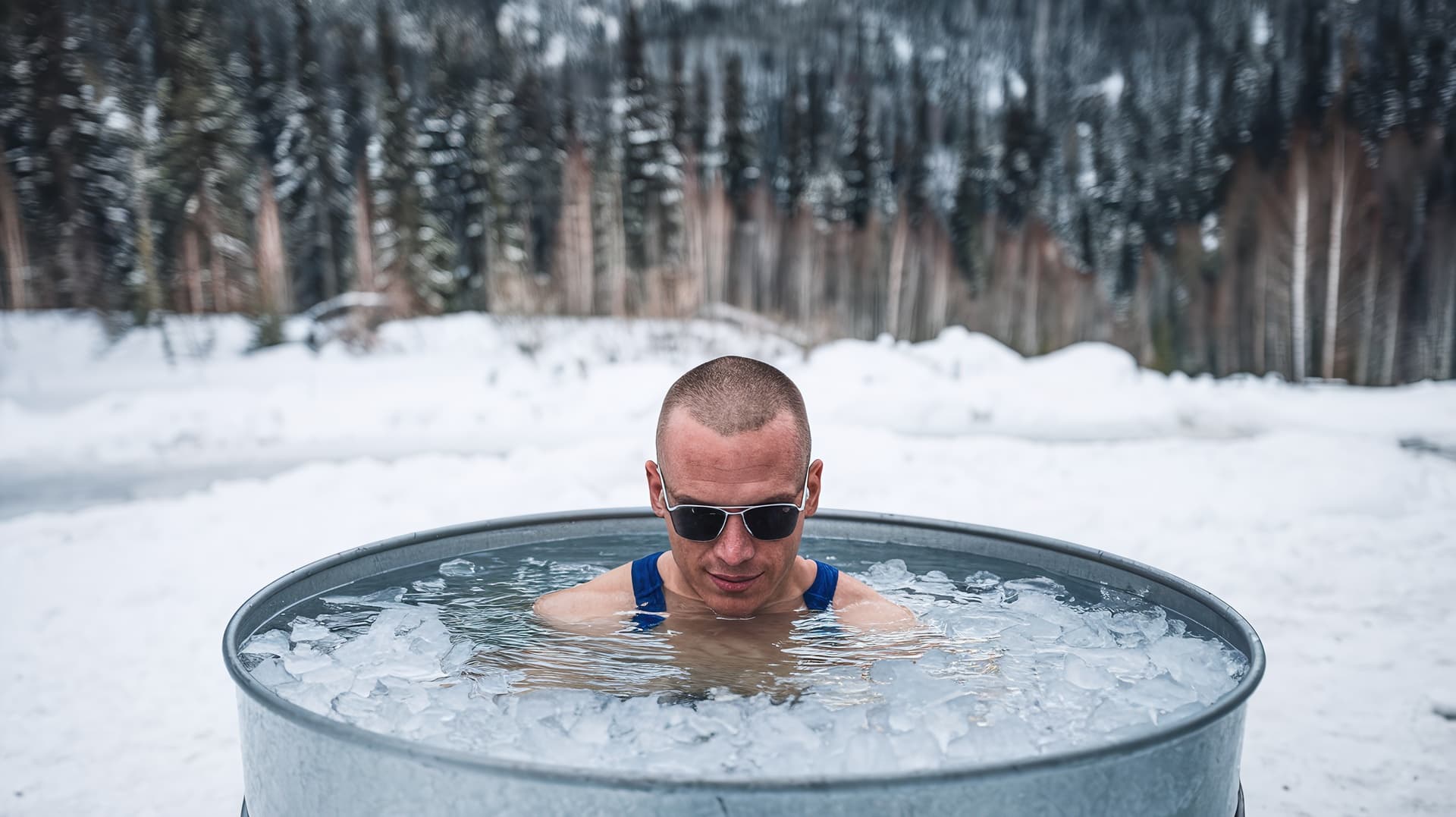
Cold therapy has a dose: how cold, how long, how much skin, and how often—not how tough you look in a photo. A wrapped ice pack, a circulating boot, a plunge, and a nitrogen chamber are different doses. Copying an athlete’s ritual without those details is how people get frostbite or waste a strength cycle.
NIAMS still teaches home ice as a short, padded application for many minor sports injuries. MedlinePlus uses ice in the first days after a muscle strain, then heat later as pain eases. The Food and Drug Administration warns that water-circulating cold devices can cause numbness and frostbite severe enough to need grafts or amputation when used too long or without a barrier. Those pages describe injury prevention. They do not define a longevity protocol.
Dose also includes when you use cold relative to training. Immediate immersion after resistance exercise is a different decision from icing a new sprain. This guide is for people choosing a time and temperature, not for people with chest pain or a white, hard patch of skin—those need medical care.
What the evidence shows
For acute sprains and strains, the practical evidence is first aid: rest, short ice with a cloth, compression, and elevation unless a clinician says otherwise. NIAMS cites about 20 minutes, repeated through the day. That is a local analgesic and swelling adjunct. It is not a disease-modifying dose. Leaving ice on for an hour does not heal a ligament faster; it raises nerve and skin injury risk.
For training adaptations, the evidence cuts the other way after lifting. Roberts and colleagues, in a PubMed Central paper, had men strength-train for 12 weeks with either 10 minutes of cold-water immersion at about 10°C or active recovery after each session. Muscle mass and strength increased more with active recovery; type II fiber area and myonuclei rose in the active group but not the immersion group. A 2024 PMC meta-analysis concluded that immediate post-resistance cold-water immersion may attenuate hypertrophy, with the usual caveat that study quality is mixed.
Endurance recovery is a different literature. Some athletes use cold to reduce soreness when they must perform again soon. That can be a reasonable short-term trade if a coach and clinician agree. It still requires a clock and skin checks. CDC frostbite guidance is written for weather, but the tissue injury is the same idea: protect skin, limit time, and rewarm carefully. There is no evidence that a colder number on the tub thermometer adds years of life.
- Injury ice: about 20 minutes, cloth barrier, repeat; stop if skin goes numb or mottled.
- After heavy lifting: regular plunges may blunt hypertrophy and strength gains.
- Devices: circulating cold boots need prescribed on/off times; unsupervised overnight use is a known harm pattern.
Common myths
Myth: colder and longer is better recovery. Beyond a short window you mainly add cold injury. FDA’s device update is explicit that cold therapy should not cause pain or skin damage when used correctly. Pain, blistering, or a white waxy patch means the dose was already too high.
Myth: you should plunge after every workout to maximize gains. If the workout was hypertrophy or max strength, the PMC data suggest you may be paying for soreness relief with smaller adaptations. Myth: numbness means the treatment “reached the muscle.” Numbness means nerves and skin are too cold. Remove the source and protect the area.
Myth: a chamber at extreme air temperature is a precise medical dose. Air and water transfer heat differently. A two-minute cryo air blast is not equivalent to a 10-minute 10°C bath, and neither is equivalent to a 20-minute ice pack. Claiming a single “optimal longevity dose” ignores those physics and the thin outcome data.
How clinics use it
A physical therapist or athletic trainer who doses carefully names the tool, the temperature if water is used, the minutes, the barrier, and the reason—new swelling versus next-day tournament soreness. They ask about diabetes, vascular disease, and whether you can feel the limb. They do not leave a circulating cuff running while you nap.
Longevity and gym settings often post a chalkboard time that everyone shares, or they compete on colder water. That is not individualized dosing. After surgery, the surgical team’s written protocol overrides any studio default; soaking an incision or icing numb skin can injure tissue. Ask who adjusts the plan if you have neuropathy or Raynaud phenomenon.
If your goal this month is muscle size, ask the clinic to skip post-lift immersion and use sleep, protein, and progressive load instead. If your goal is getting through a congested competition week, a brief, supervised cool-down may be the trade you accept. Either way, demand a stop rule: out for chest pain, dizziness, white skin, or loss of sensation that does not return promptly.
Practical takeaway
Dose cold like a tool, not a personality test. For a simple sprain, think NIAMS minutes and a towel. For lifting blocks aimed at hypertrophy, think twice before a regular ice bath. For devices, follow a clinician’s on/off schedule. For any whole-body immersion, add cardiac screening and a watcher.
- Write the goal: pain after a sprain, tournament soreness, or muscle growth—those goals conflict.
- Set temperature and time before you get in; use a barrier on packs and cuffs.
- Do not fall asleep on a cold device; do not chase numbness.
- Rewarm with room-temperature air or blankets if you overshoot; seek care for persistent white, hard, or blistered skin.
A good session ends with intact skin and a reason you can repeat or stop. A record-low temperature is not a better dose. Licensed clinicians set limits when sensation, circulation, or recent surgery change the rules.
Frequently Asked Questions
References
NIAMS: Sports Injuries — Diagnosis, Treatment, and Steps to Take
https://www.niams.nih.gov/health-topics/sports-injuries/diagnosis-treatment-and-steps-to-takeMedlinePlus: Muscle Strain Treatment
https://medlineplus.gov/ency/article/002116.htmFDA: Cold Facts on Water-Circulating Hot/Cold Therapy Devices
https://www.fda.gov/consumers/consumer-updates/cold-facts-help-avoid-injury-water-circulating-hotcold-therapy-devicesPMC: Post-Exercise Cold Water Immersion and Strength Adaptations
https://pmc.ncbi.nlm.nih.gov/articles/PMC4594298/PMC: Meta-Analysis of Cold Water Immersion and Hypertrophy
https://pmc.ncbi.nlm.nih.gov/articles/PMC11235606/ Your Privacy Choices