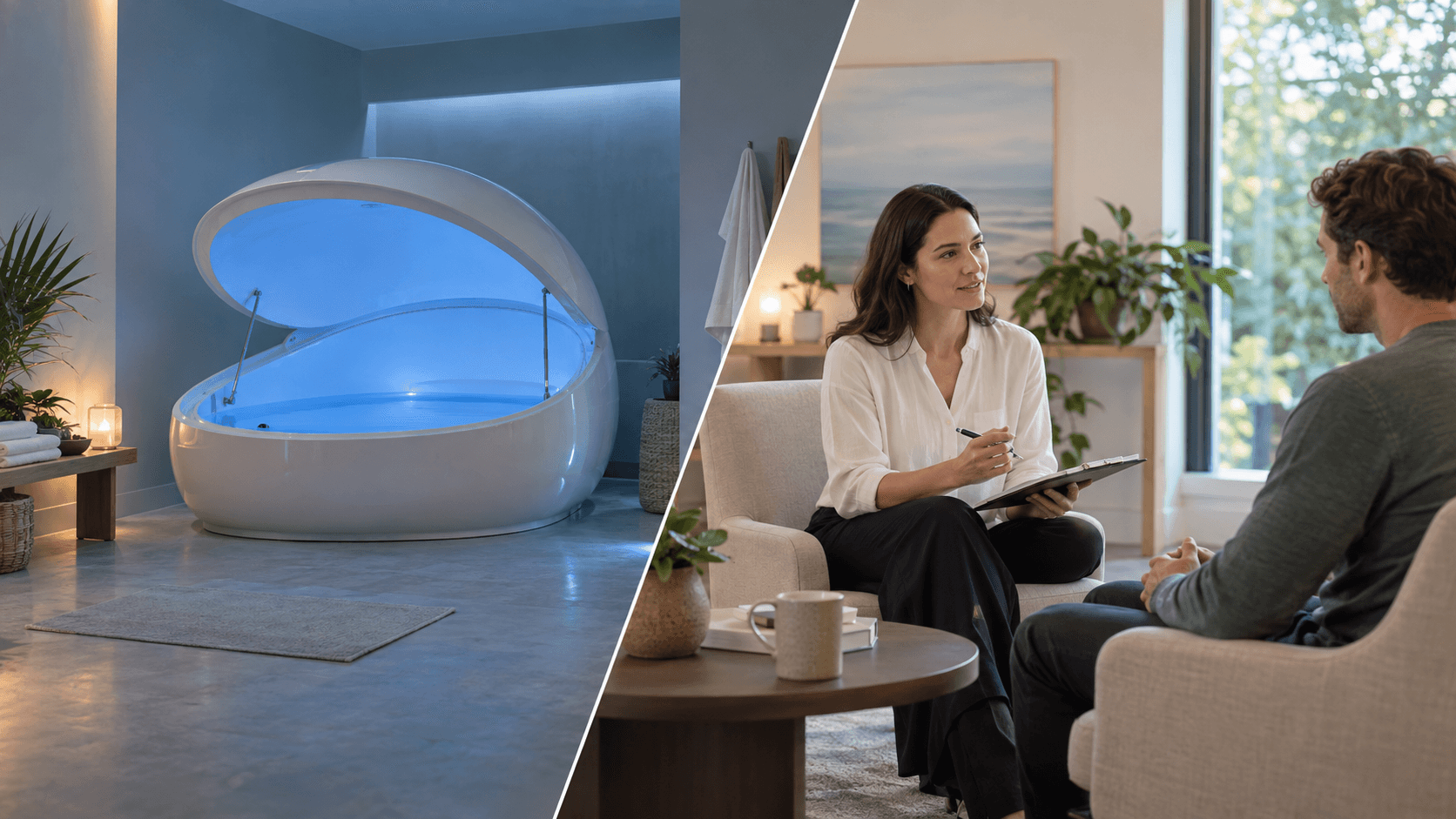
What you are comparing
Float therapy, sometimes called flotation REST or sensory deprivation tank therapy, usually involves lying in a quiet, dark tank or pod filled with warm, highly salted water. The goal is to reduce sensory input and create a deeply relaxing environment. Some people use it for stress, muscle tension, pain, sleep, or recovery.
Structured stress management is broader. It includes teachable skills and clinical supports that can be practiced outside a session: breathing techniques, mindfulness, cognitive behavioral strategies, exercise, sleep routines, time boundaries, social connection, therapy referral, and sometimes medication evaluation. It is often part of lifestyle medicine, primary care, behavioral health, or coaching programs.
The main difference is passive versus transferable. Float therapy is an experience you receive. Structured stress management is a skill set you build and use in real life.
A float session is usually 45 to 90 minutes, plus time to shower and reorient. Structured stress management is homework: a 10-minute breath practice, a bedtime, a walk, a therapy referral, or a plan for the next hard meeting. Compare them by what you can still do on a Tuesday when you cannot get to a tank.
How they differ
Float therapy may help some people feel calmer in the short term. The setting removes noise, light, pressure points, and distractions. For people who tolerate the environment well, that can create a noticeable relaxation response. The evidence base, however, remains limited. Studies are generally small, and results may not apply to every stress-related condition.
Structured stress management has a stronger clinical logic because it targets daily patterns that keep stress high. A program may help you identify triggers, change recovery routines, improve sleep timing, set boundaries, reduce alcohol, move more consistently, or seek therapy for anxiety, trauma, grief, or depression. It can be adapted for chronic disease, caregiving, burnout, pain, and work stress.
Float therapy is usually offered by wellness centers or recovery clinics. Structured stress management may be offered by licensed therapists, lifestyle medicine clinicians, health coaches, psychologists, social workers, physicians, or group programs. Credentials and scope are therefore central to choosing safely.
Access differs too. Float centers are cash businesses with limited medical screening. Structured programs may live in primary care, employee assistance, cardiac rehab, or behavioral health and can connect you to a therapist or physician. If your stress includes panic, trauma flashbacks, or insomnia that is wrecking work, that connection matters more than the tank.
Who each option is for
Float therapy may be reasonable for adults seeking relaxation who are comfortable in enclosed spaces, can enter and exit safely, and do not have contraindications. It may fit best as an adjunct: something used occasionally to decompress rather than as the main plan for a significant mental health or medical issue.
Structured stress management is better for people who need repeatable tools, measurable change, or clinical support. It is usually the better starting point for chronic insomnia, high blood pressure related to stress, burnout, panic symptoms, depression, trauma history, chronic pain, emotional eating, or stress that affects work and relationships.
If symptoms are severe, worsening, or associated with suicidal thoughts, substance misuse, chest pain, or inability to function, choose clinical evaluation first.
Skip floating if you cannot safely transfer, have uncontrolled epilepsy, open skin, active infection, or feel unsafe in a closed, dark space. Pregnant people and anyone with unstable heart symptoms should ask their clinician first. Structured stress management still needs screening, but it can be adapted for home, wheelchair use, or low vision.
Risks of choosing the wrong one
The risk of choosing float therapy alone is that it may feel soothing without changing the conditions that are driving stress. A person may leave relaxed, then return to the same sleep schedule, workload, conflict, pain cycle, or anxiety pattern. That does not make floating useless; it means it may be incomplete.
Float therapy can also be uncomfortable for people with claustrophobia, trauma triggers, dizziness, skin irritation, or mobility limitations. Sanitation and safety procedures matter because float tanks are shared environments.
The risk of choosing a poor stress management program is different. Some programs offer generic advice, blame patients for stress, or operate outside scope. Stress management should not dismiss medical symptoms or mental health conditions as simply mindset problems.
Do not use floating as a test of whether your anxiety is “real.” Feeling calmer in a tank does not rule out sleep apnea, thyroid disease, alcohol withdrawal, medication side effects, or major depression. Likewise, a stress class that tells you to think positively while you have chest pain is the wrong tool.
How to decide
Start with the problem you are trying to solve. If your goal is occasional relaxation and you are medically stable, float therapy may be worth trying with realistic expectations. Ask about cleaning procedures, emergency access, contraindications, session length, and whether staff screen for safety.
If your goal is better sleep, lower stress reactivity, burnout recovery, blood pressure support, anxiety coping, or sustainable habit change, prioritize structured stress management. Ask who leads the program, what methods are used, how progress is tracked, and when they refer to therapy or medical care.
For many people, the best answer is not either-or. A float session may be a pleasant recovery tool, while structured stress management provides the durable skills. Judge success by function: sleep consistency, mood stability, fewer stress-driven behaviors, improved relationships, better symptom control, and greater confidence handling hard weeks.
If you try floating, treat the first session as a safety and comfort test, not a treatment course. If you start a stress program, ask for two or three skills you will practice daily and a review date. Keep both only if sleep, irritability, blood pressure, or function actually move. Otherwise change the plan rather than buying a package.
Frequently Asked Questions
References
Floatation Therapy for Mental Health Conditions
https://www.ncbi.nlm.nih.gov/books/NBK559953/CDC: Coping with Stress
https://www.cdc.gov/mental-health/living-with/index.htmlNCCIH: Meditation and Mindfulness
https://www.nccih.nih.gov/health/meditation-and-mindfulness-what-you-need-to-know Your Privacy Choices