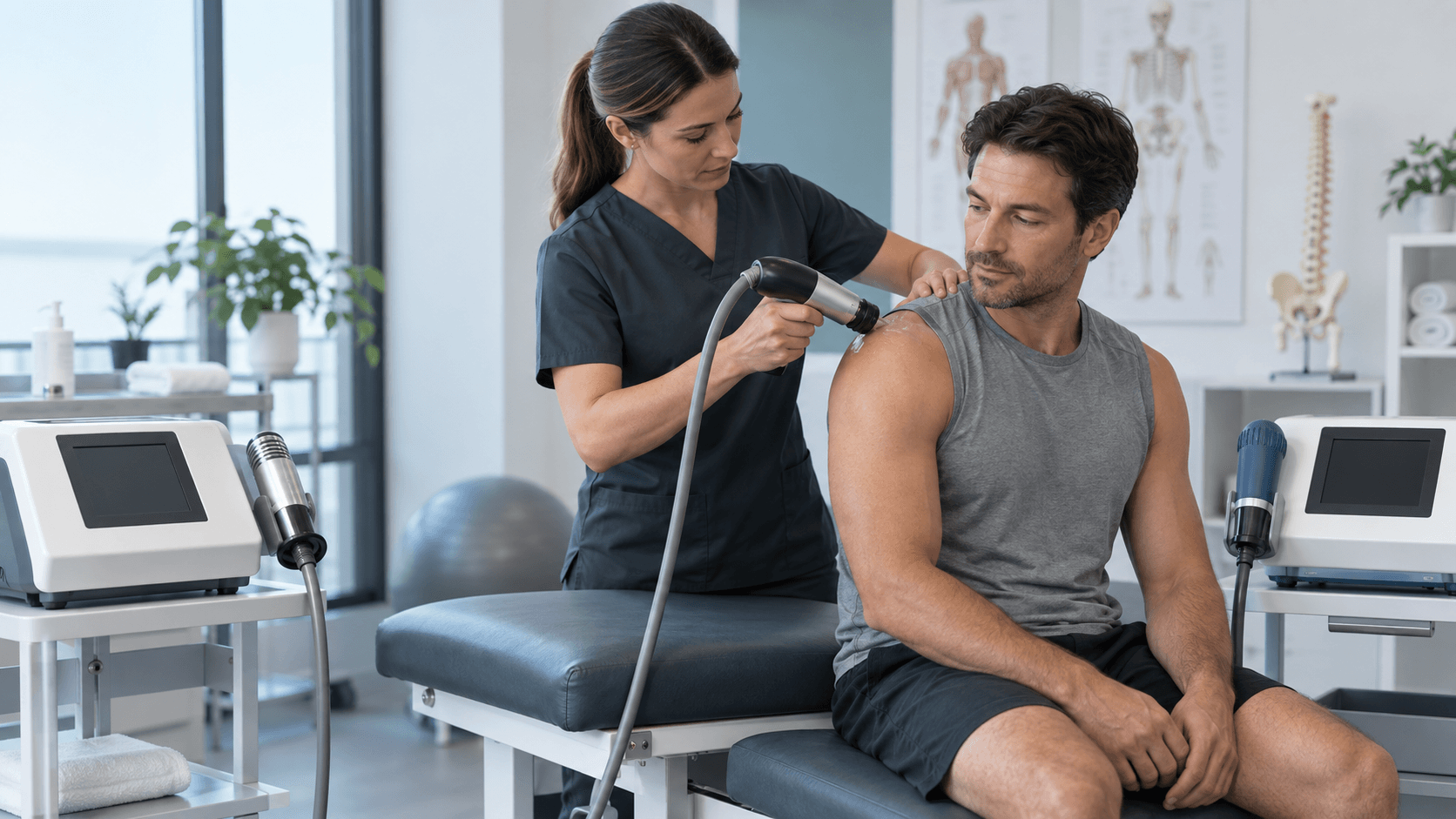
What you are comparing
Focused shockwave therapy uses electrohydraulic, electromagnetic, or piezoelectric generators to put a high-pressure pulse at a selected depth. Clinics may call it focused ESWT. Dose is often discussed as energy flux density, plus pulse count and sessions.
Radial pressure-wave therapy is often sold as radial shockwave. A projectile strikes an applicator. The wave is strongest at the skin and spreads outward. Settings are commonly bar, hertz, and pulses. Those units are not the same as focused energy flux density, so you cannot convert a radial “2.5 bar” into a focused protocol from a paper.
Both are noninvasive acoustic treatments used mainly for selected chronic tendon and fascia problems. They are not systemic anti-aging therapies. AAOS plantar-fasciitis information and NIAMS tendinitis pages still start with activity modification, stretching, and load. A device is an adjunct after a diagnosis, not a first step for undifferentiated pain.
This comparison is for adults offered “shockwave” at a sports, physical-therapy, or longevity clinic. Ask which physics you are buying. The words on the menu are often looser than the machine in the room.
How they differ
Energy delivery is the real split. Focused beams converge. They can target deeper spots, including some calcific deposits, when the operator knows anatomy. Radial waves treat a broader, more superficial field. Deeper hip or pelvic targets are a poor match for a radial handpiece used as if it were focused.
Comfort and session feel differ. Radial treatment can be uncomfortable at the skin. Focused treatment can be uncomfortable at the focus. More pain is not more healing. Numbing strategies and energy ramps vary and can change what the study you were shown actually did.
Evidence is condition- and protocol-specific. A PMC trial in tennis elbow found comparable short-term effects for one focused and one radial protocol. A later systematic review of radial versus focused shockwave for tendinopathy found no clear overall winner for pain, with low-certainty evidence. That is the opposite of a brand claiming its rental unit is the proven one.
Staffing differs. A licensed clinician who can diagnose tendon rupture, radiculopathy, or inflammatory arthritis is practicing medicine or physical therapy. A cash technician offering full-body “cellular shockwave” is selling a sensation. Device model, maintenance, and coupling gel are part of dose. A nameless machine is an incomplete consent.
- Focused: deeper focal zone; EFD dosing; anatomy-sensitive.
- Radial: superficial ballistic wave; bar and hertz dosing.
- Shared: not a fracture or infection treatment; operator-dependent.
Who each option is for
Focused treatment may be discussed for a mapped deep or calcific target when a clinician has chosen a device and dose used in relevant studies. It is a poor fit for widespread muscle soreness sold as recovery, or for anyone with a contraindication in the field such as a known tumor, severe bleeding risk, or concern for lung or nerve injury.
Radial pressure wave may be discussed for more superficial chronic plantar fascia or some tendon sites when the diagnosis is clear and exercise is underway. It is a poor fit if the pain is a stress fracture, infection, or acute rupture. NIAMS sports-injury pages remind patients that sudden trauma and inability to bear weight need medical evaluation.
People with implanted electronics, pregnancy, open growth plates, or neuropathy need an individualized safety review. Anticoagulated patients need bleeding counseling. A longevity membership should not skip those questions because the brochure says noninvasive.
Neither option is for feverish red joints, open wounds over the site, or unexplained bone pain. Those are medical problems. Acoustic therapy is not a substitute for imaging or antibiotics when those are indicated.
Risks of choosing the wrong one
Choosing radial therapy for a deep target, or focused therapy without knowing the focus, wastes money and can irritate the wrong tissue. Choosing either for a missed rupture, stress fracture, or infected bursa delays care. Pain after a session is common; new weakness, fever, or calf swelling is not “detox.”
Protocol mismatch is common. A paper on focused treatment of calcific shoulder tendinopathy does not validate a radial calf massage. Pulse counts, energy, and whether exercise was included all matter. If the clinic cannot match your diagnosis to a protocol, you are in a demo, not a studied pathway.
Opportunity cost matters. Six prepaid sessions can postpone a steroid decision, a PRP discussion, or a surgical opinion that was always going to be needed. It can also postpone simple load management that NIAMS already recommends for tendinitis.
Anti-aging and “breaks up calcium everywhere” claims stretch physics into marketing. These devices do not treat osteoporosis, do not set fractures, and do not reverse aging. Using them as a whole-body regenerative course is the wrong indication.
How to decide
Get a diagnosis. Ask whether the problem is plantar fascia, a named tendon, calcific tendinopathy, or something else. Confirm that fracture, infection, and referred pain were considered. Then ask: focused or radial, manufacturer and model, depth, energy, pulses, number of sessions, and the exercise plan.
Ask what evidence supports that pairing. A licensed physical therapist or sports-medicine clinician should be able to say why this device beats more loading time alone. If the answer is a before-and-after on social media, keep walking.
Price a full series and a stop rule. Reassess pain and function at a set visit, not after the prepaid package is gone. Ask about bruising, activity limits, and who you call if pain spikes or you cannot walk.
Device and operator are part of the treatment. Choose the physics that matches the tissue depth, in licensed musculoskeletal care, for a studied tendinopathy or fascia problem. Do not buy shockwave as infection care, fracture care, or anti-aging. The label on the website is not the waveform in the handpiece.
Frequently Asked Questions
References
AAOS OrthoInfo: Plantar Fasciitis and Bone Spurs
https://orthoinfo.aaos.org/en/diseases--conditions/plantar-fasciitis-and-bone-spurs/NIAMS: Tendinitis
https://www.niams.nih.gov/health-topics/tendinitisNIAMS: Sports Injuries
https://www.niams.nih.gov/health-topics/sports-injuriesPMC: Radial vs focused shock wave therapy for tennis elbow
https://pmc.ncbi.nlm.nih.gov/articles/PMC8641526/PMC: Efficacy of radial and focused shockwave therapy for tendinopathy (systematic review)
https://pmc.ncbi.nlm.nih.gov/articles/PMC12936064/ Your Privacy Choices