What this means
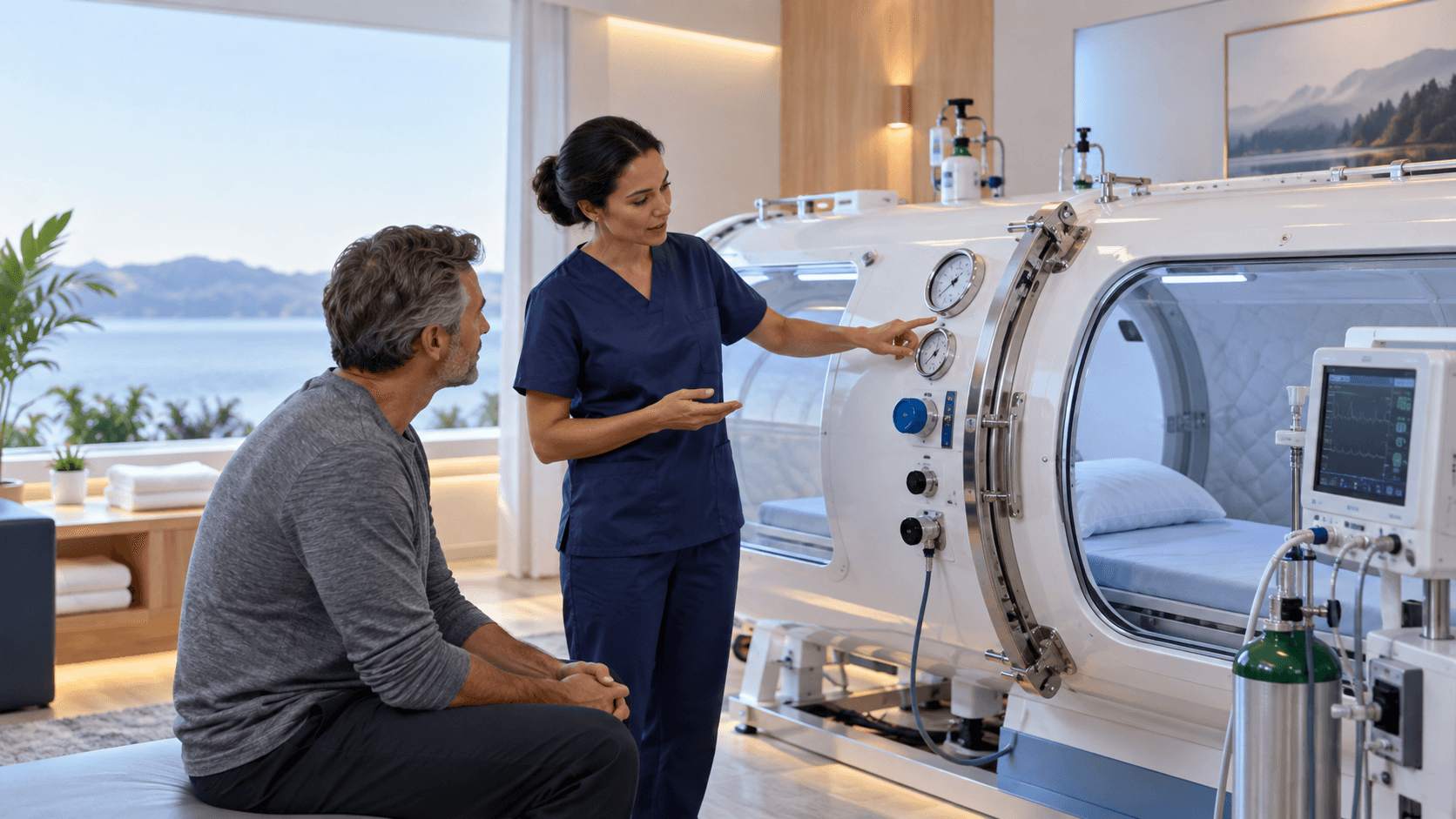
Hyperbaric oxygen therapy (HBOT) means breathing a high oxygen concentration inside a chamber pressurized above ordinary air. Pressure is usually given as atmospheres absolute (ATA). Sea level is about 1.0 ATA. Two ATA is roughly twice that absolute pressure. MedlinePlus describes HBOT as a medical treatment delivered in a pressurized room or tube, not as a generic oxygen lounge.
Chamber type changes what that definition can mean. A hard monoplace chamber is a rigid tube that often fills with oxygen around one person. A multiplace chamber is a rigid room that typically compresses air while patients breathe oxygen by mask or hood, and staff can be inside. A soft or mild chamber is usually a fabric bag that reaches lower pressure and is often filled with air, with oxygen added through a concentrator or mask if at all.
Dose is not a single number on a poster. Relevant details are pressure, oxygen concentration at the mouth, time at target pressure, compression and decompression, air breaks, and the number of sessions. Two clinics that both say “1.5 ATA” can deliver different inspired oxygen if one is a hard oxygen-filled chamber and the other is a bag of compressed air.
Longevity studios still market mild bags as “HBOT.” UHMS indication lists and hospital protocols describe a different intervention. The same acronym does not make the exposures equal.
What the evidence shows
UHMS publishes accepted indications that have been reviewed as appropriate uses of medical hyperbaric oxygen. The list includes air or gas embolism, carbon monoxide poisoning, decompression sickness, selected problem wounds, delayed radiation injury, clostridial gas gangrene, necrotizing infection, refractory osteomyelitis, compromised grafts, and other named conditions. Those are specialist diagnoses. They are not anti-aging, autism, or everyday fatigue.
UHMS credentialing guidance states that scientifically supported treatments are usually delivered between about 1.9 and 3.0 ATA by physicians with hyperbaric training. That pressure band, plus high oxygen, is the medical product people mean when they say hospital HBOT. Soft chambers that top out near 1.3 ATA on air do not reproduce those protocols.
CDC carbon-monoxide pages treat CO poisoning as an emergency. When HBOT is used, it belongs in a medical program that can manage an unstable patient, not in a cash bag booked online. Device clearance is similarly narrow. FDA classifies many hyperbaric chambers as Class II devices. A 510(k) clearance for a stated intended use is not evidence that every wellness claim is true.
Safety data are why supervision exists. FDA has told health-care providers to follow manufacturer instructions, fire-prevention rules, grounding, prohibited-item lists, maintenance, and continuous monitoring after reports of fires with serious injuries and deaths. Ear barotrauma is common. Oxygen toxicity can cause a seizure. Pulmonary barotrauma is uncommon and serious. Those risks scale with pressure, oxygen, and sloppy operations—not with how premium the waiting room looks.
Common myths
The first myth is that a soft chamber is a gentler version of the same therapy. It is usually a different dose and a different gas. Lower pressure and air fills do not silently “do 80 percent of hospital HBOT.” They also do not make fire or ear injury impossible if oxygen and poor discipline are added.
The second myth is that more ATA is always better. Medical protocols choose pressure for an indication and include air breaks to limit oxygen toxicity. Turning a wellness session into an unofficial higher-pressure experiment is not personalization. It is an unmonitored dose change.
The third myth is that clearance or a UHMS logo on a website means the clinic treats aging, concussion, or “brain optimization.” UHMS indications are specific. Emerging or off-label uses, when they exist, belong in research or specialist discussion—not in a membership that promises sharper thinking. FDA clearance of a chamber is not approval of every advertisement taped to it.
The fourth myth is that HBOT is risk-free because it is “just oxygen.” Oxygen supports combustion. FDA’s safety letter exists because fires happen. Barotrauma and oxygen-toxicity seizures are medical events, not spa aftereffects.
How clinics use it
Hospital and UHMS-oriented programs use hard chambers for listed indications, with a hyperbaric physician, chamber operators, fire protocols, and a profile that includes pressure, oxygen, and air breaks. They screen for untreated pneumothorax, unstable ears or sinuses, certain lung diseases, seizure risk, and other contraindications. Carbon monoxide, diving injury, and selected wounds are typical medical paths.
Longevity and wellness rooms often rent mild soft chambers by the month. Marketing may cite hospital literature while delivering 1.3 ATA air. Some add an oxygen concentrator and still call the product HBOT. Ask for chamber type, ATA, oxygen concentration at the patient, session length, supervision, and the intended-use statement on the device—not a testimonial.
Some outpatient medical offices sit in between: a hard monoplace used for an off-label or cash indication. That is still not a bag, but it is also not automatically UHMS-indicated care. Device identity and the diagnosis both have to be true. A cleared chamber used for an uncleared claim is a marketing problem, not a free upgrade.
If you actually need medical HBOT, delay is the clinic risk. Sitting in a mild bag after smoke exposure, a diving accident, or a radiation-injury referral can waste the window in which a hospital protocol might be used. CDC’s CO materials are about leaving the exposure and getting emergency care, not about booking a wellness dive later.
Practical takeaway
Ask four numbers and one name: ATA, oxygen concentration, minutes at pressure, who is in the room, and the UHMS or hospital indication being treated. If the answers describe a fabric chamber at low pressure for aging or focus, you are buying mild hyperbaric time. Do not call it hospital HBOT and do not use it instead of indicated medical treatment.
If you have a UHMS-listed condition, seek a medical hyperbaric program with physician supervision, fire safety, and emergency decompression. FDA’s letter is the checklist: instructions for use, grounding, prohibited items, trained staff, and continuous monitoring.
Report ear pain during compression, chest pain, sudden shortness of breath, or a seizure as medical problems. Do not finish a dive to be polite. People with diabetes should ask how glucose is handled. Pregnancy and untreated pneumothorax are specialist conversations, not waiver fine print.
Keep ordinary wound care, smoking cessation, and poisoning treatment. Mild HBOT is not hospital HBOT. Pressure, chamber type, and oxygen dose are the therapy—not the acronym on the door.
Frequently Asked Questions
References
UHMS: Hyperbaric Oxygen Therapy Indications
https://www.uhms.org/resources/featured-resources/hbo-indications.htmlFDA: Follow Instructions for Safe Use of Hyperbaric Oxygen Therapy Devices
https://www.fda.gov/medical-devices/letters-health-care-providers/follow-instructions-safe-use-hyperbaric-oxygen-therapy-devices-letter-health-care-providersCDC: About Carbon Monoxide Poisoning
https://www.cdc.gov/carbon-monoxide/about/index.htmlMedlinePlus: Hyperbaric Oxygen Therapy
https://medlineplus.gov/ency/article/002375.htmFDA Product Classification: Hyperbaric Chamber
https://www.accessdata.fda.gov/scripts/cdrh/cfdocs/cfpcd/classification.cfm?ID=CBF Your Privacy Choices