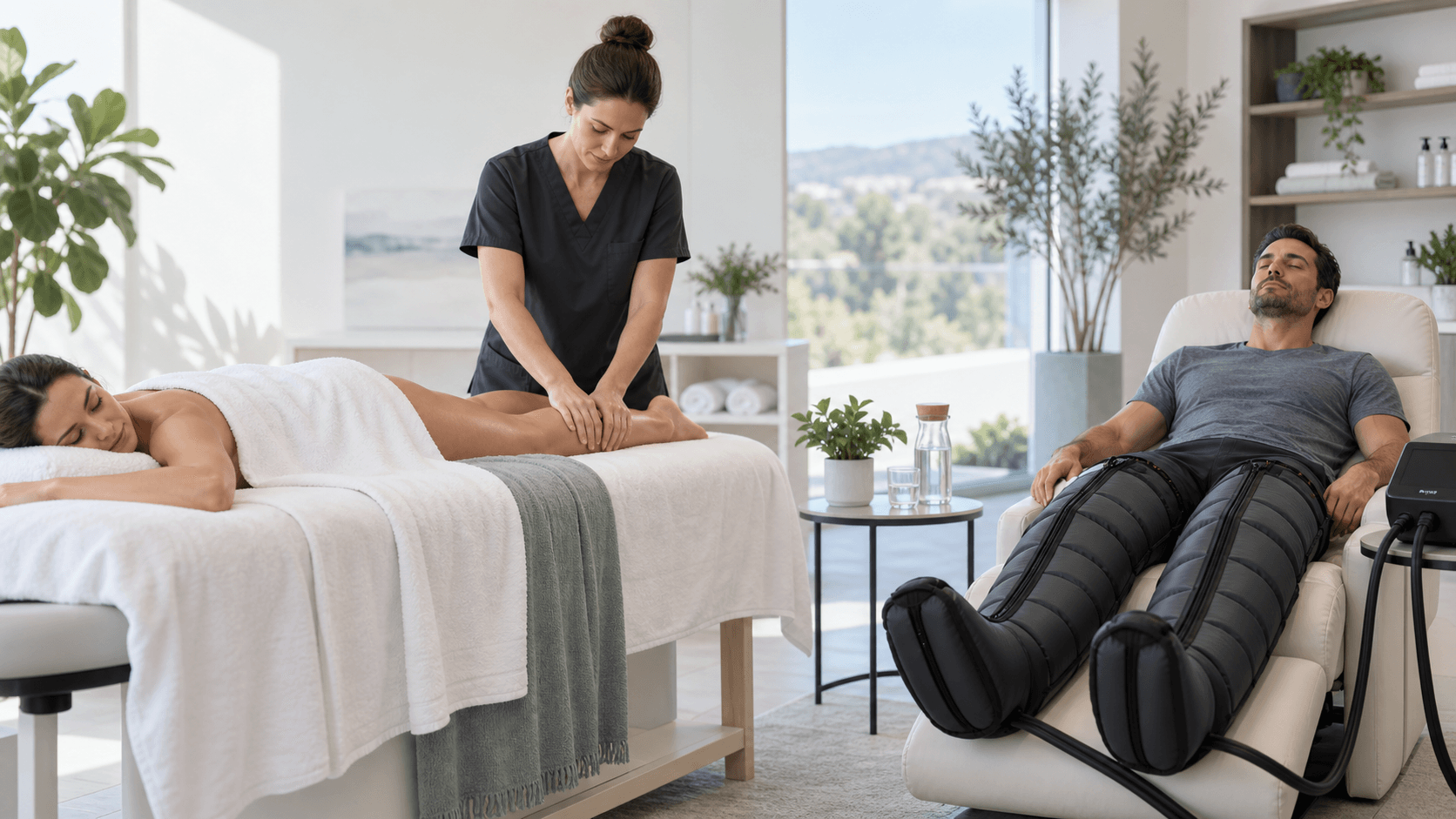
What you are comparing
Manual lymphatic drainage (MLD) is a skilled, light, directional hands-on technique intended to move lymph toward functioning pathways. Pneumatic compression uses sequenced inflatable sleeves or boots to apply intermittent pressure. In medical lymphedema care, both may appear as parts of a larger plan, not as standalone spa services.
NCI describes complete decongestive therapy as a program that can include gentle massage, compression bandaging or garments, exercise, and skin care, usually directed by a certified lymphedema therapist. Intermittent pneumatic compression is discussed as an adjunct when compression alone is not enough, generally together with garments, not as a replacement for them.
Wellness detox drainage is a different product. It may use similar words and similar-looking boots. It does not diagnose why a limb is swollen, and it does not replace medical MLD or complete decongestive therapy when lymphedema is present. Feeling lighter after a session is not proof that toxins left the body.
This comparison is for people looking at longevity or recovery clinics that sell lymphatic massage or compression boots, and for people with cancer-related or other lymphedema who are being offered devices. It does not rank brands. It does not promise volume reduction. Licensed evaluation still comes first when swelling is new or unexplained.
How they differ
MLD depends on therapist skill, anatomy, scars, and radiation changes. Pressure is light compared with ordinary massage. Sessions are typically longer hands-on visits. Benefits for chronic lymphedema often fade without compression garments or bandaging, which is why NCI places MLD inside a broader decongestive program rather than as a weekly luxury add-on.
Pneumatic pumps are consistent, programmable, and easier to repeat at home after teaching. NCI’s professional lymphedema summary notes questions about optimal pressure, schedule, and maintenance after an initial reduction. There is a theoretical concern that high pressures and long-term use could injure lymphatic vessels. Settings are a clinical decision, not a default spa cycle.
Access differs. Trained lymphedema therapists can be scarce, which is one reason home pumps exist. A device without garment fitting, skin-care teaching, and a diagnosis is still incomplete care. MLD without compression when lymphedema is established is also incomplete. Neither method treats infection, clots, or heart failure that can look like swelling.
Evidence is condition-specific. Small trials in breast cancer–related lymphedema have studied pumps added to decongestive therapy. That is not the same evidence base as a cash-pay drainage package for people with no diagnosis. MedlinePlus materials on lymphedema still start with medical evaluation of swelling, not with a menu of modalities.
Who each option is for
Medical MLD is for people with diagnosed lymphedema or related lymphatic dysfunction, delivered by a therapist trained in complete decongestive therapy—often a physical or occupational therapist or nurse with that certification. Cancer survivors with limb or truncal swelling belong in that group after oncology and therapy teams agree it is appropriate.
Pneumatic compression may suit people already in a lymphedema program who need an adjunct at home, with garments, when a clinician recommends a device and pressure range. It can help when travel to a therapist is hard, provided skin is intact and contraindications have been screened. It is not a first purchase for unexplained swelling.
People seeking a detox or post-workout flush are not medical MLD candidates by that marketing alone. Ordinary recovery is training load, sleep, and indicated injury care. Boots in a recovery lounge can feel pleasant. They are not a lymphatic diagnosis. They should not be sold as cancer prevention or toxin removal.
Some patients should not have either method until cleared: suspected deep-vein thrombosis, acute infection such as cellulitis, uncontrolled congestive heart failure in some protocols, and unstable wounds. Those exclusions exist because pumping or massaging the wrong limb can worsen a medical emergency. Screen first. Shop second.
Risks of choosing the wrong one
Choosing spa drainage for lymphedema can delay garments, skin care, and a certified therapist. Swelling that is actually a clot can be massaged or pumped when it needed urgent evaluation. CDC materials on blood clots describe limb swelling and pain as reasons to seek care, especially with risk factors such as recent surgery, cancer, or immobility.
Choosing a pump with high pressure, no garment, and no teaching can irritate skin, miss genital or truncal swelling, or give a false sense that the problem is handled. NCI notes uncertainty about long-term high-pressure use. A boot that does not fit the anatomy of your surgery is not personalized care.
Infection is another wrong-path risk. Spreading redness, fever, and flu-like symptoms in a swollen limb can be cellulitis, which needs prompt medical treatment. Massage or pumping through an infection is not drainage. Open wounds and untreated fungal skin disease also change whether compression is safe that day.
Wellness detox language can hide a missing diagnosis. Unexplained swelling, especially if sudden, painful, one-sided, or paired with shortness of breath, is not a spa booking. It is a reason to see a licensed clinician. Treating delay as self-care is the main harm of the wrong setting.
How to decide
If swelling is new, one-sided, painful, red, or associated with chest symptoms, get medical care first. Ask about deep-vein thrombosis and infection. Do not use a recovery clinic as triage. If lymphedema is already diagnosed, ask for a certified lymphedema therapist and a complete decongestive plan, not a standalone drainage add-on.
Compare MLD and pumps as tools inside that plan. Ask who sets pressure, how garments are fitted, and what you will do on days you cannot visit. Ask how progress will be measured: limb volume, function, infection rate, or a symptom score—not a detox feeling. Request a stop rule if swelling worsens.
Decline clinics that promise to drain toxins, shrink a limb in one visit, or replace cancer follow-up. Ask about contraindications in plain language: clot, infection, unexplained swelling, heart failure, and unstable skin. If staff cannot answer, they are not delivering medical lymphatic care.
Cost should include evaluation, garments, and teaching, not only a session or a device rental. Insurance may cover indicated lymphedema therapy and still deny spa packages. Keep your oncology or primary-care clinician in the loop. You can enjoy a compression session and still insist that lymphedema, if present, is treated as a medical condition.
Frequently Asked Questions
References
NCI: Lymphedema and Cancer
https://www.cancer.gov/about-cancer/treatment/side-effects/lymphedemaNCI Dictionary: Complete Decongestive Therapy
https://www.cancer.gov/publications/dictionaries/cancer-terms/def/complete-decongestive-therapyMedlinePlus: Lymphedema
https://medlineplus.gov/lymphedema.htmlCDC: Blood Clots
https://www.cdc.gov/blood-clots/about/index.html Your Privacy Choices