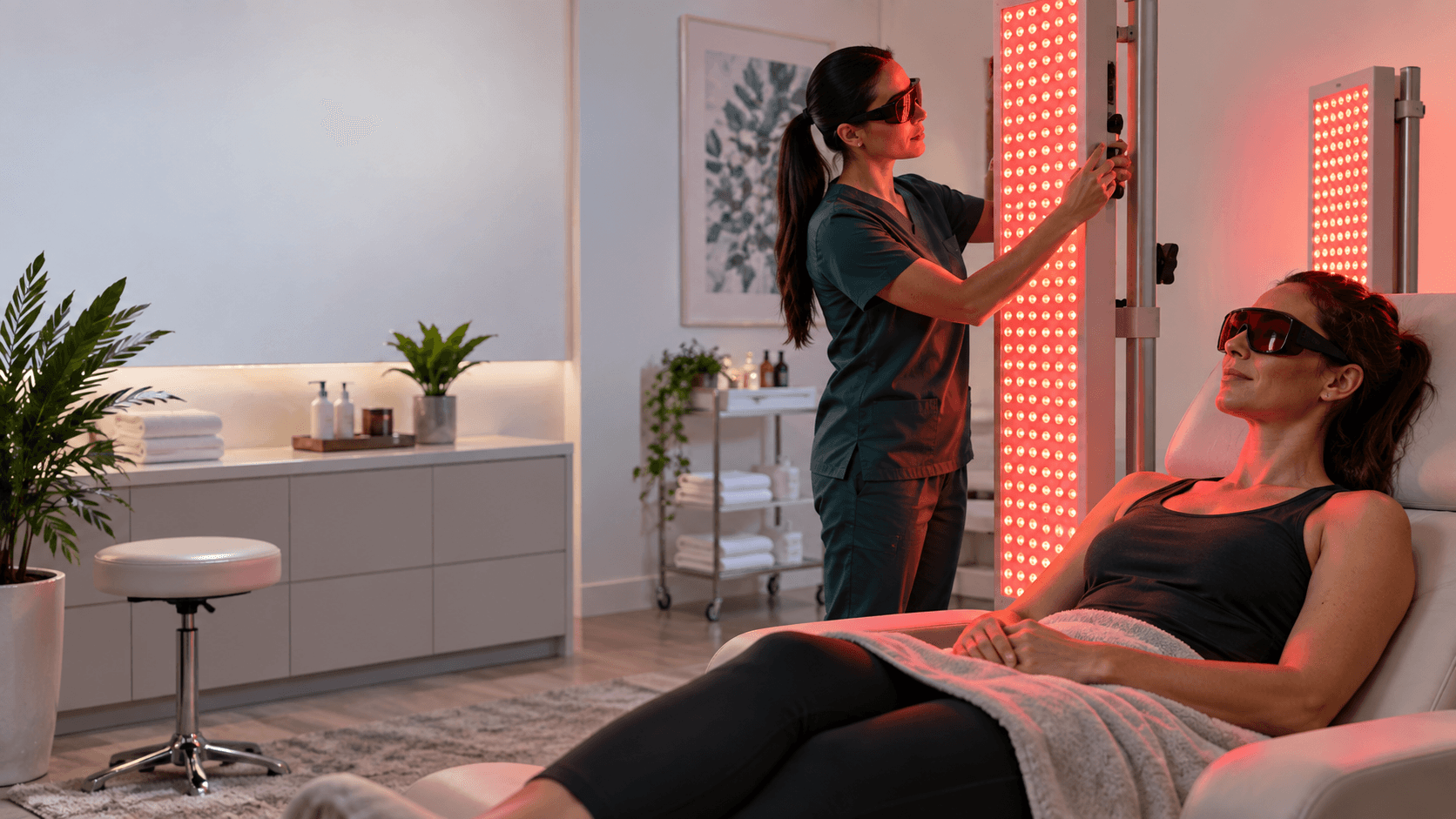
Understanding Light Therapy
Light therapy, also known as photobiomodulation (PBM) or low-level light therapy (LLLT), uses specific wavelengths of light to stimulate cellular processes. Both red light and infrared therapy fall under this category, but they target different depths and produce different effects.
While these therapies are often grouped together, understanding their differences helps you choose the right treatment for your needs.
Red Light Therapy
What It Is
Red light therapy uses visible red light wavelengths, typically between 620-700 nanometers (nm). The most commonly used wavelengths are around 630-660nm and 810-850nm (which is actually near-infrared but often grouped with red light).
How It Works
Red light penetrates the skin to a depth of about 2-5 millimeters, primarily affecting:
- Skin cells (epidermis and upper dermis)
- Superficial blood vessels
- Collagen-producing cells (fibroblasts)
- Mitochondria (cellular energy producers)
The primary mechanism is thought to be stimulation of cytochrome c oxidase in mitochondria, leading to:
- Increased ATP (cellular energy) production
- Enhanced cellular repair
- Reduced inflammation
- Improved circulation
Primary Benefits
- Skin health: Collagen production, reduced wrinkles, improved texture
- Wound healing: Faster recovery from injuries
- Hair growth: Stimulation of hair follicles
- Acne treatment: Reduction of inflammation and bacteria
- Pain relief: For superficial pain and inflammation
- Reduced inflammation: In skin and superficial tissues
Best For
- Skin rejuvenation and anti-aging
- Acne and skin conditions
- Hair loss
- Superficial wounds
- Facial treatments
- Cosmetic improvements
Infrared Therapy
What It Is
Infrared therapy uses invisible infrared wavelengths, typically between 700-1000nm (near-infrared) or longer wavelengths (mid and far-infrared). Near-infrared (NIR) is most commonly used in therapeutic applications.
How It Works
Infrared light penetrates much deeper than red light, reaching:
- Deep muscle tissue
- Joints and connective tissue
- Bones
- Internal organs (with sufficient power)
Infrared works through:
- Deep tissue heating
- Mitochondrial stimulation (like red light)
- Increased blood flow
- Muscle relaxation
- Pain modulation
Primary Benefits
- Deep pain relief: Muscle and joint pain
- Improved circulation: Throughout the body
- Muscle recovery: Faster healing after exercise
- Joint health: Reduced inflammation in joints
- Relaxation: Deep tissue warmth and relaxation
- Detoxification: Through increased sweating
- Cardiovascular benefits: Improved heart health
Best For
- Chronic pain conditions
- Muscle soreness and recovery
- Arthritis and joint pain
- Deep tissue injuries
- Overall wellness
- Cardiovascular health
Key Differences
| Characteristic | Red Light Therapy | Infrared Therapy |
|---|---|---|
| Wavelength | 620-700nm (visible) | 700-1000nm+ (invisible) |
| Penetration Depth | 2-5mm (superficial) | Up to several centimeters (deep) |
| Primary Target | Skin, superficial tissues | Muscles, joints, deep tissues |
| Heat Production | Minimal | Significant |
| Best For | Skin health, cosmetics | Pain, recovery, wellness |
| Sensation | No heat felt | Warm to hot sensation |
Combined Therapy
Many devices combine red light and infrared wavelengths to provide benefits of both:
- Superficial skin benefits (red light)
- Deep tissue benefits (infrared)
- Comprehensive treatment
Combined devices are popular for whole-body treatments and comprehensive wellness protocols.
Scientific Evidence
Red Light Therapy Evidence
Research supports red light therapy for:
- Wound healing (moderate evidence)
- Hair growth (some evidence)
- Skin rejuvenation (growing evidence)
- Pain relief (limited but promising)
Infrared Therapy Evidence
Research supports infrared therapy for:
- Muscle recovery (moderate evidence)
- Pain relief (growing evidence)
- Circulation improvement (some evidence)
- Joint health (limited evidence)
Both therapies show promise, but more high-quality research is needed for many claimed benefits.
Safety Considerations
Red Light Therapy Safety
- Generally very safe
- No heat production
- Minimal side effects
- Can be used frequently
- Eye protection recommended
Infrared Therapy Safety
- Generally safe when used properly
- Risk of burns if too intense
- Dehydration risk from sweating
- Not recommended for certain conditions
- Eye protection essential
- Time limits important
Who Should Avoid
Red Light Therapy:
- Photosensitive conditions
- Certain medications causing photosensitivity
- Active skin cancer (in treatment area)
Infrared Therapy:
- Pregnancy
- Heart conditions
- Fever or acute inflammation
- Certain medications
- Open wounds
- Impaired sensation
Treatment Protocols
Red Light Therapy
- Frequency: 3-5 times per week initially
- Duration: 10-20 minutes per session
- Distance: 6-12 inches from device
- Course: 4-12 weeks for visible results
Infrared Therapy
- Frequency: 2-4 times per week
- Duration: 15-30 minutes per session
- Distance: Varies by device
- Course: Ongoing for chronic conditions
Cost Considerations
Both therapies are available as:
- Professional treatments: $50-$200 per session
- Home devices: $100-$3,000+
- Combination devices: Higher cost but more versatile
Home devices offer convenience but may be less powerful than professional equipment.
Choosing the Right Therapy
Choose Red Light If You Want:
- Skin improvements
- Cosmetic benefits
- Hair growth
- Superficial wound healing
- Non-heating treatment
Choose Infrared If You Want:
- Deep pain relief
- Muscle recovery
- Joint health
- Overall wellness
- Deep tissue benefits
Choose Combined If You Want:
- Comprehensive benefits
- Both superficial and deep effects
- Whole-body treatment
- Maximum versatility
Final Thoughts
Both red light and infrared therapy offer unique benefits:
- Red light excels at skin health and superficial benefits
- Infrared excels at deep tissue healing and pain relief
- Combined offers the most comprehensive approach
Your choice depends on your specific goals:
- For skin and cosmetic goals → Red light therapy
- For pain and deep tissue → Infrared therapy
- For comprehensive wellness → Combined therapy
Both therapies are generally safe when used properly, but consult with a healthcare provider if you have medical conditions or concerns. Research continues to evolve, showing promise for various applications in longevity and wellness medicine.
 Your Privacy Choices