What Is Shockwave Therapy (ESWT)?
Noninvasive acoustic treatment using focused shockwaves or radial pressure waves for selected musculoskeletal conditions. These technologies have different wave physics, depth, dosing, device status, and evidence.
Noninvasive acoustic treatment using focused shockwaves or radial pressure waves for selected musculoskeletal conditions. These technologies have different wave physics, depth, dosing, device status, and evidence.
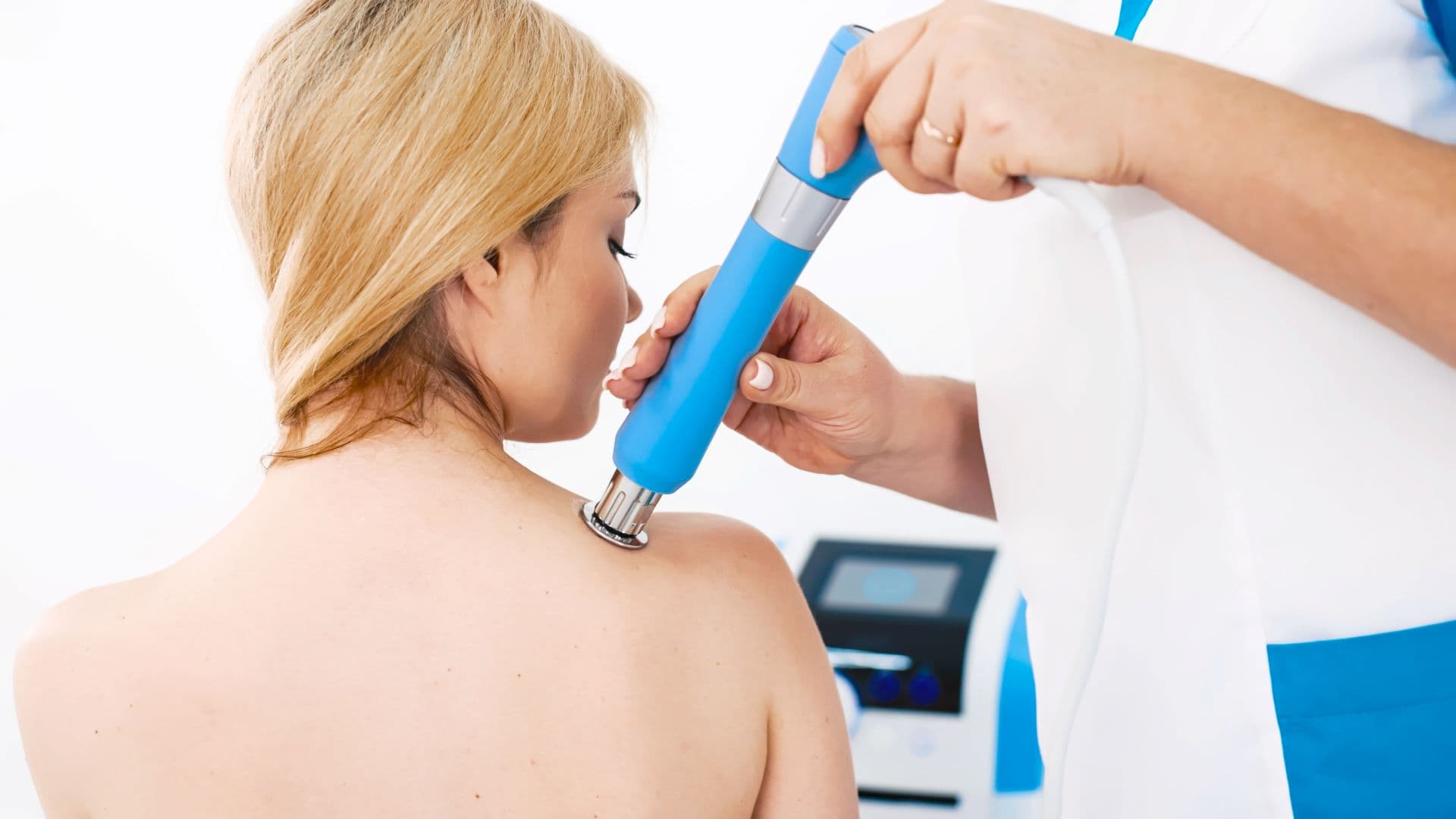
Extracorporeal shockwave therapy (ESWT) delivers acoustic energy from outside the body to a selected musculoskeletal target. True focused shockwaves and radial pressure waves are often marketed together, but they are physically and clinically distinct.
Focused shockwave
Focused systems generate pressure waves that converge at a selected depth. Energy flux density, focal zone, pulses, frequency, and guidance define treatment. Generation may be electrohydraulic, electromagnetic, or piezoelectric.
Radial pressure wave
Radial devices accelerate a projectile that strikes an applicator, producing pressure highest near the skin and dispersing outward. Device pressure in bar is not directly interchangeable with focused energy flux density.
Evidence
Evidence varies by diagnosis. Selected plantar fasciopathy and calcific rotator-cuff tendinopathy have stronger support than many broad claims. Tendinopathy subtype, chronicity, imaging, rehabilitation, dose, and whether treatment is focused or radial matter. ESWT does not pulverize routine soft tissue or guarantee tissue regeneration.
Safety and anatomy
Avoid treating over lung, brain, major neurovascular structures, active infection, tumor in the field, or vulnerable growth plates without indication-specific expertise. Anticoagulation, bleeding disorders, pregnancy, implanted devices, and recent injection or surgery require review.
Bring diagnosis and imaging, medication and anticoagulant list, pregnancy status, bleeding or clotting history, infection, cancer, implants, neuropathy, recent steroid or biologic injections, and rehabilitation plan.
Temporary pain, redness, bruising, swelling, or numbness can occur. Activity advice depends on diagnosis. Severe pain, weakness, expanding bruising, chest symptoms, or loss of function needs prompt review.
Pain, bruising, swelling, petechiae, numbness, nerve irritation, hematoma, tissue injury, and treatment failure. Poor targeting near lung or major neurovascular structures can cause serious harm; aggressive treatment may worsen a partial tear.
International Society for Medical Shockwave Treatment Guidelines.
https://www.shockwavetherapy.org/about-eswt/ismst-guidelines/ESWT for Chronic Calcific Tendinitis of the Shoulder.
https://doi.org/10.1001/jama.290.19.2573Systematic Review of ESWT for Tendinopathies.
https://doi.org/10.1097/PHM.0000000000002156PubMed: Focused versus Radial Shockwave Reviews.
https://pubmed.ncbi.nlm.nih.gov/?term=focused+shockwave+versus+radial+pressure+wave+review© 2026 Longevity Clinic Finder. All rights reserved.
Designed by SMBPulse
Adults with a confirmed condition supported by evidence and a rehabilitation plan. Acute rupture, active infection, tumor in the treatment field, uncontrolled bleeding risk, or unsafe anatomy may preclude treatment.
Explore nearby clinics, compare profiles, and find providers offering this treatment.
Find Clinics Near You© 2026 Longevity Clinic Finder. All rights reserved.
Designed by SMBPulse
 Your Privacy Choices