What you are comparing
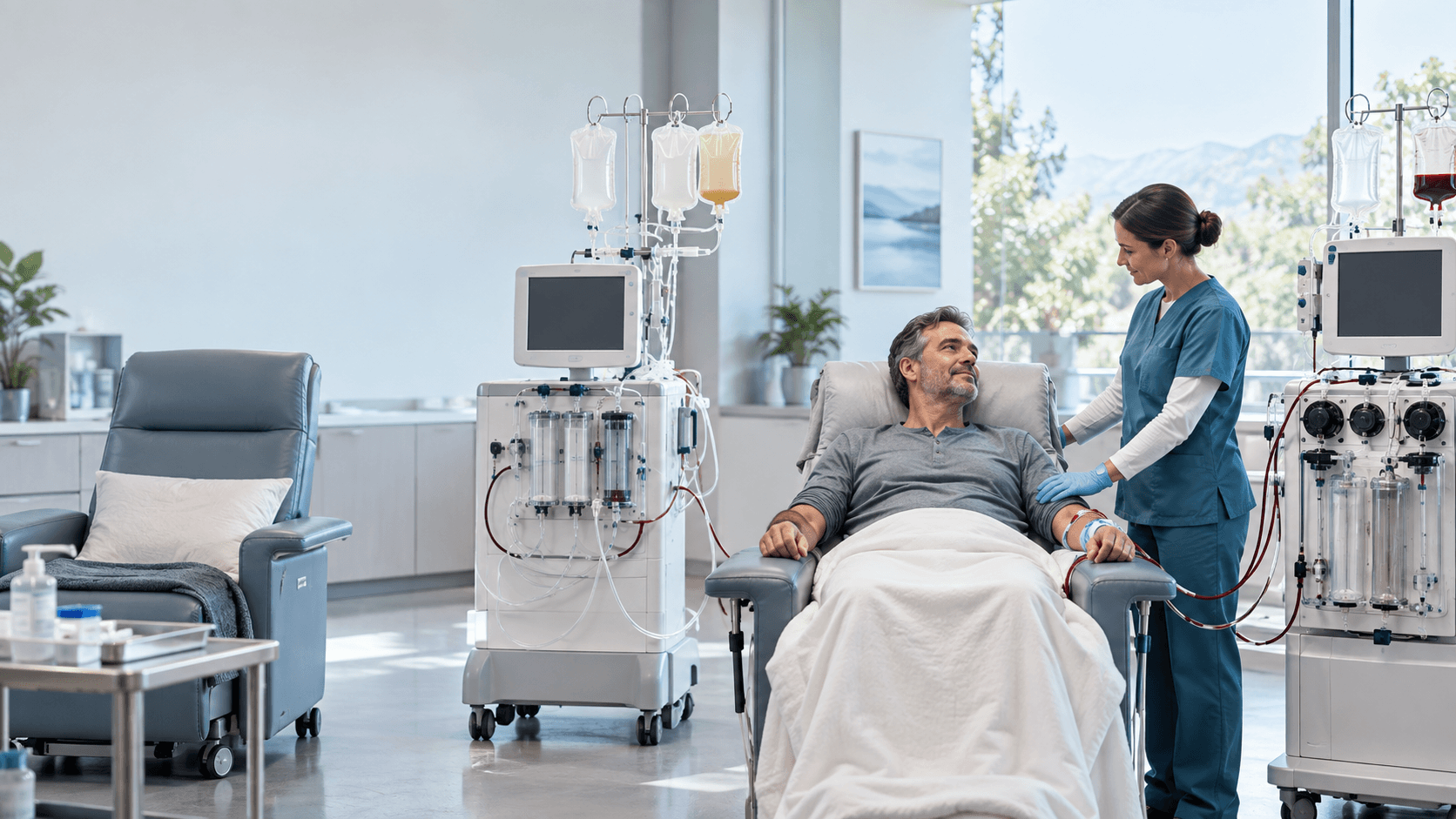
Therapeutic plasma exchange (TPE) separates plasma from blood cells, discards the plasma, and returns cells with albumin or donor plasma. ASFA defines that procedure and rates disease indications. NHLBI describes it for acquired TTP. AAN describes plasma exchange for selected Guillain-Barré syndrome. Replacement fluid, plasma volume, and a physician order are the core of the therapy.
EBOO (extracorporeal blood oxygenation and ozonation), sometimes marketed as ozone dialysis, passes heparinized blood through a gas-exchange or dialysis-style membrane while an oxygen-ozone mixture contacts the other side. Blood returns to the patient. The intent, in older clinical papers, is a controlled oxidant stress, not removal of a plasma volume. A PMC methods paper frames ozone dialysis as delivering more ozone than major autohemotherapy, not as TPE.
Clinics may place both on a “blood optimization” menu because both use extracorporeal tubing. That packaging is not evidence they are interchangeable. EBOO is not an established equivalent to medical TPE. EBOO evidence is limited. Longevity TPE itself is speculative. Neither is a wellness facial. Access, clotting, and infection risk apply to both circuits.
How they differ
Mechanism: TPE is subtractive. Antibodies, paraproteins, and other plasma constituents leave in a bag. EBOO is expositive. Blood sees ozone and oxygen; plasma proteins largely stay unless a clinic quietly adds a separate filtration step. If they add filtration, they must say so and cite that method’s evidence, not EBOO’s.
Indication: TPE has ASFA categories, AAN neurologic guidance, and hematology standards. EBOO has small older series and a randomized PAD trial of 28 patients versus prostacyclin for skin lesions—not a GBS or TTP trial, and not an aging mortality trial. FDA regulates blood components used in TPE; ozone devices used in cash-pay ozone dialysis are not a substitute license for plasma exchange in TTP.
Logistics: TPE sessions exchange roughly a plasma volume and last one to several hours, often in a series, with citrate or heparin and calcium checks. EBOO protocols in classic papers ran about an hour, twice weekly for weeks, treating several liters of blood without discarding plasma. Chair time can look similar to a patient. The bags hanging are not similar. A consent form that lists “extracorporeal therapy” without naming discarded volume versus ozone concentration is not informed consent for either procedure.
- TPE: plasma out, albumin or FFP in, ASFA-rated diseases.
- EBOO: blood ozonated and returned; plasma generally not replaced.
- Shared: venous access, anticoagulation, device-related infection and thrombosis risk.
- Neither: proven standard aging treatment.
Who each option is for
TPE is for people with a named medical indication: TTP, symptomatic hyperviscosity, selected MG or GBS contexts, and other ASFA-listed settings under hematology or neurology. Those patients belong in hospitals or apheresis units with blood-bank support. They are not EBOO candidates as an alternative to indicated exchange.
EBOO, where offered at all, appears in ozone-practice and some integrative clinics for circulatory or inflammatory complaints. The evidence base is thin and old relative to TPE. People who want ozone should understand they are not receiving TTP- or GBS-grade therapy. People who need TPE should not be redirected to ozone because a clinic owns a membrane.
Well adults seeking longevity are not a first-line population for either. Elective TPE is already speculative. Elective EBOO is not a validated shortcut around that speculation. If a research protocol exists, it should say EBOO or TPE, not “hospital blood washing.”
Risks of choosing the wrong one
Choosing EBOO when TPE is indicated can delay ADAMTS13 replacement in TTP or timely GBS immunotherapy. That delay is the dominant harm. Ozone does not fill an ASFA Category I hole.
Choosing TPE when someone only wanted ozone still imposes volume shifts, product exposure, hypocalcemia, and possible central access. Choosing either for aging imposes circuit risk without proven life-extension. Marketing that says “EBOO is TPE with oxygen” is false and dangerous.
Both can infect or clot a line. TPE’s citrate hypocalcemia is well described in ICU reviews. EBOO’s oxidant load is the point of the method; long-term elective safety is not established like transfusion-medicine TPE. Heparin used in some EBOO circuits has bleeding risk. Do not assume “no plasma bag” means “no hospital-level complication.”
How to decide
If a hematologist or neurologist named TPE, proceed in an apheresis program. Ask ASFA category, fluid, and session count. Do not substitute EBOO. If you were offered only EBOO for a syndrome that sounds like TTP, GBS, or hyperviscosity, get emergency or specialty care instead.
If you were offered both as longevity tools, treat them as two unproven extracorporeal products. Ask what is discarded, what is infused, what gas concentration is used, who is licensed, and who manages a clot or bacteremia at night. Price the package against the absence of outcome data.
Keep the vocabulary strict. Plasmapheresis is not ozone. Donation is not TPE. EBOO is not established medical TPE. Limited PAD and methods papers do not rewrite NHLBI or AAN. Choose indicated TPE when the disease demands it. Decline both when the only goal is a speculative age reset you could not explain to the covering intensivist.
If you still compare price sheets, compare coverage and rescue, not ambiance. Hospital TPE for an ASFA indication has a blood bank, an on-call physician, and a documented fluid. Boutique EBOO plus “plasma exchange” packages often have a salesperson and a before-and-after photo. Infection, clotting, and access injuries do not read the brochure. Pick the setting that can treat the complication it creates.
Frequently Asked Questions
References
ASFA: JCA Special Issue 9th Edition (TPE as medical apheresis)
https://www.apheresis.org/news/647089/JCA-Special-Issue-9th-Edition-Now-Available.htmPMC: Ozone dialysis (EBOO) delivery compared with other ozone methods
https://pmc.ncbi.nlm.nih.gov/articles/PMC9555023/NIH PubMed: Extracorporeal blood oxygenation and ozonation clinical implications
https://pubmed.ncbi.nlm.nih.gov/16156950/NHLBI: Thrombotic Thrombocytopenic Purpura (TTP)
https://www.nhlbi.nih.gov/health/thrombotic-thrombocytopenic-purpuraAAN: Immunotherapy for Guillain-Barré syndrome
https://www.aan.com/Guidelines/home/GuidelineDetail/59PMC: Plasma exchange in the intensive care unit
https://pmc.ncbi.nlm.nih.gov/articles/PMC9372988/ Your Privacy Choices