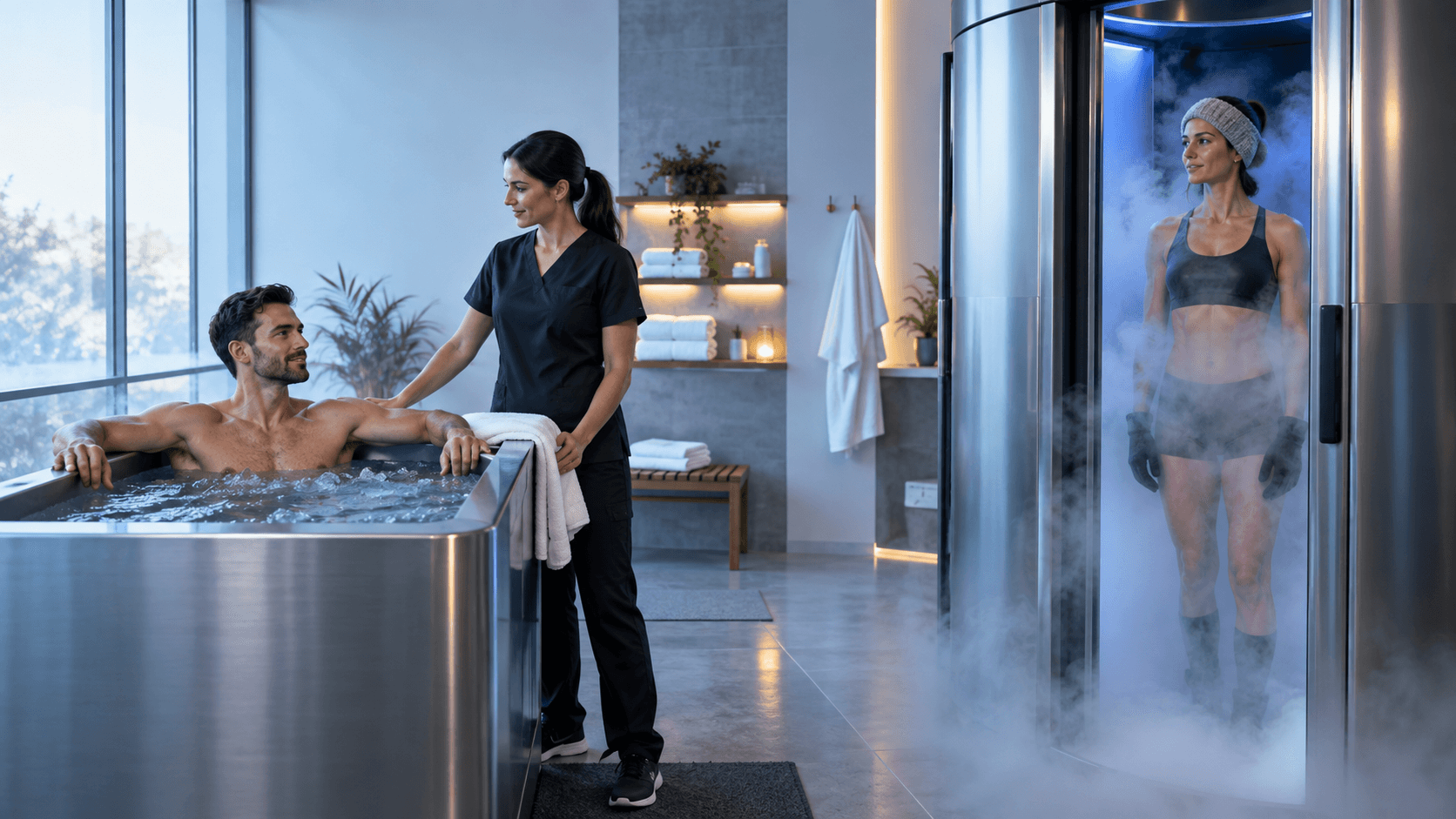
What you are comparing
Cold-water immersion is a plunge, tub, or lake: skin and often the torso sit in water. Dose is water temperature, time, depth, and whether you move. Water conducts heat quickly, so a moderately cold tub can drop skin temperature fast. Hydrostatic pressure is part of the stimulus. You must be able to get out.
Whole-body cryotherapy is a short stand in a cabin or room of extremely cold dry air or nitrogen vapor, often two to four minutes, with socks, gloves, and sometimes a mask. Air temperatures look dramatic. Dry air removes heat more slowly than water. The product is a chamber session, not a swim.
Longevity clinics sell both as recovery, inflammation control, or a longevity habit. Neither is a proven lifespan therapy. FDA consumer language on cryotherapy is cautious: whole-body cryotherapy presents a different set of risks than circulating cold wraps, and its healing benefits are unconfirmed. A plunge is not FDA-approved to treat disease either. NIAMS still describes ordinary ice as short, wrapped first aid after some sports injuries—not a chamber membership.
You are comparing two optional cooling tools with different costs, supervision needs, and failure modes. Match the tool to a named goal—short-term soreness versus a photo—and to whether you can exit safely. Do not compare them as competing cures.
How they differ
Physics is the first split. Water pulls heat off the body faster than cold air. A chamber’s minus-200 Fahrenheit graphic is not a larger medical dose. Immersion also applies pressure and can include the head if someone dunks, which raises drowning and cold-shock risk. Chambers usually keep the head out of liquid but can flood an enclosure with nitrogen.
Evidence is the second split. Cold-water immersion has more trials for delayed-onset soreness and perceived recovery after hard exercise. Effects on strength and later performance are mixed. Whole-body cryotherapy studies are smaller and harder to compare. FDA MAUDE narratives and agency commentary note insufficient evidence that chambers treat the conditions spas advertise, and they record injuries including cold panniculitis and worse events.
Risk profiles differ. Immersion: cold shock, arrhythmia in susceptible people, hypothermia if you stay too long, slips, drowning, and dirty water. CDC winter-safety pages treat cold-water exposure as a hypothermia and emergency problem. Chambers: frostbite, eye injury, falls, and hypoxia if nitrogen displaces oxygen. AHA pages on cold weather remind people with heart disease that sudden cold is a cardiovascular stress. Both can spike blood pressure at entry.
Cost and logistics differ. A home tub or gym plunge is often cheaper per use. Chambers need specialized equipment, bookings, and staff who understand ventilation. Neither requires a medical license in many storefronts, which is a consumer-protection issue, not a quality seal.
- Plunge: water dose, exit skill, drowning and shock risk, more recovery research.
- Chamber: brief dry extreme cold, nitrogen and frostbite hazards, weaker medical evidence.
- Neither: a proven longevity drug or a substitute for cardiac care.
Who each option is for
A plunge may fit a medically stable adult who wants a studied, cheaper cooling method after unusually hard endurance work, who can time the session, and who can stand and exit without help. It is a poor sole plan after a suspected fracture, concussion, or chest pain. It is a poor plan if you cannot swim, cannot feel your feet, or have poorly controlled heart disease.
A chamber may fit someone who refuses immersion, understands FDA’s “unconfirmed benefit” language, and accepts frostbite and ventilation risk for a short novelty session. It is a poor fit if you want a disease treatment, a lifespan protocol, or a substitute for physical therapy. It is a poor fit if you have cold urticaria, Raynaud phenomenon, significant neuropathy, or claustrophobia in a nitrogen space.
People with coronary disease, uncontrolled hypertension, serious arrhythmia, pregnancy, or a faint after cold need a clinician’s decision before either option. Children and anyone who cannot report burning should not be left in a tub or cabin. Alcohol plus cold is a common way people stay in too long.
If muscle growth is the priority, immediate post-lift cooling is a special case. A PMC meta-analysis of postexercise cold-water immersion and hypertrophy found a signal that routine immersion after resistance training can modestly blunt muscle growth. That literature is about water, not a proof that chambers are safer for hypertrophy.
Risks of choosing the wrong one
Choosing a chamber because the temperature sticker looks more “medical” can cost more and add nitrogen risk without adding outcome data. Choosing a long outdoor plunge because it is “natural” can mean cold shock far from help. AHA’s cold-weather guidance is about reducing cardiac strain, not collecting extreme minutes.
Using either tool as longevity therapy delays the habits that change risk: blood pressure treatment, activity, sleep, and tobacco cessation. Using either to numb an undiagnosed injury delays imaging and rehabilitation. NIAMS still points people with significant sports injuries toward evaluation and rehab, not a temperature brand.
Facility error matters. An unattended nitrogen room has caused deaths in public reports summarized in FDA adverse-event narratives. An uncovered plunge has caused drownings. “Someone on a phone at the desk” is not a safety plan if you cannot open the door or climb the stairs.
The adaptation error is quieter. Daily plunges immediately after lifting, chosen because a clinic sold recovery, may trade a bit of hypertrophy for numbness. If that was not the goal, you chose the wrong recovery tool.
How to decide
Name the goal. If the goal is longevity, skip both as therapy and keep indicated prevention. If the goal is short-term soreness during a crowded competition week, a brief, temperate immersion is the more studied option. If you dislike water, a chamber is optional recreation, not a medical upgrade.
- Get a clinician’s no if you have heart disease, uncontrolled blood pressure, pregnancy, or impaired sensation.
- Prefer the method you can exit in seconds, with a spotter and a clock.
- Ask chambers how they monitor oxygen and who can extract you; ask plunges about depth, hygiene, and warming after.
- Do not use either immediately after key hypertrophy sessions if muscle size is the priority.
Judge success by function the next day and by the absence of injury—not by how extreme the number on the wall was. Stop for chest pain, confusion, severe pain, or white, hard skin. Licensed care stays with licensed clinicians. A colder sticker is not a better therapy.
Frequently Asked Questions
References
FDA: Cold Facts on Water-Circulating Hot/Cold Therapy Devices
https://www.fda.gov/consumers/consumer-updates/cold-facts-help-avoid-injury-water-circulating-hotcold-therapy-devicesFDA MAUDE: Whole-Body Cryotherapy Adverse Event Report
https://www.accessdata.fda.gov/scripts/cdrh/cfdocs/cfmaude/detail.cfm?mdrfoi__id=7251080&pc=ILJAHA: Cold Weather and Cardiovascular Disease
https://www.heart.org/en/health-topics/consumer-healthcare/what-is-cardiovascular-disease/cold-weather-and-cardiovascular-diseaseCDC: Winter Weather Safety
https://www.cdc.gov/winter-weather/safety/index.htmlPMC: Postexercise Cold Water Immersion and Hypertrophy Meta-Analysis
https://pmc.ncbi.nlm.nih.gov/articles/PMC11235606/ Your Privacy Choices