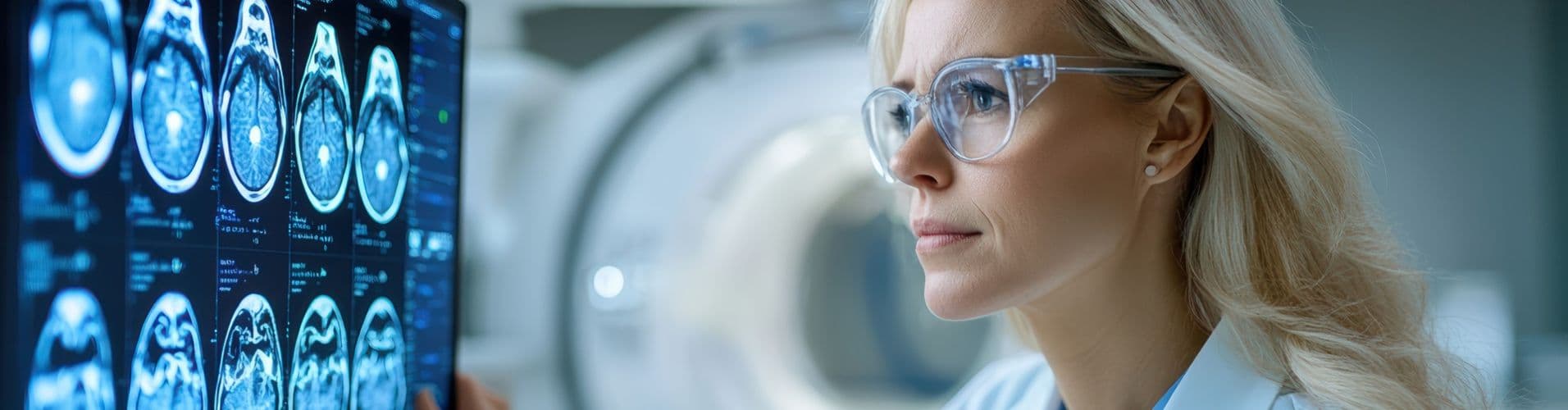
Diagnostic scans create anatomical or functional information using different technologies. A scan is valuable when it has an appropriate indication and a plan for acting on results—not because more imaging is inherently preventive.
Major modalities
- Ultrasound: no ionizing radiation; operator and target dependent.
- DEXA: low-dose X-ray for bone density and sometimes body composition.
- CT: fast, detailed X-ray imaging with ionizing radiation; some exams use iodinated contrast.
- MRI: no ionizing radiation, but longer exams, implant restrictions, claustrophobia, and sometimes gadolinium contrast.
- Nuclear imaging: radiotracers assess selected physiology and disease.
Screening is not diagnosis
Screening asymptomatic people only helps when evidence shows benefits exceed harms in a defined group. FDA knows of no evidence that full-body CT screening of asymptomatic people provides more benefit than harm. Whole-body MRI avoids radiation but still creates incidental findings, follow-up, anxiety, cost, and uncertain outcome benefit.
Incidental findings
High-resolution imaging often finds cysts, nodules, degenerative changes, or variants that were not causing disease. Some need surveillance or biopsy; many do not. Before scanning, know who reads it, what protocol is used, and who owns follow-up.
Right test, right dose, right time
Use appropriateness criteria, prior imaging, age, pregnancy, kidney function, implants, contrast history, and the clinical question. A normal broad scan does not replace mammography, cervical, colorectal, lung, or other guideline-based screening.
 Your Privacy Choices