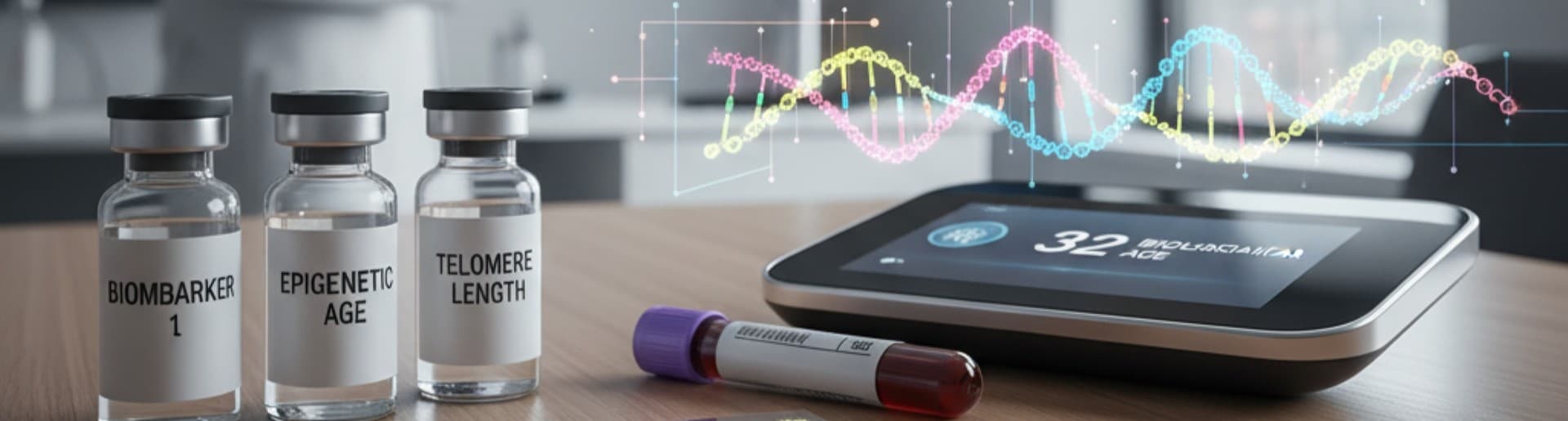
Biological age testing applies a statistical model to biomarkers associated with age or health outcomes. The result is an estimate relative to a reference population—not a direct measurement of how old every organ is.
Major test types
- DNA-methylation clocks from blood, saliva, or other tissue
- Proteomic, metabolomic, glycomic, or immune signatures
- Clinical algorithms using routine labs and physiology
- Functional measures such as fitness, strength, or cognition
Clock identity matters
Different clocks were trained for chronological age, mortality risk, disease associations, or pace of aging. They can produce different answers from the same person. Sample tissue, collection, storage, assay platform, cell composition, calibration, ancestry, health status, and model version affect results.
What a result cannot prove
Being “younger” on one clock does not guarantee longer life, and a change after an intervention does not establish that the intervention slows aging or improves clinical outcomes. No consensus defines how often healthy people should retest or how large a within-person change exceeds technical and biological variation.
Best use
Treat the result as optional context or research data. Prioritize validated risk factors—blood pressure, lipids, glucose, tobacco, sleep, physical activity, vaccination, and recommended screening—before optimizing a proprietary score.
 Your Privacy Choices