What Is Cold-Water Immersion?
Cold-water immersion uses a tub or plunge for short-term cooling. It may reduce post-exercise soreness, but introduces cold-shock, drowning, cardiovascular, hygiene, and overexposure risks.
Cold-water immersion uses a tub or plunge for short-term cooling. It may reduce post-exercise soreness, but introduces cold-shock, drowning, cardiovascular, hygiene, and overexposure risks.
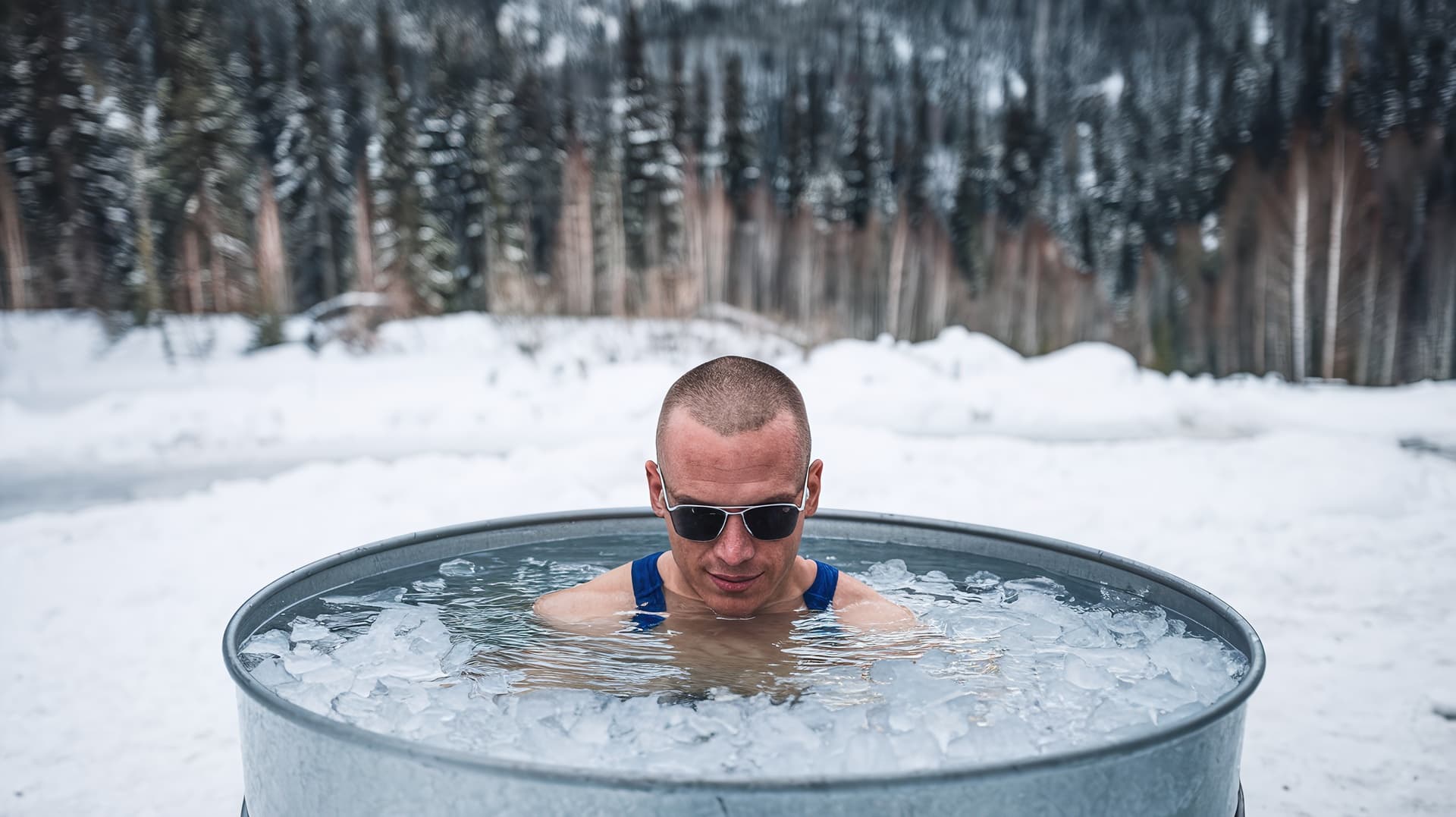
Cold-water immersion (CWI) places part of the body—often to the waist, chest, or shoulders—in cool or cold water for a timed exposure. Water removes heat far faster than air, and deeper immersion adds hydrostatic pressure and a larger cooling dose.
Evidence for recovery
Meta-analyses suggest CWI can reduce delayed-onset muscle soreness and improve perceived recovery after strenuous exercise. Effects on strength, power, biomarkers, and performance vary by exercise and follow-up. Relief does not prove faster tissue repair.
Temperature and time
Research commonly studies roughly 5–15°C (41–59°F) for 5–15 minutes, with recent analyses often finding benefit around 10–15 minutes at 11–15°C for soreness. These are study ranges, not a universal prescription. Beginners and higher-risk people need milder, shorter exposure.
Training adaptation
Frequent CWI immediately after resistance training may modestly attenuate muscle growth and some strength gains. Use may make more sense between closely spaced events than after every hypertrophy session.
Cold shock comes first
Entry can cause involuntary gasp, hyperventilation, panic, blood-pressure surge, and arrhythmia before hypothermia. Never jump in, hyperventilate, hold the breath, submerge the head, or plunge alone. A person must be able to exit without assistance.
Hygiene
Shared tubs require filtration, disinfectant control, documented water testing, cleaning, bather rules, and exclusion of people with diarrhea, open wounds, or contagious skin disease.
Avoid alcohol or sedatives, hydrate normally, disclose heart disease, arrhythmia, high blood pressure, fainting, Raynaud phenomenon, cold urticaria, neuropathy, pregnancy, medications, wounds, or illness, and plan a safe exit with direct supervision.
Dry and rewarm gradually. Temporary shivering and redness may occur. Confusion, clumsiness, persistent numbness, hives, fainting, chest symptoms, severe breathlessness, or uncontrolled shivering needs prompt care.
Cold shock, panic, aspiration, drowning, arrhythmia, blood-pressure surge, fainting, hypothermia, frostbite, cold urticaria or anaphylaxis, bronchospasm, infection from shared water, and interference with training adaptation.
Cold-Water Immersion Dose and Recovery Meta-Analysis.
https://pmc.ncbi.nlm.nih.gov/articles/PMC11897523/Postexercise CWI and Hypertrophy Meta-Analysis.
https://onlinelibrary.wiley.com/doi/10.1002/ejsc.12074CDC/NIOSH: Cold Shock and Cold Incapacitation.
https://www.cdc.gov/niosh/fishing/falls-overboard/index.html© 2026 Longevity Clinic Finder. All rights reserved.
Designed by SMBPulse
Screened adults seeking short-term exercise recovery who can understand instructions and exit safely. Unstable cardiovascular disease, uncontrolled hypertension, syncope, significant vascular disease, cold hypersensitivity, impaired sensation, intoxication, or inability to self-rescue may preclude immersion.
Explore nearby clinics, compare profiles, and find providers offering this treatment.
Find Clinics Near You© 2026 Longevity Clinic Finder. All rights reserved.
Designed by SMBPulse
 Your Privacy Choices