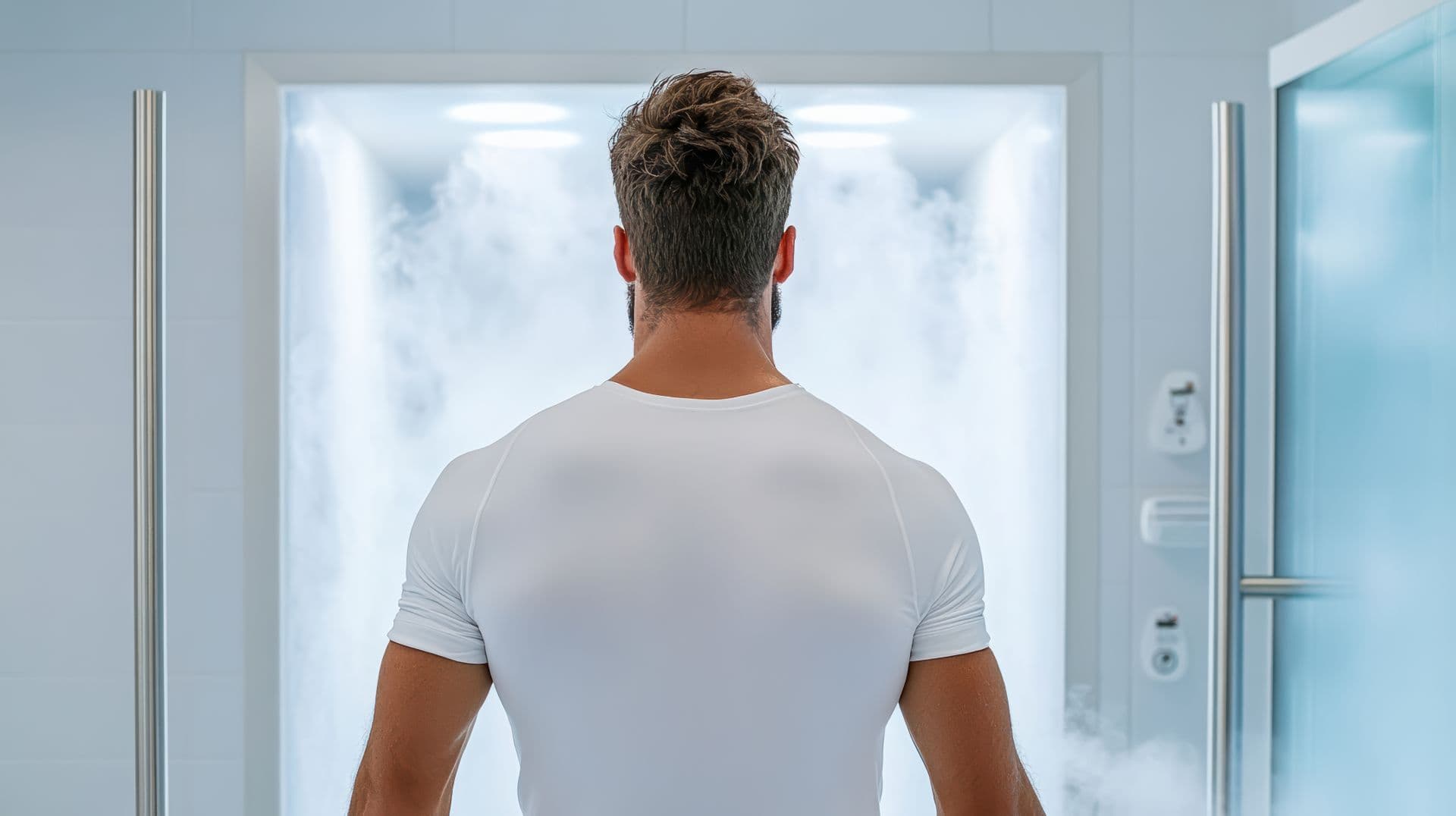
Whole-body cryotherapy (WBC) uses a refrigerated room or chamber, or a partial-body cryosauna, to expose skin to extremely cold dry air for roughly two to three minutes. Air cools less efficiently than water, so WBC is not an “ice bath at a colder number.”
Whole-body versus partial-body
Electric rooms may enclose the entire person and refrigerate air mechanically. Open-top cryosaunas commonly use nitrogen-cooled vapor around the body while the head remains outside. Technology changes oxygen-displacement, ventilation, contact, and emergency-exit risks.
Evidence
Small studies and reviews report possible short-term changes in soreness, perceived recovery, or inflammatory markers, but protocols and results vary. Objective performance benefit, chronic-pain efficacy, optimal dosing, and long-term safety remain uncertain. FDA has not cleared or approved WBC devices to treat medical conditions.
Unsupported claims
Evidence does not establish WBC as treatment for weight loss, Alzheimer disease, asthma, depression, diabetes, fibromyalgia, multiple sclerosis, arthritis, anti-aging, immune enhancement, or cancer. A brief calorie estimate is not evidence of meaningful fat loss.
Safety
Moisture, metal, excessive exposure, direct vapor, equipment failure, or inadequate monitoring can cause frostbite and cold burns. Nitrogen can displace oxygen. Other concerns include fainting, cold urticaria, bronchospasm, blood-pressure and rhythm stress, panniculitis, and eye injury.
 Your Privacy Choices